The Hormuz strike and the ceasefire that wasn't
A week-old interim understanding between Washington and Tehran met its first serious stress test on Friday, when US forces struck Iranian targets after a drone hit a cargo ship in the Strait of Hormuz.
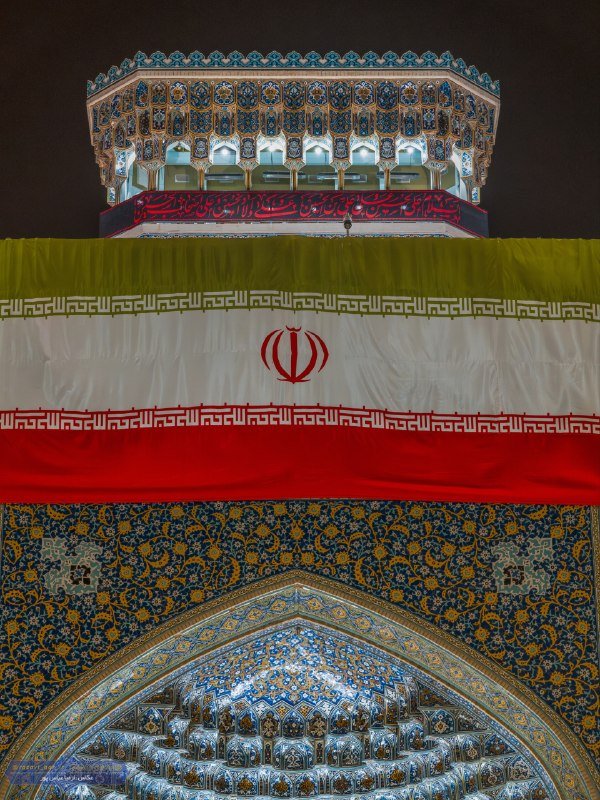
The first week of a US–Iran interim understanding was supposed to buy time. By the evening of 26 June 2026, it had bought a retaliation. The United States struck Iranian positions on Friday after a one-way attack drone struck the upper deck of a cargo ship in the Strait of Hormuz the day before — a sequence that turns a diplomatic opening into a stress test, and a stress test into a precedent.
What is now being treated as the first serious breach of the arrangement reached roughly a week earlier does not yet look like a war. It looks like the kind of calibrated exchange that defines the floor of a non-war: a drone on a commercial vessel, a strike on an Iranian target, an accusation of "foolish violations," and a market repricing within hours. The question worth asking is not whether the agreement has failed. It is whether an interim understanding was ever built to absorb the kind of friction the Strait reliably produces.
What actually happened in the water
According to reporting carried on 26 June, Iran fired at least four one-way attack drones at vessels transiting the Strait of Hormuz, with President Donald Trump stating that one of the drones struck the upper deck of a cargo ship. The Strait of Hormuz is the narrow chokepoint between Iran and the Arabian peninsula through which a disproportionate share of seaborne oil flows; any kinetic action inside it carries an outsized price tag for global energy markets regardless of the size of the vessels involved. SBS News framed the US response as strikes carried out "in response to a cargo ship attack," language that places the initiative on the Iranian side and the reaction on the American side — a framing that, if it holds, matters more than the strike itself.
The US strike is, at this writing, the most significant operational test of the interim understanding announced roughly a week earlier. NPR's lead on the story uses almost the same word — "test." That word choice is deliberate. A test implies the agreement was expected to be tested. It also implies the test was failed.
The ceasefire that wasn't
Trump's own framing, captured in two social-media posts timestamped 26 June 2026, was that Iran "violated the ceasefire agreement" and engaged in "foolish violations." The political economy of that language is worth noting. Calling a one-week-old interim arrangement a "ceasefire" raises the threshold for what counts as a violation; calling violations "foolish" characterises them as tactical errors rather than strategic choices. Both moves push the story toward restraint and away from escalation.
Markets, predictably, did not wait for the diplomatic narrative to settle. The pattern is familiar: an attack on a tanker in Hormuz is, in effect, a tax on confidence in the entire corridor. Insurers reprice war-risk premia; charterers reroute or pause; refiners in Asia hedge against a Brent spread that widens within minutes. The reporting surfaced here does not specify the price move in dollars, and this publication will not invent one. The direction, however, is the one the Strait always produces.
What the counter-narrative looks like
The dominant Western framing — Iranian aggression, US response, agreement under strain — is not the only available read. The Iranian side has consistently described its posture around the Strait as defensive, and Iranian-aligned commentary will almost certainly frame the strikes as a violation of sovereignty on Iranian territory. That framing has limits: an attack drone striking a commercial vessel is not a defensive act under any reading of the law of the sea, and the United States is entitled to treat kinetic action against its flagged or chartered shipping as a use of force.
But the structural point survives. The interim understanding was an off-ramp built around a narrow set of confidence-building measures, and it was always going to be tested first in the place where Iranian and American interests intersect most directly — the water. The surprise is not that the test came. The surprise, if there is one, is that it came this fast.
The pattern underneath the pattern
Strip the headlines away and the deeper question is about architecture, not theatre. An interim understanding of the kind reportedly reached a week ago is designed to prevent the kind of incident that just occurred from becoming a casus belli. Its success is measured by what does not happen next: no further strikes, no escalation ladder climbed, no market dislocation that hardens into a political fact. Its failure is measured by the opposite — by repetition, by widening, by the slow conversion of a single incident into a new baseline.
That is the live question as of 26 June 2026, 16:58 UTC, when the second of Trump's social-media posts surfaced: whether Friday's exchange is a one-off the arrangement can absorb, or the first of a series that breaks it. The sources currently available do not let this publication settle that question. They let us name the test. They do not let us grade it.
What remains uncertain
Several pieces of the picture are not in the record as of this writing. The reporting does not specify which cargo ship was struck, its flag, its cargo, or whether there were injuries aboard. It does not name the specific Iranian target or targets hit in the US response, nor the weapons used. It does not specify whether the Iranian actions were carried out by regular forces, by an allied militia, or by a faction acting without central direction — a distinction that changes the political reading of the event entirely. The interim understanding itself is referenced but not described in detail in the wire material available here, which means its precise terms — what counts as a violation, what the response menu looks like, who is empowered to call a breach — remain a matter of inference rather than citation.
What can be said with the evidence at hand is narrower than the headlines suggest but firmer than the speculation: a commercial vessel in the Strait of Hormuz was struck by at least one Iranian-origin drone on or about 25 June 2026; the United States responded with a strike on Iranian territory on 26 June 2026; and the political actors involved have publicly characterised the sequence as a violation of an arrangement reached roughly a week earlier. The rest is the next 72 hours.
Desk note: Monexus frames this as the first operational test of an interim arrangement, not as the collapse of one — a distinction the wires themselves are split on, with the President's social-media language leaning toward "violation" and the broadcast framing leaning toward "strain."
Wire provenance
This editorial synthesis draws on the following public wire/social posts:
- https://t.me/hindustantimes