Lebanon's Israel deal draws rare Lebanese buy-in — and a Hezbollah veto
President Joseph Aoun has endorsed an initial Israel–Lebanon framework as the first step toward restoring displaced citizens — but Hezbollah MP Hassan Fadlallah says the deal has no legitimacy and won't hold on the ground.
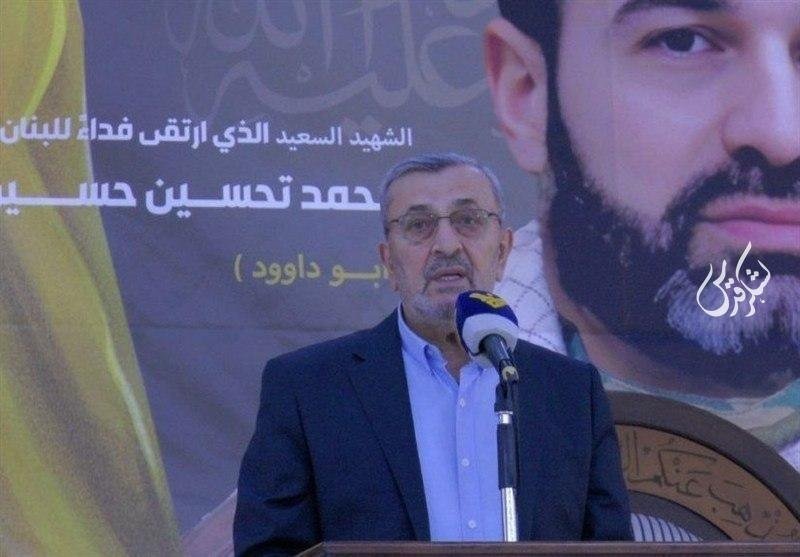
On the evening of 26 June 2026, Lebanese President Joseph Aoun publicly endorsed an initial agreement with Israel as the first step toward the full return of Lebanese citizens to their lands in the south. Hours earlier, his Israeli counterpart had framed the same arrangement as a strategic blow against Tehran. By Friday morning, the man who commands the largest armed faction inside Lebanon — Hezbollah MP Hassan Fadlallah — declared that the Lebanese government had no legitimacy to sign it and that the movement would not allow it to be enforced on the ground.
The cross-recognition, if it holds, is unusual on three counts: an Israeli prime minister publicly claiming victory over an Iranian client while negotiating with that client's host state; a Lebanese head of state staking his office on a deal with Jerusalem before the ink has settled; and a Hezbollah political leadership invoking domestic statute — Article 52 of the Lebanese Constitution, which bars recognition of Israel — to delegitimise a transaction their own patrons in Tehran appear willing to tolerate. Each of those positions is structurally fragile, and each tells a different story about who actually speaks for Lebanon.
What Aoun has bought, and what Netanyahu has sold
President Aoun's framing is the most cautious of the three. In remarks carried on 26 June at 23:16 UTC by Iranian state-affiliated Fars News, he described the agreement as the opening move in a longer sequence: an initial deal that, if implemented, would allow displaced Lebanese civilians to return to villages in the south cleared of Israeli forces. The transactional core, on Aoun's account, is the return of citizens to land — a position that gives the Beirut government something to defend even if subsequent rounds collapse.
Netanyahu's sales pitch, captured in the early hours of 27 June at 02:04 UTC by the Telegram channel DDGeopolitics citing Israeli daily Ynet, is sharper. The prime minister told Israelis that the deal represented a blow to Iran, and — critically — that Israeli troops would remain in southern Lebanon regardless of any subsequent Iranian demand for withdrawal. That is a non-trivial commitment: it ties any future Lebanese or Iranian request for an Israeli pullback to a separate political calculation rather than to the agreement itself, and it preserves an Israeli security buffer on a frontier where Hezbollah's pre-war footprint has been the central Israeli demand since October 2023.
The asymmetry is the point of the architecture. Aoun is being offered a humanitarian deliverable — the return of villagers — in return for quiet along a border that Israel has spent two and a half years attempting to pacify. Netanyahu is being offered a diplomatic format that costs him little, given the troops stay, while reframing the entire exercise as part of his long-running contest with Tehran. Each leader is selling the same document to a different audience.
The Hezbollah veto
Hezbollah's response, when it arrived via Fars News and Iran's Tasnim on the night of 26 June, was procedural as much as substantive. Fadlallah did not simply reject the agreement on political grounds; he argued that under Lebanese law — Article 52, which criminalises dealings with Israel — no Lebanese government, however elected, has the constitutional authority to sign. The Lebanese parliamentarian invoked the statute to argue that the deal is void at root, not merely inadvisable. Tasnim reported his position at 23:28 UTC on 26 June as: "Direct negotiations with the Israeli enemy are contrary to Article 52 of the Lebanese Constitution."
The argument is not frivolous. Article 52 of the Lebanese Constitution, in its post-Taif formulation, formally prohibits normalisation with Israel and the entry of Israeli goods into Lebanese territory. The article has sat largely dormant in recent decades because Lebanon and Israel have not formally recognised one another in any case; it acquires operative force only when an Israeli and a Lebanese counterpart sit across a table and produce text. That is precisely the moment Fadlallah and his parliamentary bloc are now contesting.
The political effect is to deny the Beirut government the air of consensus it would need to absorb the costs of compliance. If Hezbollah's MPs — still a meaningful bloc inside the Lebanese Parliament, even after the war's damage to the movement's military standing — frame the agreement as unconstitutional, the government cannot claim a domestic mandate for it. The deal becomes, from inside Lebanon, the act of one branch of government against the letter of the constitution as cited by another.
A blow to Iran — or a recognition of it?
Netanyahu's claim that the arrangement damages Iran is the boldest assertion in play, and it deserves scrutiny on its own terms. Tehran's posture toward the deal, as far as the public record goes, is ambiguous. Iranian state outlets have transmitted Hezbollah's rejection; they have not endorsed it. There has been no Iranian foreign ministry statement framing the deal as acceptable, and none framing it as a casus belli. The silence is the message: Iran is allowing its Lebanese partner to reject the text publicly while reserving the right to recalibrate once the operational facts on the ground — troop positions, prisoner files, ceasefire monitoring — are clearer.
Read against that ambiguity, the Israeli sales pitch reads less as an analytical claim than as a framing move. Asserting the deal is a defeat for Iran serves two domestic Israeli functions: it reassures a public that has paid a steep price since the cross-border war began, and it pre-empts a future Lebanese or Iranian demand for withdrawal by anchoring the troop presence in a victory narrative rather than in the agreement's text. Whether the architecture actually constrains Iran is a separate question — and one that the Iranian response, so far, has declined to answer in writing.
Stakes
If the agreement holds even in its initial form, the immediate winners are the displaced Lebanese civilians of the south, whose return to their villages is the explicit deliverable Aoun has named. The Lebanese government gains a piece of paper that it can present as the foundation of a longer peace track — useful domestically, useful in any future donor conference, useful in Beirut's relations with Gulf states that have insisted on border quiet as a precondition for reconstruction financing. Israel gains a buffer zone with international cover.
The immediate losers are the Hezbollah parliamentary bloc, whose leverage over Lebanese state policy shrinks every month that an Israeli presence is accepted, legal or not, and whose legal theory — Article 52 as a hard veto — has just been tested in front of a Lebanese public that, according to multiple post-war surveys cited by regional outlets, increasingly distinguishes between the movement's armed wing and the political actor it fronts. Iran loses a layer of deniability: for two decades Tehran has been able to insist that what Hezbollah does on the southern frontier is a Lebanese domestic matter. A Lebanese-Israeli document, signed by a Lebanese president, moves the question out of that grey zone and into the open.
The unresolved question is enforcement. Fadlallah said the movement would not allow the deal to be enforced on the ground; Aoun said the deal was the first step toward the return of citizens. Both statements cannot be fully true at once, and neither side has so far shown willingness to test the contradiction. Until one of them does, the agreement is a ceiling on the violence, not a floor on the politics.
What the sources do not say
The reporting available on 27 June 2026 does not specify the exact scope of the initial agreement — what territory Israeli troops would vacate and on what timeline, what happens to Hezbollah's residual military infrastructure in the south, whether the deal includes a prisoner file, and whether any third-party guarantor (the United States, France, UNIFIL) has signed on. The Lebanese president's statement describes intent; the Israeli prime minister's statement describes outcomes. The gap between them is the document itself, which has not yet been published in any source reviewed for this article. Until that text appears, every characterisation — including this one — is provisional.
How Monexus framed this versus the wire: most Western coverage of Israel–Lebanon diplomacy treats Hezbollah as an outside actor commenting on a sovereign Lebanese decision. The available reporting suggests the opposite framing fits better — Hezbollah is contesting the constitutional authority of the Beirut government, not lobbying it from the margins — and Monexus has written the article accordingly.
Wire provenance
This editorial synthesis draws on the following public wire/social posts:
- https://t.me/DDGeopolitics/
- https://t.me/DDGeopolitics/
- https://t.me/tasnimplus/
- https://t.me/farsna/
- https://t.me/farsna/