Robert Richardson, the Cinematographer Who Framed Hollywood's Most Dangerous Men, Gets the Documentary Treatment
A new festival-bound documentary trains its lens on Robert Richardson, the three-time Oscar-winning cinematographer whose frames defined a generation of American provocation. The trailer hints at a portrait of obsession as much as craft.
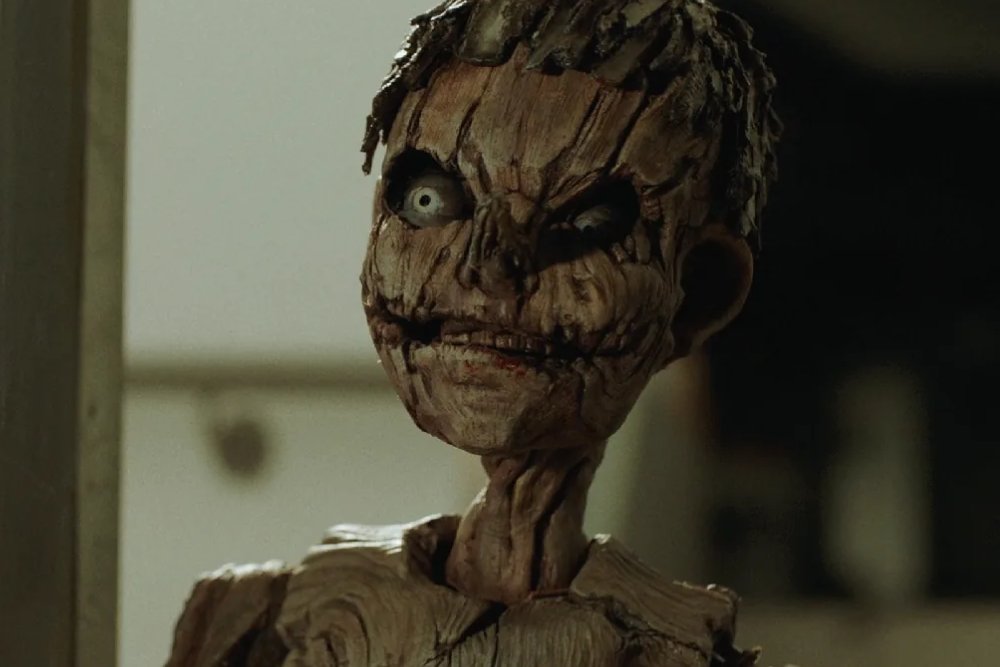
The first trailer for Robert Richardson: The White Devil landed on 26 June 2026, and the line that cuts through the two-minute cut is the one Barletta Productions chose to put on the poster: "I'm deeply addicted to work. Because I choose the work over family." It is a line delivered by Richardson himself, and it is the sort of confession that polite cinema profiles usually sand down. The Barletta trailer leaves it raw.
The documentary, which the producer is taking to festival this autumn, treats Richardson not as a behind-the-camera technician but as the author of a specific visual grammar — long lenses, sweat-beaded close-ups, tungsten flares bleeding through cracked windows — that has shaped American screen violence for four decades. It is a grammar forged in collaboration with directors who like their audiences uncomfortable: Oliver Stone, Martin Scorsese, Quentin Tarantino, among others. The trailer's thesis is that you cannot separate the men Richardson has framed from the man holding the lens.
The career as a case study
Richardson is one of a small handful of cinematographers whose filmography reads as an alternative history of late-twentieth-century American cinema. Platoon (1986), Born on the Fourth of July (1989), JFK (1991) and Nixon (1995) gave him four collaborations with Oliver Stone and three Academy Awards. Casino (1995), Bringing Out the Dead (1999), The Aviator (2004), Shutter Island (2010) and Hugo (2011) extended a parallel run with Scorsese. Kill Bill: Volume 1 (2003) and Inglourious Basterds (2009) added Tarantino. The through-line across those films is a willingness to commit fully to a director's visual obsession, regardless of whether the result will play in a suburban multiplex.
The trailer leans into that reputation. Clips from war pictures and mob pictures are intercut with Richardson behind the camera in featurettes that look like on-set documentary footage. The implicit argument — that his consistency is the consistency of a specific temperament, not a checklist of tricks — is the kind of claim a feature-length cut will have to earn.
The "white devil" frame
The title is doing real work. The White Devil is a 1612 tragedy by John Webster about a duplicitous Italian aristocrat; it is also, the trailer implies, a description of the cinematographer's own self-image, half-admiring, half-accusatory. The phrase recurs in the voiceover and in a hand-lettered title card. Whether that is the documentary's organising metaphor or a tagline lifted from Richardson's own vocabulary is unclear from the trailer alone; it is the kind of question a festival programmer will press the director on.
What is clear is the production's tonal ambition. Barletta is not pitching a standard-issue industry tribute — the kind of film where colleagues say "genius" on a loop — but a portrait that is willing to sit with cost. The opening line, the family line, is the explicit signal. The implicit one is the choice of a Webster tragedy as title.
What the documentary is, and isn't, arguing
A festival cut of this kind will live or die on access. The trailer suggests Richardson sat for extended interviews and that the production assembled a meaningful archive of behind-the-scenes material from his principal collaborators. The question the cut will have to answer is whether the film treats Richardson's collaborators with the same seriousness it treats him. Platoon and JFK remain politically contentious works four decades on; Kill Bill and Inglourious Basterds are exercises in cinematic violence that have aged in uneven ways. A portrait of the man who lit those films can either interrogate the politics of the frames or treat them as settled.
The trailer gestures toward the interrogation. The family line is one gesture. The choice to lead with Stone-era imagery rather than the awards-season gloss of The Aviator or Hugo is another. Whether that survives into the finished film, or whether commercial pressure and festival politics sand it down, is the open question.
What to watch for at the festival circuit
Barletta has not yet named a premiere, but the autumn 2026 festival calendar is the obvious target. A documentary of this profile — feature-length, single subject, festival-grade cinematography in its own right — typically debuts at Venice, Toronto, Telluride or New York in the September window before being shopped to distributors. The reception at those events will determine whether The White Devil arrives in theatres, on a streamer, or as a one-off broadcast.
For now, the trailer does its job. It introduces a subject who is well known inside the industry and invisible outside it, and it makes the case that the invisibility is the story. Whether the full film sustains that case will be the work of the next several months.
— Monexus framed this as a portrait of artistic obsession rather than a standard craft tribute. The trailer's choice of the family line as its anchor, and the Webster reference as its title, justify that read.
Wire provenance
This editorial synthesis draws on the following public wire/social posts:
- https://t.me/s/FirstShowing/
- https://en.wikipedia.org/wiki/Robert_Richardson_(cinematographer)
- https://en.wikipedia.org/wiki/Platoon_(film)
- https://en.wikipedia.org/wiki/The_White_Devil