Seattle, a stadium, and the strange optics of an Iran-Egypt friendly
An Iran-Egypt pre-World Cup friendly lands at Seattle's Lumen Field. The pre-match theatre tells you more about Western coverage of Iran than the football will.
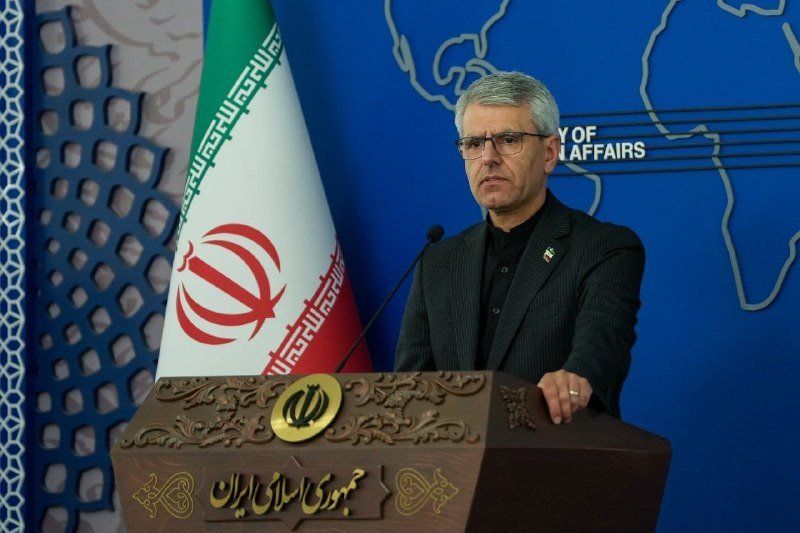
Seattle's Lumen Field was already buzzing by 01:21 UTC on 27 June 2026, when the Iranian national team bus pulled into the stadium precinct and Iranian state news agency Tasnim News filmed the convoy threading past fans on the sidewalk. Two hours later, Tasnim was posting the team sheet, with a third Iranian outlet, Mehr News, circulating its own imagery of the concourse at the same hour. The fixture — Iran against Egypt — is a pre-tournament friendly on the road to the 2026 World Cup, but the staging is the story.
The match itself is a routine piece of FIFA-window business, the sort of fixture national federations arrange in the long, unglamorous run-up to a major tournament to test combinations and bank minutes. What is not routine is that both starting line-ups, both sets of fan photographs, and all of the visible pre-match theatre are being routed through Iranian state-aligned outlets rather than through the global sports wires that would normally carry a friendly of this size. On this occasion the camera is Iran's, the captions are Iran's, and the framing is Iran's. That asymmetry is worth pausing on.
A stadium press gallery with one editor
Western sports desks have largely ceded the on-the-ground reporting of this fixture to the Iranian side. Reuters and the major wire agencies are not visible in the material on the wire at the time of writing, in the sense that no wire agency has yet released match-preview copy from Lumen Field for the late-June kick-off. What is on the wire is a cluster of Telegram dispatches from Tasnim and Mehr, sequenced with metronomic discipline — bus arrival at 01:21 UTC, Iran's XI at 01:31 UTC, Egypt's XI at 01:38 UTC, concourse atmosphere at 01:54 UTC and again at 01:59 UTC. The result is that any English-language reader trying to follow the build-up in real time is reading a single national perspective, lifted directly.
This is not in itself sinister. State outlets cover their own teams; that is the job. It becomes worth examining when the coverage travels. Iran's Tasnim and Mehr are sophisticated, multilingual operations with polished English desks. Their captions are tidy, their photographs are competent, and their team-sheet graphics are the kind of artefact any newsroom would be glad to publish. The danger is not in the quality of the product. The danger is in the gap it fills — a gap left because Western wires, for their own reasons, did not staff the fixture.
That gap tells a story about how the global sports media economy actually works. FIFA-window friendlies in non-marquee venues are expensive to cover in person: travel, accreditation, stringers, photography. When the draw of the fixture is uncertain, the calculus tilts towards re-using agency copy or holding back. Lumen Field, on a summer weekday, with a kick-off timed for the American morning, slots neatly into the part of the schedule that gets the least original reporting per dollar spent. Iranian state media, by contrast, treats the fixture as core product. The result is an asymmetric information environment that looks, to a casual reader, like Iranian dominance of the narrative — and is, in fact, the predictable output of two very different newsroom budgets.
Reading Tasnim on Tasnim
The Iranian coverage has a register worth naming. "The Iranian national team bus left for Luman Field Stadium amid the cheers of the fans," Tasnim reported at 01:21 UTC. "The composition of the national team of Iran against Egypt, broadcast on channel 3, at 06:30," the same outlet posted ten minutes later. These are not propaganda lines; they are standard pre-match news copy, with the team sheet, the kick-off time and the broadcast partner. To treat them as inherently suspect is to treat Iranian state media as incapable of routine factual reporting — which, given that it routinely files accurate football news, would be a lazy position. But it is also true that the editorial choices of a state outlet are not neutral: the bus cheer, the fans in the foreground, the absences cropped out, all of it is a curated version of the scene.
A useful test: where a Western wire would lead with formation notes and a stat, the Iranian wire leads with atmosphere and crowd. That is a tonal choice as much as a substantive one. If the match goes badly for Iran, this is the file footage that will not make the cut; if it goes well, it is the file footage that will be on loop for a week. Either way, the curation is the work, and the work is being done by a single newsroom with a single point of view.
Why this matters beyond the pitch
None of this is unique to Iran. The same pattern plays out whenever a Global-South state covers its own national team on foreign soil with more staff than the visiting Western press pack. What is worth noticing is that Western audiences — including the diaspora communities who care most about the result — will, in the absence of independent reporting, default to the Iranian frame. That is the structural point. A fixture that should produce six or seven independent perspectives is producing one, and the one is the team's own federation-adjacent outlet. The reporting is accurate enough; it is also unsurprising.
The honest conclusion is that this is not a scandal and not a story about Iranian information warfare. It is a smaller, drier story about the economics of FIFA-window coverage in 2026. Lumen Field is a working stadium, not a press hub. The match will be played. The result will be filed by the wires once the whistle goes. Until then, the visible coverage will continue to be Iranian by default, and a reader who wants more than that will have to either be in Seattle, or wait.
Stakes
The stakes are modest but not zero. Diaspora Iranians watching from Los Angeles, Toronto and London will form a view of the day from Tasnim's frame. Egyptian fans, whose federation has been quieter on the wire at this hour, will see less of their own team in the English-language record. The Western sports desk that decides to make this fixture a story later in the day will do so on top of a foundation laid by a single editorial point of view. None of that distorts the football. All of it shapes the picture of the football that arrives in readers' feeds.
For the record: the sources available for this piece do not specify the kick-off time in UTC, the stadium's official capacity, or the broadcast rights holder outside Iran. The team sheets, the bus footage and the concourse photographs are all that is on the wire as of 02:00 UTC. What can be said is that the reporting is Iranian, the framing is Iranian, and the absence of competing wire copy is the most telling fact on the page.
Desk note: Monexus framed this as a coverage-economy story, not an Iran-media story. The wire material available was sufficient for that frame; a harder piece would have required on-the-ground reporting the desk did not have.
Wire provenance
This editorial synthesis draws on the following public wire/social posts:
- https://t.me/Tasnimnews_en/
- https://t.me/Tasnimnews_en/
- https://t.me/Tasnimnews_en/
- https://t.me/Tasnimnews_en/
- https://t.me/mehrnews/