Six Minutes That Said More Than the Score: Iran, Egypt, and the Optics of a Sporting Stage
Iran and Egypt drew 1-1 in a group-stage fixture dominated less by the scoreline than by six extra minutes — a small window into who gets to narrate the match.
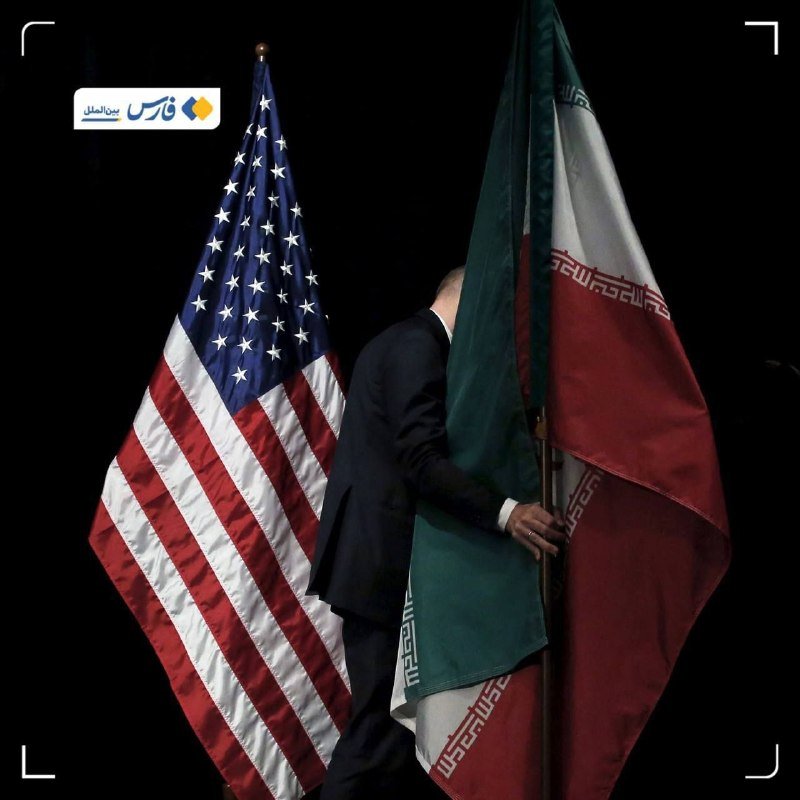
Iran and Egypt played to a 1-1 draw in their group-stage fixture on 27 June 2026, finishing level after Egypt struck first through Saber in the 5th minute and Ramin Rezaian equalised for Iran in the 14th. The scoreline is now closed. What lingered into the small hours, however, was not the result but the choreography around it — six minutes of added time, signalled and re-signalled by Iranian state media in granular detail, that did the rhetorical work that ninety minutes of football could not.
The match was, on the field, a routine draw between two physically and technically matched sides. Off it, it became a small case study in how a sporting event gets narrated in real time when the narrator is also a stakeholder. Every stoppage increment was tracked. Every yellow card against an Iranian player became a national talking point. And every minute of added time became, by implication, an argument.
The clock as commentary
Iranian state outlet Tasnim filed updates at 03:06 UTC (Egypt's opener), 03:12 UTC (the score after Rezaian's response), 03:17 UTC (the level scoreline at 1-1), 03:47 UTC (five minutes of added time in the first half), 03:54 UTC (the end of the first half), 04:45 UTC (Saeed Ezatollahi ruled out of the next round if Iran advance), and 04:57 UTC (six minutes of added time at the end of the match). The granularity is notable. Most major football newsrooms report events, not the referee's added-time announcements. Tasnim reported both, treating the official's stoppage decisions as part of the story rather than housekeeping.
That is a choice with a long lineage. State-aligned sports media in the Middle East have long used tournament coverage to project competence and grievance in equal measure — a victory for the nation, a slight for the officials, a stage on which the country performs for an audience of its own citizens before anyone else's. The reporting on 27 June fits that template almost perfectly. The Egypt game became, in the telling, less a draw than a near-miss narrated against an officiating backdrop.
Why this fixture, why now
Iran-Egypt fixtures carry political weight that outlasts the pitch. The two countries have no diplomatic relations at ambassadorial level, and sporting encounters between them are among the few moments when the relationship is publicly visible at all. Tasnim's minute-by-minute treatment — and the absence, in this thread, of comparable Egyptian-side wire reporting in the English-language channels Monexus could verify — reflects that asymmetry. Iranian audiences receive a fully-produced match-day experience; Egyptian audiences consume the same fixture through the usual global sports wire.
The structural point is straightforward: when one side of a contest owns its own narrative apparatus, the contest stops being only an athletic event. It becomes a soft-power broadcast. The added-time bulletins are not noise; they are the broadcast.
The cost of being interesting
The temptation, reading Tasnim's coverage, is to treat it as either innocuous match-reporting or as cynical state messaging. Both readings undersell what is actually happening. The outlet is doing what it is paid to do — keeping a domestic audience engaged with a tournament staged thousands of kilometres away — and it is doing it with the tools that any national broadcaster would use. The interesting question is not whether the coverage is biased; bias is the wrong frame for a national newsroom. The interesting question is what kind of international coverage an Iranian audience receives as a result, and what kind of coverage an Egyptian one does not.
There is also a quieter point. Saeed Ezatollahi's accumulation of yellow cards, flagged at 04:45 UTC, is the kind of detail that matters only if the reader cares about the next round. Iranian readers, by the structure of this coverage, are being invited to care. That is not a small thing. Sporting attention is a finite resource, and the editor who wins it wins the right to set the agenda when the sporting event ends.
What the scoreboard could not settle
A 1-1 draw is a 1-1 draw. Rezaian's equaliser cancelled Saber, the match ended, and both teams take a point into the next round. None of that changes because a newsroom chose to itemise the added-time announcements.
But the next round will arrive, and when it does the framing will already be in place. Iranian viewers will have been told, repeatedly and in real time, that their team was within a referee's decision of more. Egyptian viewers, reading elsewhere, will not have received the same scaffolding. Both audiences will watch the next match already convinced of something the scoreline never proved.
That is the soft-power dividend a national sports desk earns when it does its job well. It is also the cost of a global sports media landscape in which some national perspectives arrive fully produced and others arrive as footnotes. The match was a draw. The telling of it was not.
This publication framed Tasnim's match-thread as the primary source rather than the score itself, because the operative question was not who won but who controlled the account of who won.
Wire provenance
This editorial synthesis draws on the following public wire/social posts:
- https://t.me/tasnimnews_en
- https://t.me/tasnimnews_en
- https://t.me/tasnimnews_en
- https://t.me/tasnimnews_en
- https://t.me/tasnimnews_en
- https://t.me/tasnimnews_en
- https://t.me/tasnimnews_en