The Hormuz blockade and the price of political theatre
Twelve thousand flights cancelled and jet fuel prices doubled: the bill for the Hormuz standoff is already arriving on airline tickets. Monexus reads the carrier group and the cabin pricing as one story.
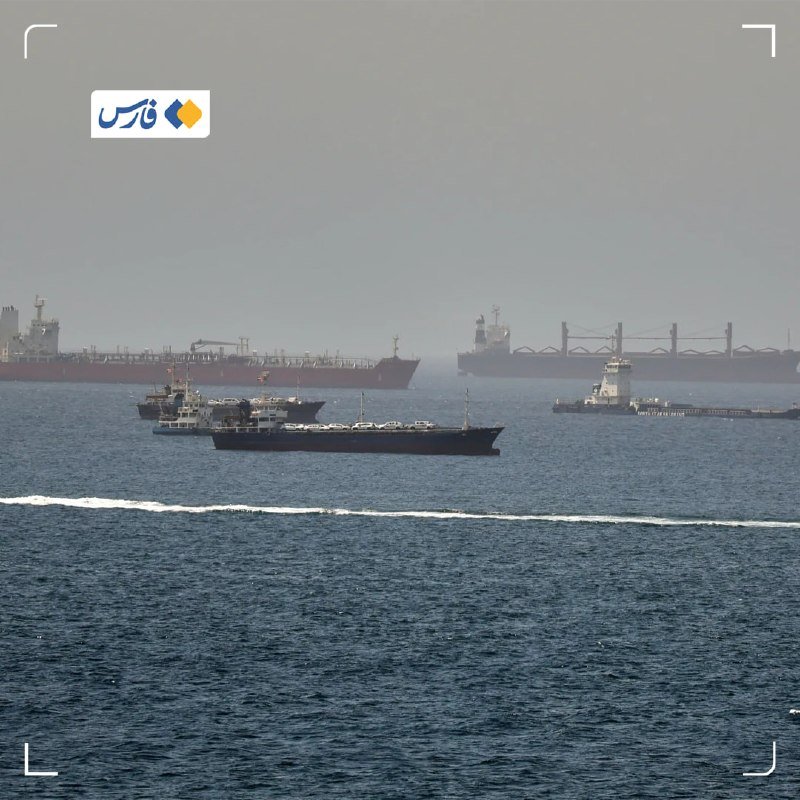
On 4 May 2026, jet fuel passed a number that aviation analysts had warned was coming and hoped would not: a doubling of its pre-crisis price, with roughly 12,000 commercial flights cancelled and about two million seats pulled from the global schedule, according to a Financial Times calculation relayed by Iranian state outlets Tasnim and Mehr News. The proximate cause sits in a twenty-mile-wide stretch of water between Iran and the Arabian peninsula. The Strait of Hormuz has, in the first week of May, become the choke point through which a much larger argument about American power is being conducted, at airline-economy-class resolution.
The story the wire has not yet decided how to cover is the one where the blockade, the carrier group steaming toward it, and the price of a ticket from Frankfurt to Singapore belong to the same sentence. Monexus reads them together. The Hormuz standoff is the visible event; the underlying story is whether coercive foreign policy is becoming a routine instrument of an American executive that, domestically, has spent years normalising the use of force as a political shortcut.
From the Gulf, theatre disguised as strategy
The Iranian framing of the standoff arrived on Monday evening, repeated across Fars, Tasnim, Press TV and the IRGC's own political directorate in near-identical language. Foreign Minister Abbas Araghchi told reporters that "events in Hormuz make clear that there's no military solution to a political crisis," and that the United States should be "wary of being dragged back into quagmire by its own clients," with talks reportedly progressing through Pakistani mediation. IRGC Political Deputy General Javani added that Washington was "flexing its power, deploying all its capabilities, but will ultimately face defeat," and that the prize in the negotiation is nothing less than the "reopening of the Strait of Hormuz." Araghchi separately characterised America's so-called "freedom of navigation" operation in the strait as a "dead end project."
None of this is neutral. Press TV, Tasnim, Fars and Mehr are Iranian state media, and the IRGC's spokesmen are not disinterested observers. But the content of what they are saying matters precisely because Tehran has every incentive to project confidence. The fact that Iranian officials feel able to call the operation a "dead end" in English-language messaging aimed at regional and Western audiences signals that the projection is working. A weaker Iran would not be granting interviews; it would be bargaining in private.
The price that is already paid
The other half of the story is the one already showing up in operating margins. The Financial Times, as republished by Tasnim and Mehr, put a hard number on what the closure has cost aviation so far: jet fuel prices doubled, twelve thousand flights cancelled, two million seats withdrawn. Reuters and Bloomberg had, in the days before 4 May, traced the spike to insurer war-risk premiums attached to the strait and to the rerouting of crude tankers away from the Persian Gulf. Those numbers belong in the same article as the carrier group, because they are the consumer-facing bill for whatever the warships are there to negotiate.
Muhammad al-Farkh, a member of the political bureau of the Yemeni Ansarullah movement, drew the same line more bluntly: "Saudi Arabia is imposing a tax on the Kaaba, and wants Iran not to impose a tax on the Strait of Hormuz." The framing is partisan and almost certainly exaggerated, but it identifies the structural argument correctly. The dispute is not over navigation as such; it is over who collects the rent on the most consequential twenty miles of sea lane in the energy economy. A blockade is a tax; a warship sent to break one is a tax collector with a different flag.
What the wire framed as two stories
Western desks have largely split the picture in two. One story is the standoff in the Gulf, run through defence and energy correspondents citing Pentagon briefings, OPEC chatter and Lloyd's List. The other is the domestic American story about the normalisation of political violence, the one flagged by Al Jazeera's English-language channel in the days leading into May. The two stories share a structural logic, and that shared logic is what the surface coverage has been reluctant to name. When force becomes the default grammar of political argument at home, it becomes easier to reach for force as the default grammar of foreign argument. The carrier group in Hormuz is not a discontinuity from that pattern; it is an export of it.
Iran's messaging, for its part, is built around the inverse claim: that the United States is over-extending, that its clients in the Gulf are unreliable, and that negotiation, not firepower, is the path out. Iranian sources are explicit that this is "a political crisis" that "does not have a military solution," which is a useful sentence for Tehran but also an accurate one. The trouble with arriving at that conclusion inside a blockade is that it arrives after the price has already been paid, in jet fuel and cancelled routes, on the passenger's ticket.
The cost of the performance
Two dates to watch. The first is whatever briefing produces the next round of insurer war-risk revisions for transits of the strait, because that is the number that will reach households through airfares within a fortnight. The second is any Pakistani-mediated channel that produces a face-saving formula allowing the carrier group to stand down without the White House having to call the operation off in words. Until that second date arrives, the blockade is the policy, and the doubling of jet fuel is its price. The question is not whether the performance is being staged. It is who in the audience is expected to pay for standing room.
Sources: Tasnim News English, Financial Times: war with Iran doubled jet fuel cost; Mehr News, Financial Times: jet fuel prices doubled; Fars News Agency, Araghchi on Hormuz "dead end project"; Press TV, IRGC Political Deputy Javani on US power; Press TV, Araghchi: no military solution; Tasnim News English, Araghchi on "dead end project"; GeoPolitical Watch, Araghchi statement thread; DDGeopolitics, Araghchi on Pakistan-mediated talks; OSINT Live, Araghchi quoted via Faytuks News; Clash Report, Araghchi on Hormuz crisis; Al Alam Arabic, Araqchi: no military solution; Al Alam Farsi, Araghchi on Hormuz; Researcher Network Intel, statement compilation; X / @s_m_marandi, Tehran preparing for major attack; X / @sprinterpress, al-Farkh on Saudi Kaaba "tax"; Telegram / Al Jazeera Global feed.
Desk note: Monexus connected the Hormuz standoff to the structural question Al Jazeera flagged about the normalisation of political violence, rather than treating them as separate desks. Where the wire ran a foreign-policy story and a domestic one, this piece argues they are the same ledger entry.