Britain Declares Strait of Hormuz World's Most Dangerous Maritime Passage
A UKMTO advisory on 5 May flagged the Strait of Hormuz as the world's most dangerous maritime passage, landing inside a 72-hour window of U.S. destroyer transits under fire, Iran–U.S. ceasefire drafting, and a Saudi–Kuwaiti base-access reversal that cleared the way for a renewed effort to reopen the
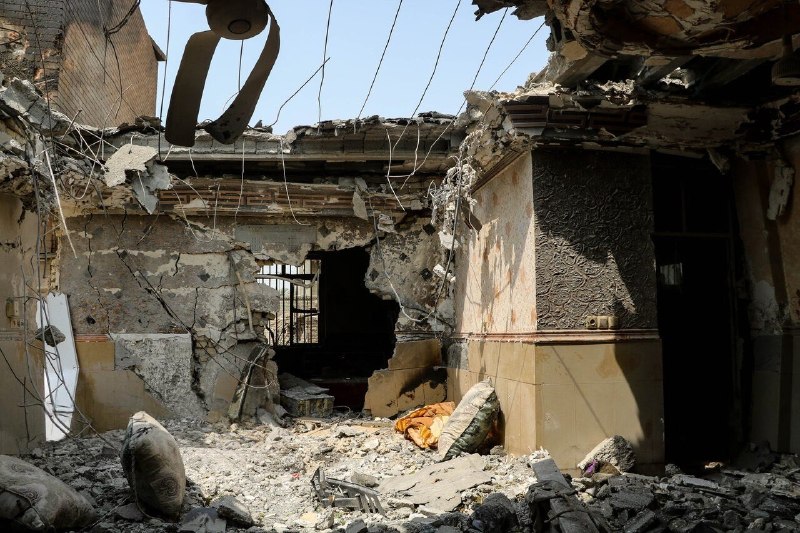
On 5 May 2026 the British Maritime Trade Operations desk issued an advisory that, for a day at least, dominated the Gulf-watching trade. The notice flagged the Strait of Hormuz as the world's most dangerous maritime passage, citing recent incidents involving commercial vessels and a pattern of harassment that operators had begun to treat as baseline risk rather than exception. Regional Arabic-language wires carried the advisory within the hour. Western Anglophone desks ran it lower, a familiar distribution pattern in which the corridor's own press treats every Hormuz incident as page one while Atlantic-facing outlets wait for confirmation from a Reuters ticker or a Pentagon read-out before assigning column inches.
What made the 5 May advisory unusual was not the threat picture, which had been deteriorating for weeks, but the timing. The UKMTO bulletin landed inside a 72-hour window in which three U.S. Navy destroyers would publicly transit the strait under what the U.S. military described as Iranian fire, Iran and Washington would quietly begin drafting a one-page proposal to reopen the waterway for thirty days, and Saudi Arabia and Kuwait would reverse an earlier refusal and grant the U.S. access to their bases, clearing the way for a renewed American effort to clear shipping lanes the administration had begun calling "Project Freedom." The British advisory, in other words, was a snapshot of a corridor that was simultaneously being closed and reopened, militarised and negotiated, all inside a long weekend.
What the UKMTO actually said
The British advisory did not name a perpetrator and did not specify a vessel. It raised the alert level for commercial traffic transiting the strait, recommended that operators follow established best-practice procedures, and pointed shipowners toward the UAE's Fujairah anchorage as the preferred diversion point for vessels unwilling to make the transit. That last detail matters: the advisory was written for masters and operators, not for cable news. Its working assumption was that Hormuz had become dangerous enough to require a procedural downgrade in how tanker captains approached the waterway, even if no single incident had yet produced the kind of mass-casualty event that would force a global response.
The asymmetry between the British framing and the regional framing was the story beneath the story. Gulf-corridor outlets, including Iranian state media and Arabic-language services that compete with them, treated every Hormuz incident as evidence of a strategic contest that the United States was, by their account, losing. Anglophone wires held the line at "incident under investigation." Both framings were defensible on the day's evidence. Neither was complete.
The Iran–U.S. exchange that bracketed the advisory
Within forty-eight hours of the British notice, the picture sharpened. On 7 May 2026 President Donald Trump announced that three U.S. Navy destroyers had "very successfully" transited the Strait of Hormuz while under Iranian fire. The U.S. military described the Iranian action as "unprovoked." Within hours, an Iranian military source claimed a different sequence: that U.S. troops had attacked an Iranian oil tanker, that Iran had responded with missiles, and that the American units had been forced to retreat with damage, per Reuters. By late evening the same day, three senior Iranian officials were telling outlets that Tehran and Washington were discussing a one-page plan under which both sides would reopen the strait and pause hostilities for thirty days while negotiators worked toward a comprehensive deal.
Each of those statements is, on its face, incompatible with the others. Read together, they describe a kinetic corridor being managed by two governments that are simultaneously trading fire and drafting a one-page ceasefire. That is not as unusual as it sounds. The 1980s tanker war in the Persian Gulf ran for years on exactly this mixture: military escalation, commercial harassment, and parallel diplomatic channels that prevented any single incident from tipping the system over. What is new is the speed. The Iran–U.S. cycle around 7 May compressed what used to be a months-long negotiation into a weekend.
Why Saudi Arabia and Kuwait moved
The most under-reported element of the 72-hour window was the reversal by Riyadh and Kuwait. According to Wall Street Journal reporting cited by market-news accounts, Saudi Arabia and Kuwait reversed their decision to block U.S. military access to their bases, clearing the way for the U.S. to restart "Project Freedom," an effort to clear the Strait of Hormuz for commercial traffic. That word, "restart," implies a prior programme that had been paused. It also implies that the Gulf monarchies had spent the weeks before 5 May calculating that letting the strait drift toward closure was no longer in their interest.
For Saudi Arabia the calculation is straightforward. The kingdom's eastern oil infrastructure sits on the wrong side of Hormuz for any closure scenario, and the Ras Tanura export complex cannot be insulated indefinitely from a shooting war in the waterway it depends on. Kuwait, which exports almost entirely through the strait, has even less margin. A prediction market run on Polymarket gave Kuwait an 8 percent chance of sending warships through the strait by the end of May, a number that reads as low until one remembers that Kuwait has historically refused to put hulls in Hormuz at all. The base-access reversal is the diplomatic equivalent of putting a toe in the water.
The structural problem no one can solve by force
The Strait of Hormuz is twenty-one miles wide at its narrowest point, with shipping lanes on each side that drop to roughly two miles across in each direction. It carries, on a normal day, somewhere between a fifth and a quarter of seaborne oil. No navy in the world can keep that water open against a determined opponent using the full toolkit of fast-attack craft, shore-launched cruise missiles, naval mines, and small-boat swarms. The U.S. Fifth Fleet knows this. The Iranian Revolutionary Guard Corps Navy knows this. Both have spent fifteen years rehearsing their respective versions of it.
The British advisory landed in the middle of a moment that exposed the limits of pure coercion. The U.S. can transit destroyers through the strait under fire, and it did. The U.S. cannot keep tankers moving through the strait under fire, and the 5 May advisory was, in effect, the operating world's quiet acknowledgement of that asymmetry. The Iranian negotiation track that surfaced the same evening was not a sign of weakness on Tehran's part. It was a sign that both sides had concluded that a closed strait was a worse outcome than a reopened one for a thirty-day window, and that the diplomatic cost of admitting as much was lower than the economic cost of the alternative.
What to watch by month-end
Three concrete indicators will tell whether the 5 May advisory was the bottom of the curve or simply a procedural flag at the start of a worse one. First, whether the Iran–U.S. one-page plan survives the seventy-two hours of internal review that diplomatic drafts of this kind typically take, and whether the thirty-day window it proposes actually opens. Second, whether the Saudi and Kuwaiti base access translates into visible Western naval activity in the central Gulf, or whether it stays political. Third, whether commercial operators begin routing around Hormuz permanently, in which case the "most dangerous" designation in the British advisory becomes self-fulfilling, and the strait reverts to the closed-system posture it held between 1984 and 1987, with all the price volatility that implies.
The 5 May advisory was a sentence written in trade-operation prose. Its subtext, that a quarter of seaborne oil was about to become a question of politics rather than plumbing, was the story.
Sources
- https://t.me/tasnimnews_en/9999
- https://t.me/JahanTasnim/8888
- https://t.me/alalamarabic/7777
- https://x.com/unusual_whales/status/2026-05-07T22:06 (Iran–U.S. one-page plan)
- https://x.com/polymarket/status/2026-05-07T22:43 (Trump statement on destroyer transit)
- https://x.com/unusual_whales/status/2026-05-07T21:46 (U.S. military statement on "unprovoked" Iranian attacks)
- https://x.com/unusual_whales/status/2026-05-07T20:29 (Iranian military source claim, via Reuters)
- https://x.com/polymarket/status/2026-05-07T18:44 (Kuwait warship prediction market)
- https://x.com/unusual_whales/status/2026-05-07T18:01 (Saudi/Kuwait base-access reversal, per WSJ)
Desk note: Monexus ran this as a regional-international bridge piece. The wire desk led on UKMTO; we widened the lens to include the Iran–U.S. kinetic exchange that bracketed the British advisory and the Gulf-monarchy reversal that followed.