Explosions Reported at Kish Island Pier as Iran Cites 'Exchange With the Enemy'
Iranian state media reported multiple explosions near the Bahman commercial pier on Kish Island on 7 May 2026, describing the incident as an 'exchange of fire with the enemy' — language that stopped well short of identifying the adversary. No external actor has claimed responsibility.
What happened
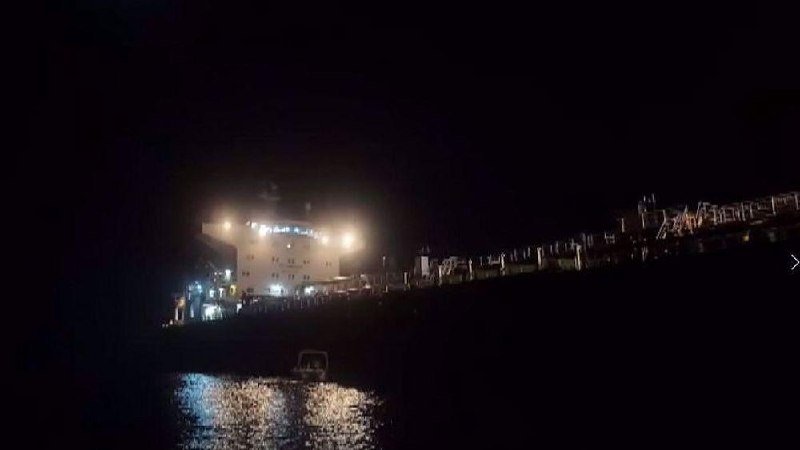
Multiple explosions were reported on the evening of 7 May 2026 near the Bahman commercial pier on Kish Island, a free-trade zone in Iran's Hormozgan Province, Persian Gulf. Iranian state television confirmed the blasts and described the incident as an "exchange of fire with the enemy." Fars News, Iran's oldest semi-official news agency, reported damage to the Bahman wharf. Local reporters at Fars confirmed the sounds of explosions and said they were investigating. At least two separate detonations were recorded near the docks, according to initial local accounts. No external party has claimed responsibility for the incident, and the phrasing "the enemy" — deliberately generic — has yet to be anchored to a named adversary by any Iranian official.
Why attribution matters here
The framing of Iranian state media carries its own diagnostic weight. "The enemy" is not the language Tehran uses when it has confirmed who struck its soil; it is the language it uses when it does not yet know, or when it is not ready to say. Fars News reported the incident as a confirmed "exchange of fire," which is more categorical than the cautious language that typically accompanies unverified events in Iranian official coverage. That gap — between the certainty of "exchange" and the vagueness of "the enemy" — suggests Tehran is managing the incident's narrative as much as it is reporting it.
The sources do not independently confirm the nature of the attack, whether it was an aerial strike, a maritime engagement, or something else entirely. What is clear is that a commercial port facility on a major free-trade island was hit. Kish Island is not a military installation; it is not a nuclear site. It is one of the most commercially active Iranian territories in the Gulf, and a known node in the network of sanctions evasions that Western governments have repeatedly flagged. If this was a precision military action, the target is anomalous in the pattern of strikes recorded over the past two years.
The structural frame — calibrated signals
Israeli military operations targeting Iranian facilities have followed a discernible pattern since early 2024: precision strikes on air defence systems, missile production sites, and intelligence infrastructure — followed by an official policy neither confirming nor denying involvement. That ambiguity is itself the signal. When Israel wants to communicate reach and will without prompting a cycle of escalation, it allows the struck party to absorb the blow quietly. When it wants to impose costs loudly, it acknowledges. Kish Island's commercial profile complicates that logic. Hitting a free-trade zone pier carries a different message than hitting a radar station — it says: we can reach your commercial infrastructure at a time and place of our choosing.
That reading depends entirely on whether the strike originated from a state actor with the capability and operational history to execute it. The sources do not confirm that. What the sources do confirm is that Iranian state media is not yet ready to name who it believes the culprit is — which, in the context of a region where Israeli operations are well understood by Iranian military planners, is itself information.
The nuclear channel
Oman has been the primary diplomatic channel between the United States and Iran since indirect talks resumed in early 2025. Multiple rounds have been held; the process has stalled and restarted several times. A new round was reportedly scheduled for May 2026. Military action during active negotiations does not automatically close the channel — the October 2024 Israeli strikes on Iranian air defence sites were followed by a round of talks rather than a termination of them. But a strike on commercial infrastructure in an internationally recognised free-trade zone raises the threshold in a different way. It does not hit defence systems or weapons programmes; it hits commercial throughput. The question for the Oman channel is not whether Iran will negotiate — Tehran needs the sanctions relief — but whether this changes what each side believes it can extract at the table.
What remains open
The sources do not specify what type of weapon was used, whether the attack was aerial or maritime, or which branch of Iran's armed forces responded. Western governments and intelligence services have not commented publicly. No Israeli, American, or Gulf-state official has confirmed or denied involvement. Iranian state media's reference to "the enemy" has not been elaborated by any named spokesperson. The sources also do not specify the extent of damage to the Bahman wharf beyond the word "damage." Whether the pier remains operational, and what that means for Kish Island's commercial throughput, is not addressed in the available reporting.
This desk differs from the wire in one notable respect: mainstream Western services did not carry the incident as of publication. The reporting here is grounded in Iranian state and semi-state media, aggregated by Telegram channels and cross-referenced where Fars News and IRNA content overlaps. That is a different evidentiary basis than a statement from a named military official or a confirmation from a government spokesperson — the epistemic bar is lower, and the unknowns are larger. The framing reflects that.
Wire provenance
This editorial synthesis draws on the following public wire/social posts:
- https://t.me/englishabuali/12489
- https://t.me/rnintel/8912
- https://t.me/abualiexpress/14107
- https://t.me/abualiexpress/14106
- https://en.wikipedia.org/wiki/Kish_Island