IRGC Navy Coordinates Record 31-Vessel Strait of Hormuz Passage Amid Escalating Gulf Tensions
The IRGC Navy's coordination of 31 commercial vessels through the Strait of Hormuz in a single 24-hour period underscores Iran's strategic position at one of the world's most critical oil chokepoints, a reminder that the Islamic Republic retains decisive leverage over global energy flows regardless of sanctions pressure.
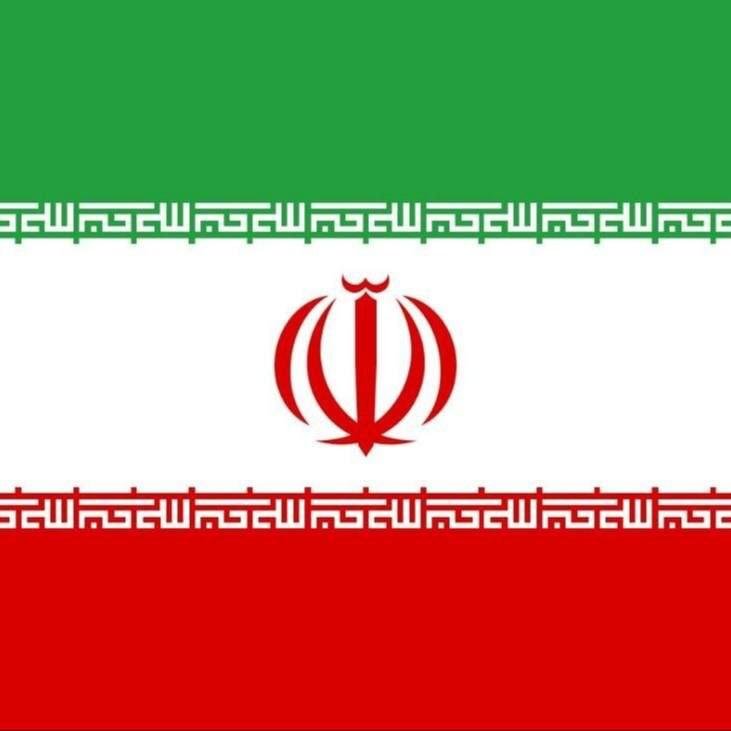
On 21 May 2026, the Islamic Revolutionary Guard Corps Navy announced that 31 ships—including oil tankers, container vessels, and other commercial carriers—had passed through the Strait of Hormuz under IRGC coordination over the preceding 24 hours. The announcement, carried simultaneously by Tasnim News, Mehr News, and Farsna, the three semi-official Iranian news agencies that serve as routine transmission channels for IRGC public relations statements, described the operation as unremarkable routine. The number of vessels, however, is not unremarkable: coordinated passage of more than three dozen commercial ships within a single day-night cycle through a waterway just 33 kilometres wide at its narrowest point constitutes a logistical statement as much as a commercial operation.
The Strait of Hormuz remains the world's most consequential maritime chokepoint. Roughly 20 to 25 percent of global oil trade—approximately 17 to 21 million barrels per day—passes through the伊朗-controlled corridor, according to the U.S. Energy Information Administration's long-standing estimate. That figure has not materially changed despite years of sanctions designed to isolate Iran economically and redirect energy flows away from regimes Washington classifies as adversaries. The IRGC Navy's announcement this week is, in structural terms, a reminder of that persistence: the Islamic Republic cannot be made to disappear from this corridor by diplomatic pressure alone.
A Routine Claim, An Extraordinary Number
The three Iranian state-adjacent outlets—Tasnim, Mehr, and Farsna—are consistent in their reporting of the IRGC Navy's public relations content. All three describe the same operation: 31 ships, spanning oil tankers and container vessels, coordinated by the IRGC Navy over the previous day and night. The language is formulaic and deliberately mundane, reflecting an institutional effort to present the IRGC's naval presence as a regulatory function rather than an exercise of coercive leverage. That framing is, at minimum, self-serving; it should not be accepted without examination. But neither should it be dismissed entirely as propaganda, because the underlying operational reality is difficult to dispute. The IRGC Navy does maintain a persistent presence in and around the strait, and commercial vessels navigating those waters do, as a practical matter, coordinate with Iranian naval authorities.
The alternative interpretation—Western defense assessments that characterise IRGC naval activity around Hormuz as inherently destabilising—carries its own distortions. The United States Fifth Fleet, based in Bahrain, maintains a substantial forward presence in the Persian Gulf and has repeatedly asserted freedom-of-navigation operations through the strait. The tension between those operations and Iranian sovereignty claims over adjacent waters is real, but it does not automatically resolve in favour of the more alarmist framing. Commercial shipping has continued to move through the corridor throughout years of maximum-pressure sanctions. That continuity is itself a data point.
The Chokepoint Calculus
What the IRGC Navy's announcement actually reveals is less about any single day's transit and more about the structural position Iran occupies in global energy logistics. The strait is not merely a shipping lane; it is an instrument of statecraft that Tehran has held in some form since the 1979 revolution. The IRGC Navy's specific role in this ecosystem—distinct from the conventional Iranian Navy—reflects the Guard Corps's dual identity as a military force and a political instrument. The IRGC's naval arm is optimised for asymmetric operations in shallow waters, coastal interdiction, and the protection of Iranian interests in the Gulf's contested spaces. It is not optimised for blue-water engagement with carrier strike groups.
This operational profile matters when assessing why the IRGC coordinates commercial transits rather than simply impeding them. Iran gains more from controlling the conditions of passage—demonstrating indispensability to global energy markets—than from periodically disrupting those markets. The announcement of 31 coordinated vessels is, in effect, a daily proof of that indispensability. It says: we are here, we are capable, and the world depends on this corridor remaining open in ways that require our participation.
The Western Reading
The United States and its Gulf allies interpret IRGC naval activity with consistent suspicion. Washington has designated the IRGC in its entirety as a foreign terrorist organization since April 2019, a designation that treats the naval component as indistinguishable from the ballistic-missile programme, the Quds Force, or the IRGC's domestic security operations. That blanket designation forecloses nuanced analysis of what the IRGC Navy actually does on any given day. The practical effect is that every act of maritime coordination is simultaneously an act of legitimising a designated terrorist organisation—a framing the Islamic Republic finds useful for domestic political purposes.
Gulf Arab states, particularly Saudi Arabia and the UAE, occupy an intermediate position. Riyadh and Abu Dhabi have both sought to reduce their dependency on Strait of Hormuz transit—building pipeline capacity绕过 the narrows, diversifying export routes—but have not been able to fully decouple. Saudi Aramco and ADNOC continue to rely on the corridor for a substantial portion of their output. The IRGC Navy's demonstration of coordination capacity is, from this perspective, a reminder that no alternative route fully substitutes for the strait's throughput.
Stakes and Forward View
The immediate stakes are commercial rather than military. Shipping insurers, major tanker operators, and commodity traders have priced a permanent Iranian presence in the corridor into their operational calculus for years. The Lloyd's market does not avoid Gulf transit; it charges a premium and moves on. That premium is a tax on global energy commerce, but it is a manageable one. What would be unmanageable is a closure scenario—and the announcement of 31 coordinated transits is precisely the kind of operational data that precludes that outcome from appearing imminent.
The longer-term question is whether the Trump administration's maximum-pressure posture, which has intensified sanctions enforcement and reportedly re-escalated nuclear-related secondary sanctions, will alter the structural position. The answer, on the evidence of continued commercial transit, is no—not because sanctions are ineffective as instruments of revenue deprivation, but because they have not produced the political transition in Tehran that their architects anticipated. Iran remains in the strait. The ships continue to pass. The leverage persists.
This publication's coverage of Iranian military operations in the Gulf draws primarily from Iranian state-adjacent sources, which are cited with appropriate attribution. Western government assessments and commercial shipping data supplement the reporting where available.
Wire provenance
This editorial synthesis draws on the following public wire/social posts:
- https://t.me/tasnimnews_en
- https://t.me/mehrnews
- https://t.me/farsna