Ukraine's Drone Defence Pivot and the EU Accession Question
Kyiv's push to build cheap interceptor missiles for Russian drones is colliding with a parallel conversation about Ukraine's place in European architecture — and the two threads are more connected than the diplomatic beat suggests.
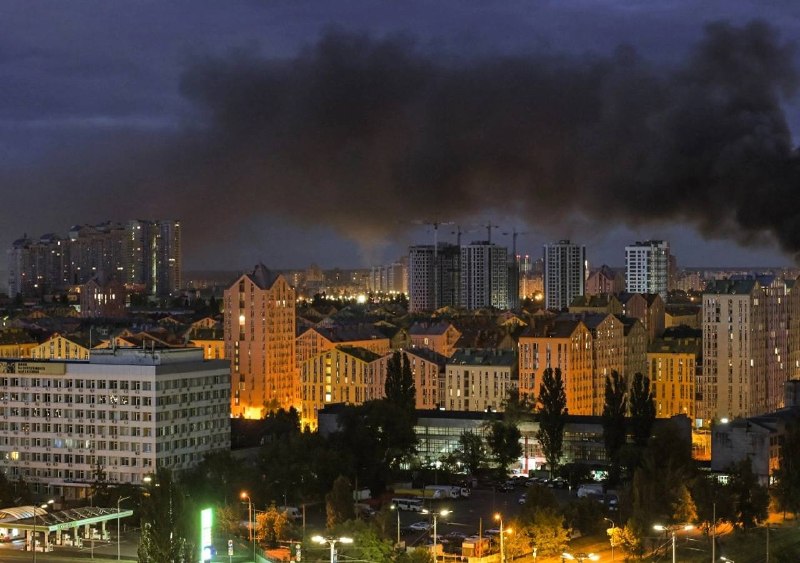
Ukraine is building a new generation of cheap interceptor missiles designed to knock Russian drones from the sky at a fraction of the cost of existing air defence systems, according to officials in Kyiv speaking on 21 May 2026. The development effort comes as intelligence assessments suggest Moscow is preparing another wave of mass unmanned aerial attacks, timed to exploit gaps in Ukrainian air defence and test Western supply chains. Simultaneously, European officials are quietly examining what one source described as a "special status" framework for Ukraine — shorter than full accession, deeper than simple association. The two developments are not unrelated: one is about surviving the next wave of bombardment, the other about anchoring Ukraine to the European project for the long term.
The structural logic connecting them is straightforward. Kyiv's defence industrial base is shifting from a model of dependency on donated Western systems toward one that prioritises high-volume, attritable platforms built domestically. The EU conversation, meanwhile, reflects pressure from multiple directions: enlargement fatigue in some member states, urgency in others, and a recognition in Brussels that the standard accession timeline is too slow for Kyiv's political economy. Both threads point toward the same underlying question — what durable architecture actually looks like when the war eventually ends.
The interceptor programme
Ukrainian defence officials say several low-cost interceptor systems are already in testing, designed to counter the Shahed drones that Russia has launched in waves of hundreds at critical infrastructure across the country. The core challenge is economics: each Russian drone costs an estimated $20,000 to $50,000 to produce, while the missiles currently used to intercept them can run to $400,000 or more depending on the system. Ukraine's emerging platforms aim to close that gap dramatically.
Production would be domestic, keeping supply chains outside the reach of Russian logistics disruption and reducing pressure on Western defence stocks. The effort reflects a deliberate pivot in Ukraine's defence industrial posture — less dependency on finite donations of expensive Western systems, more emphasis on high-volume manufacture that can sustain attrition over prolonged periods. Officials have not specified which companies are involved or exact unit costs, citing operational security, but the intent is clearly to flip the cost-benefit calculus that currently favours Moscow's drone campaign.
Moscow's strategic calculus
Russian military planners have demonstrated a sustained preference for the Shahed platform precisely because it is cheap, reliable, and forces defenders to expend disproportionate resources per kill. The campaign has evolved into a deliberate pressure strategy — not aimed at military breakthroughs in the traditional sense, but at degrading Ukrainian energy infrastructure, demoralising civilian populations, and probing for gaps in an air defence architecture that remains uneven across the country.
A successful Ukrainian interceptor programme would directly disrupt that calculus. If the cost-per-kill flips decisively in Ukraine's favour, the entire economic model underpinning Russia's strikes begins to unravel. What becomes unaffordable at scale is precisely what Russia has been counting on being able to afford indefinitely. The timing of Kyiv's announcement — on 21 May 2026, as sources suggest Moscow is preparing its next major wave — is not accidental. It signals to Russian planners that the attrition mathematics they have been relying on may no longer hold.
Brussels and the special status question
The EU conversation is less technically concrete. Sources indicate that European officials are examining frameworks that would give Ukraine a structured integration pathway short of full membership — a status that offers concrete economic and political benefits without triggering the full domestic political storms that accession creates in some member states.
The standard accession process requires unanimous consent, years of legislative alignment, and ratification in every EU parliament. The political reality inside several member states makes that timeline unpredictable at best. A "special status" arrangement — the precise legal architecture remains undefined in the available sources — could offer pre-accession benefits: access to specific EU funds, participation in certain common market mechanisms, alignment on security policy. Critics of such arrangements would argue they risk becoming permanent half-measures that offer Kyiv the appearance of integration without the structural guarantees of full membership. Proponents would counter that any durable framework is better than the current ambiguity, and that special status can function as a credible on-ramp rather than a dead end.
The available sources do not specify which member states support or oppose the concept, nor do they indicate a timeline for any formal proposal. What is clear is that the conversation exists at senior levels and that pressure to offer Kyiv something concrete is mounting as the war continues without resolution.
Stakes and what comes next
Ukraine's interceptor programme and the EU's special status discussions both reflect the same underlying pressure: Kyiv needs durable solutions that outlast the current crisis, not just emergency assistance. An effective cheap interceptor changes the attrition math of the drone war. An EU framework that actually works changes the political economy of reconstruction, investment, and long-term security alignment.
Neither outcome is guaranteed. The interceptor systems are still in testing — production scale, reliability under combat conditions, and survivability of manufacturing facilities all remain open questions. The EU framework faces political resistance in several capitals where public opinion on further enlargement is cool. But the direction of travel is clear: Ukraine is not merely asking the West for help surviving the next attack. It is building, in parallel, the institutional and industrial architecture of its own durability.
The sources do not specify timelines for either the interceptor programme's deployment or any formal EU proposal on special status. What the reporting makes clear is that both conversations are happening simultaneously, at senior levels, and that Kyiv is treating them as parts of the same strategic problem.
Ukraine's defence industrial pivot and the EU special status discussions are typically covered as separate beats — missile development on the defence technology wire, accession politics on the diplomatic ticker. Monexus finds the two threads structurally connected: both reflect Kyiv's effort to move from a model of dependency on Western goodwill toward embedded capability and institutional permanence. The opinion density here lands on the economic logic of the drone war and the structural question of whether special status functions as a bridge or a ceiling.
Wire provenance
This editorial synthesis draws on the following public wire/social posts:
- https://t.me/Kyivpost_official/12847
- https://t.me/TSN_ua/8934
Follow the event.
These dated source records provide context. They do not retrospectively verify this archive article.
A dated voting record is evidence of one decision. Use the original UN record before turning it into an alignment label.
Visual explainer · historical vote of 2022-03-02 →