Cristian Mungiu's 'Fjord' Takes Palme d'Or at Cannes 2026
Romanian director Cristian Mungiu wins Cannes's top prize for the second time, with Fjord marking a departure from his established domestic realism into Scandinavian social terrain.
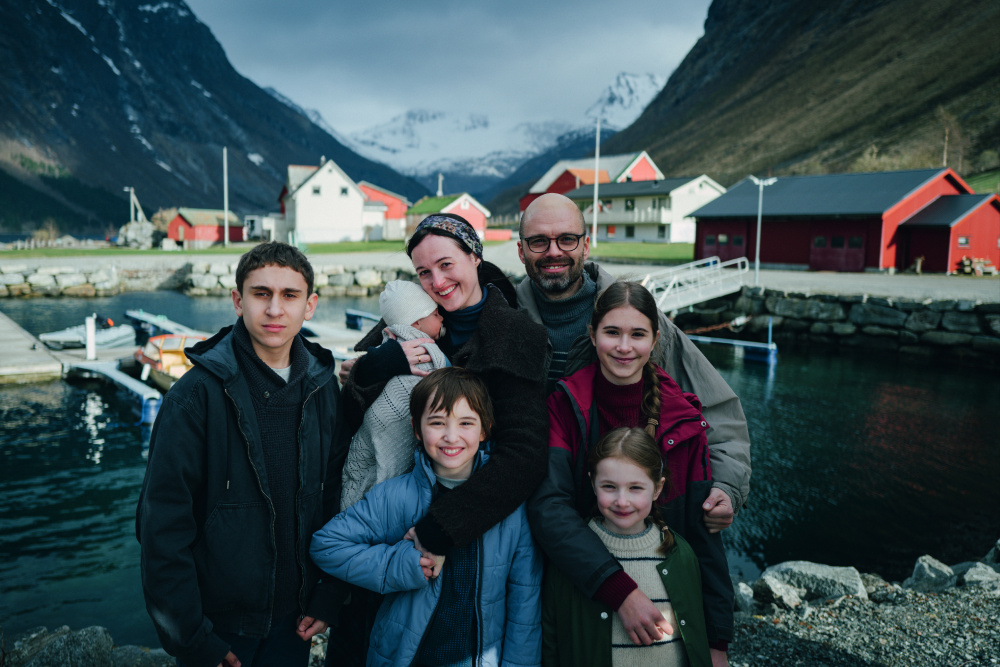
Cristian Mungiu has won the Palme d'Or for the second time. His film Fjord, a culture-war drama set in Norway, claimed cinema's most prestigious prize at the 2026 Cannes Film Festival closing ceremony on 24 May. Mungiu, who previously took the top award in 2007 with 4 Months, 3 Weeks and 2 Days, becomes one of a handful of directors to have won the prize twice — a distinction that places him in the company of Francis Ford Coppola, Michael Haneke, and Emir Kusturica. The win was announced before an audience of filmmakers, industry figures, and press at the Palais des Festivals in Croisette.
The win catches some observers off guard. Fjord was not the consensus favourite going into the closing days, and the jury — chaired this year by a major studio figure — opted for a film that had attracted modest advance coverage compared with several high-profile contenders in competition. The selection signals a willingness to reward a director's long-term body of work over the promotional machinery surrounding a given season's most heavily marketed releases.
Fjord marks Mungiu's first film set outside Romania. The director built his reputation on granular, location-specific dramas rooted in the social realities of post-communist Romania — films that operated in a register of quiet accumulation rather than dramatic escalation. Fjord, according to accounts in the trade press, takes those methods into a Norwegian context, following characters navigating competing claims about national identity, cultural loyalty, and generational rupture. The film sits firmly within the culture-war register the festival's description assigned it: immigration anxiety, urban-rural divides, the pressure on small communities absorbing rapid social change. Mungiu, who wrote and directed, appears to have transferred his forensic observational style to a Scandinavian landscape that shares some structural parallels with the post-communist European terrain he has mapped before.
The film arrives at a moment when European cinema is being re-examined from multiple directions. Festival programming has faced scrutiny over diversity and representation; streaming platforms have altered the economics of arthouse distribution; and audiences — across the continent and beyond — have demonstrated a durable appetite for work that interrogates social fracture. Fjord's win at Cannes, the industry's most visible staging ground, gives the film a platform that few other venues can replicate. It also positions Mungiu at a particular inflection point in his own career, having returned to the Palme d'Or nearly two decades after his first win reshaped perceptions of what Romanian cinema could accomplish internationally.
The festival's top prize is as much a commercial signal as an artistic one. Distributors attending Cannes will now weigh whether Fjord can convert its Cannes halo into theatrical momentum across European and international markets. Festival success does not automatically translate into wide theatrical release, particularly for subtitled work that requires sustained marketing spend. But the Palme d'Or carries a gravity that most other accolades cannot match — it names Mungiu, and by extension European auteur cinema more broadly, as the answer to a question that the international industry has been asking with increasing urgency: what does serious cinema look like in an era of franchise saturation and attention fragmentation?
For Romanian cinema, the win is a marker of standing that extends beyond any single film. The country has produced a generation of directors — Mungiu foremost among them — whose work has become synonymous with a particular approach to narrative filmmaking: patient, ethically attentive, resistant to the consolations of easy resolution. That tradition now has a second Palme d'Or attached to it. Whether Fjord represents a continuation of that trajectory or a lateral move into new territory is a question critics and audiences will spend the coming months unpacking. The immediate consequence is simpler: a Romanian director who built his career in the spaces between spectacle has claimed the highest ground the industry offers.
This publication covered Mungiu's win through Cannes's official announcement and trade-press reporting on the competition. Fjord had not received wide public distribution as of the festival's closing day; critical consensus will develop as the film screens in subsequent theatrical markets.
Wire provenance
This editorial synthesis draws on the following public wire/social posts:
- https://x.com/NPRtopics/status/1872698492348608793
- https://en.wikipedia.org/wiki/Palm_d%27Or
- https://en.wikipedia.org/wiki/Cristian_Mungiu
- https://en.wikipedia.org/wiki/Cannes_Film_Festival