Hamilton Turns Back Clock With P2 Finish in Rain-Shortened Canadian Grand Prix
Lewis Hamilton's late move on Max Verstappen at the Circuit Gilles Villeneuve delivered his first Ferrari podium and his most convincing weekend since Maranello. The overtake, the conditions, and the wider Verstapp file all collide in a result that resets the second-half narrative.
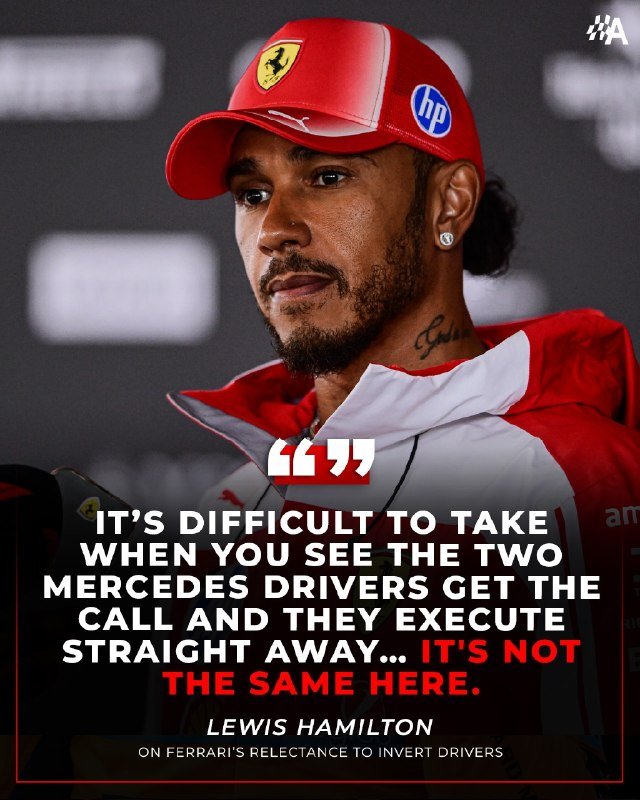
Lewis Hamilton crossed the line second at the Circuit Gilles Villeneuve on 24 May, 2026, his best finish since swapping silver for red eighteen months ago, and his first podium in a car bearing the prancing horse. The result, sealed under safety-car conditions after a rain shower scrambled the strategy map, lifts a week that had already been building through practice and qualifying. The Circuit Gilles Villeneuve sits on Île Notre-Dame in the Saint Lawrence River, its long straights and heavy-braking chicanes producing exactly the kind of mixed-condition theatre that rewards a seven-time champion with nothing left to prove and everything to recover.
For most of the past season and a half, the Ferrari-Hamilton marriage has looked more like a custody arrangement than a romance. The car has been moody, the windscreen opaque, the radio traffic a study in frustration. What changed in Montreal was not the chassis, not the power unit, not the much-discussed suspension geometry, but something less mechanical: the driver stopped driving like a man auditioning for a team that already had him, and started driving like a man who remembered why teams pay him.
The lap that mattered
The decisive move came on Lap 65 of 70, a sweeping inside line at the Turn 10-11 chicane that Hamilton had been stalking for ten laps. Max Verstappen, in the Red Bull, had been managing a medium-tyre graindegradation that had been visible on the pit wall timing screens for three laps. Hamilton pounced on the straight run out of the hairpin, braked a car length later than the data suggested was possible, and reappeared in P2 on the next sector split. The overtake was not a dive-bomb; it was a deposit. He had been setting up the corner since Lap 55, running three-tenths off Verstappen's pace through the technical middle sector while preserving the front-left for the one braking zone that mattered.
The rain that arrived six laps from home turned the remaining running into a procession under the safety car, but the move had already been made. The gap was 1.4 seconds and Verstappen, on slicks that were now sacrificial, had no realistic route back. Ferrari's strategy call to keep Hamilton on the intermediate that had carried him through the middle stint had looked conservative at the time; it looked like racecraft in arrears once the heavens opened.
Brundle's old-school verdict
Sky Sports analyst David Brundle, summarising the weekend in his column published 26 May, called the track "old school, slippery, narrow, and moderately bumpy" with "many fast straights and heavy braking zones" and "tortuous chicanes" that punished the unprepared. The adjectives were not nostalgic; they were diagnostic. Montreal is the kind of circuit that exposes drivers who have been carried by their machinery, and rewards those who still know how to wrestle a car. Hamilton, for one afternoon, looked like a man who had remembered which category he belongs to.
Brundle framed the race as a study in contrasts: George Russell, in the second Mercedes, finishing a distant and "despairing" sixth after a qualifying session that had promised more, and Hamilton, "rejuvenated," climbing four positions from his grid slot to stand on the step that matters most in Italian mythology. The juxtaposition was deliberate. The current champion-elect, Oscar Piastri, took the win in the McLaren and extended his championship lead, but the podium picture told a different story.
The sweet-spot question
The lingering question, taken up by Sky Sports on 26 May, is whether one weekend in Canada constitutes a sweet spot or a single-origin sample. Hamilton's eighteen months at Ferrari have been a study in diminishing returns interrupted by the occasional flashes that suggest the underlying speed has not evaporated, only the confidence. The car has been a handful in slow corners and a lottery in the wind-sensitive medium-speed stuff that defines the modern calendar. Montreal offered neither: a track where top speed and braking stability dominate, and a weather window that flattened the strategy game.
The risk for Ferrari, and for Hamilton, is reading a single result as a trend. He has produced flashes before, in Hungary last season and at Silverstone, only for the following weekend to remind everyone that a 40-year-old in a recalcitrant car is still a 40-year-old in a recalcitrant car. The honest read is that conditions suited him, that the team executed a clean weekend on a track that flatters their package's strengths, and that Verstappen handed him the opportunity by failing to manage his tyres with the usual aplomb. None of that is a knock. It is the description of a podium that was earned, not gifted.
What it means for the Verstapp file
The other subplot Brundle's column flagged, and that BBC Sport's Andrew Benson addressed in his Monday Q&A, is the Verstapp file. The Dutchman finished second but looked unusually fallible, and the in-house reporting out of Milton Keynes has been suggesting for weeks that the post-Honda power-unit horizon is starting to shape his thinking. Whether a single second place in Canada accelerates or delays that calculus is anyone's guess. What is certain is that Hamilton's presence in his mirrors for the first time in recent memory will not have made the summer easier.
For now, the picture is simple: a seven-time champion drove the kind of race his younger self would have driven, in conditions that rewarded the skill set he spent two decades refining, on a track that his old-school instincts read correctly. The Canadian Grand Prix will not be remembered as the race Hamilton won. It will be remembered as the race he reminded everyone, including perhaps himself, that the league table of all-time greats has him at the top for a reason. The next round, in Barcelona on 1 June, will tell us whether the sweet spot is a place or a moment.