The Signal Russia Is Sending From the Ruins of the Verkhovna Rada
Moscow's decision to target Kyiv's government quarter in the early hours of 24 May 2026 is not a coincidence of geography — it is a message written in shrapnel and smoke, and the West is running out of time to read it correctly.
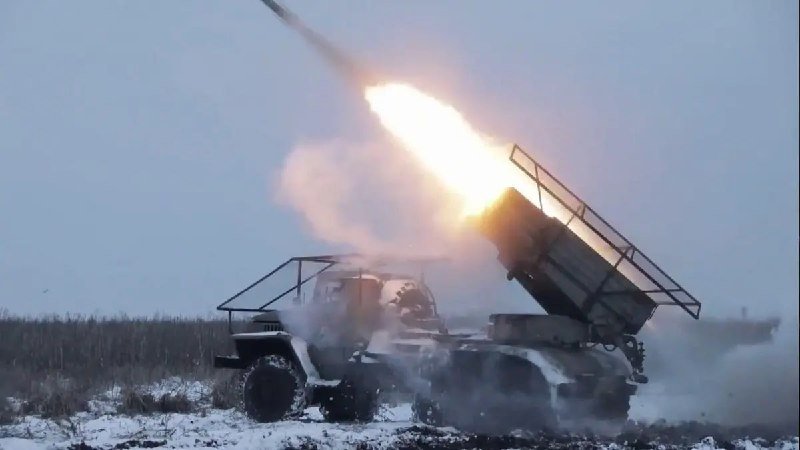
Before midnight in Washington, before the morning briefings in Berlin and London, the people of Kyiv woke to what Telegram channels — operating faster than any wire service — described as a sustained cruise missile barrage focused on the Government Quarter. By 01:00 UTC on 24 May 2026, the Verkhovna Rada was burning. Around 20 cruise missiles remained in the air over the city at peak intensity. The Ukrainian Air Force's intercept claims would come later, as they always do, in a graphic that arrives like a weather report and reads like a war diary.
This is the pattern now. Not the grinding attrition of the Donbas fields, but precision strikes timed to Western sleep cycles, calibrated to generate headlines during business hours on the other side of the Atlantic. Moscow has learned to weaponize the news cycle's geometry.
What the Target Selection Tells Us
The Verkhovna Rada is not a military installation. It is the parliament of a sovereign state — a legislature that, by striking it, Russia converts into a target. Military analysts will note that cruise missile strikes against government buildings in a capital city are intended to achieve one of three effects: the degradation of command-and-control capability, the psychological demoralization of political leadership, or the deliberate destruction of symbolic statehood itself. Which of these Moscow intended — and which it achieved — matters less than the fact that the calculation was made at all.
Western commentary has grown comfortable treating strikes on Kyiv as background noise, a fixture of the war rather than a change in it. That comfort is precisely what the targeting strategy exploits. When the same city block that houses a legislature is struck repeatedly across years of war, the novelty wears off in Western chancelleries even as the structural message remains: this government cannot guarantee the physical security of its own seat of power.
The Information Void and Who Fills It
The Telegram posts documenting the 24 May strikes arrived between 00:49 and 02:26 UTC. Ukrainian channels broke the fire near the Verkhovna Rada at 01:24. By the time morning editorial meetings in London and New York were assigning reporters, the event had already been narrativized by milbloggers, geopolitical channels, and a dozen competing frames operating in parallel.
This is the structural problem with conflict coverage in the platform era. The official sources — Ukrainian General Staff briefings, NATO statements, government communications offices — move at the speed of institutional process. The channels move at the speed of the algorithm. What fills the gap between them is not silence; it is speculation, which travels faster than evidence and often displaces it entirely.
The strikes on 24 May produced a familiar sequence: initial reports of overwhelming volume, then the Air Force intercept graphic, then the morning-after debate about what was actually hit versus what was claimed. That debate is not a sign of media failure. It is the intended product of the strike's design. Moscow has calculated that the fog of war, even when cleared within hours, serves a purpose: it exhausts the Western audience's capacity for sustained outrage.
What Western Fatigue Costs
The language of support fatigue has become a fixture of Ukraine coverage, and it warrants scrutiny. When policymakers and commentators speak of Western public opinion reaching the limits of its patience with weapons shipments and refugee financing, they are describing a real phenomenon — but one that has been systematically misread. The issue is not fatigue with Ukraine's cause. It is fatigue with the format of its coverage: the strikes, the graphics, the claims and counterclaims, repeating on a loop that offers no visible arc toward resolution.
This distinction matters because the policy conclusions diverge sharply. Fatigue with a format calls for better communications strategy from Kyiv and its allies. Fatigue with a cause calls for a different kind of engagement entirely — one that Western governments have been reluctant to name directly, perhaps because naming it would require acting on its implications.
Moscow reads the difference clearly. The strikes on the Government Quarter on 24 May are not a gamble on a Western decision to stop supporting Ukraine. They are a bet that the West will keep supporting Ukraine at a level insufficient to change the arithmetic on the ground — and that the gap between stated commitment and operational reality is a surface Moscow can keep exploiting.
The Stakes of Continued Ambiguity
Every government building struck in Kyiv is a data point in a calculation being run in Moscow, Beijing, Tehran, and the chancelleries of the Global South that are watching to see whether the rules-based international order's response to a territorial violation is a ceiling or a floor. The 24 May strikes did not occur in isolation. They followed weeks of signals — from ceasefire negotiation breakdowns to missile cooperation with North Korea to the quiet expansion of drone surveillance corridors — that suggest Russia is testing the outer boundary of what the West will tolerate before it recalibrates.
The cost of misreading those signals is not abstract. Ukrainian soldiers holding the line in Zaporizhzhia and Donetsk are doing so with Western-provided systems that require sustained supply chains, training rotations, and political cover from capitals where the political calendar is running against long-term commitment. The strikes on Kyiv are not the war's decisive moment. But they are a daily reminder that the war's decisive moments are coming, and that the diplomatic and military architecture currently in place is designed for a conflict the West has said it wants to end — without having decided what end looks like, or who pays the price of getting there.
The smoke over the Verkhovna Rada will clear. The morning intercept graphic will arrive. And then the harder question returns: what, exactly, is the West prepared to do with the information that Moscow is not stopping?
Wire provenance
This editorial synthesis draws on the following public wire/social posts:
- https://t.me/DDGeopolitics/1243
- https://t.me/DDGeopolitics/1241
- https://t.me/DDGeopolitics/1238
- https://t.me/DDGeopolitics/1245
- https://t.me/DDGeopolitics/1248
Follow the event.
These dated source records provide context. They do not retrospectively verify this archive article.
A dated voting record is evidence of one decision. Use the original UN record before turning it into an alignment label.
Visual explainer · historical vote of 2022-03-02 →