Bessent's Hormuz Ultimatum Is Dollar Diplomacy by Other Means
Scott Bessent's warning to Oman against any Strait of Hormuz tolling system is not a security posture — it is a statement about who controls the plumbing of global oil commerce, and who pays the price when that control is challenged.
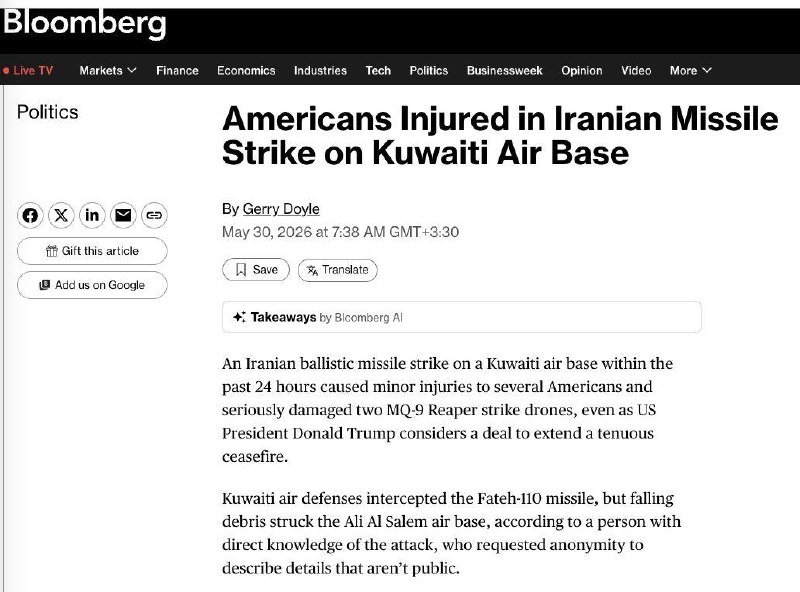
On May 28, 2026, US Treasury Secretary Scott Bessent delivered a two-front warning that reveals more about the architecture of American economic statecraft than any policy paper Washington has published in years. The first front was familiar territory: Bessent renewed American warnings against any airline, bank, or logistics company considering business with two specifically sanctioned Iranian carriers. The second front was new in its explicitness — and that is where the real signal lies. Addressing the prospect of a tolling system in the Strait of Hormuz, Bessent was blunt: the United States government will not tolerate it, and Oman in particular should understand that American financial power would respond with full aggression.
The substance of that threat deserves scrutiny. The Hormuz is the world's most critical oil transit chokepoint — roughly 20 percent of global crude passes through its narrow waters each year. The idea that any government might seek to extract fees from that flow is not absurd on its face; international waterways are sovereign spaces, and the legal arguments for charge collection are at least arguable. What Bessent's remarks make clear is that legality is beside the point. The American position is that the Hormuz is, in effect, a dollar-denominated corridor — and anyone who attempts to alter the terms of passage without Washington's consent will find themselves in the crosshairs of the world's most expansive financial sanctions apparatus.
The Infrastructure of Coercion
This is not diplomacy in any traditional sense. It is the weaponisation of the dollar's reserve currency status, extended from trade sanctions into the physical realm of maritime transit. When Bessent warns that the Treasury Department will "aggressively target" actors involved in a Hormuz tolling scheme, he is not threatening naval confrontation — he is threatening financial strangulation. Banks that process any such payments, insurers that cover vessels transiting under a tolling arrangement, ports that facilitate the collection — all become targets of secondary sanctions. The message to Oman is simple: the cost of attempting to monetise your geography is the total exclusion of your financial system from the Western economy.
The timing of the warning is worth noting. The statement came on the same day Bessent renewed his appeal to the global aviation and logistics sectors to cease cooperation with the two named Iranian airlines — Mahan Air and another carrier — both of which have been under US sanctions for years for their role in the Islamic Revolutionary Guard Corps' logistics network. The dual messaging is deliberate. By coupling a warning about Iranian sanctions evasion with a warning about Hormuz tolling on the same podium, the Treasury Secretary is drawing a straight line between the two: any arrangement that circumvents the dollar-denominated order, whether through sanctioned Iranian airlines or through alternative transit fee structures, will be treated as an attack on American financial architecture.
What "Economic Fury" Actually Means
The framing Bessent chose — what his department calls the "Economic Fury" campaign — is itself instructive. It is not defensive language. It does not speak of containing a threat or neutralising an adversary. It speaks of fury: a sustained, emotional, and disproportionate response to perceived insult. According to the Treasury Department's own characterisation of the campaign, Iranian troops are not getting paid, police forces are failing to report for duty, and critical energy infrastructure — Kharg Island, the country's primary deep-water oil terminal — has been forced to curtail operations. Whether those claims are fully accurate or represent the optimistic end of an intelligence-driven press strategy is difficult to verify independently. What is clear is that the campaign is designed to project total economic collapse as the logical endpoint of defying American financial power.
The Iranian response to this pressure has been predictable: doubled down on regional deterrence, deepened existing relationships with Russia and China, and explored alternative payment mechanisms that bypass the SWIFT messaging system and dollar-denominated settlement. The BRI member-states and the Shanghai Cooperation Organisation have provided a degree of diplomatic and economic cover. But the limits of that cover are equally visible. Chinese banks, Russian financial institutions — none of them have been willing to fully absorb the secondary sanctions risk that would come with becoming the primary financial conduit for Iranian oil sales at scale. The dollar may not be eternal, but it remains, for now, irreplaceable as the language of global commerce.
The Oman Problem
Oman occupies an uncomfortable position in this architecture. Muscat has long pursued a foreign policy of studied neutrality — mediating between Iran and the Gulf states, maintaining cordial relations with both Washington and Tehran, and deriving considerable economic benefit from its strategic location without openly monetising it in ways that antagonise either side. The suggestion that Oman might explore a Hormuz tolling system is not new; analysts have speculated for years that Muscat, facing fiscal pressure and seeking to extract more value from the pipeline of goods flowing through its waters, might eventually test the limits of American tolerance.
Bessent's warning closes that door, at least for now. The message is unambiguous: neutrality in geography does not translate to neutrality in financial architecture. Oman may sit at the crossroads of the Hormuz, but it does not own the crossing. The United States owns the dollar, and the dollar owns the crossing — or at least, the dollar owns the ability to make life unbearable for anyone who attempts to charge for passage without American approval.
The Stakes Beyond the Strait
The implications extend well beyond Oman and Iran. If the United States can credibly threaten financial annihilation against a sovereign state for merely contemplating a tolling system on one of the world's most vital maritime chokepoints, the signal to every other transit state — the Suez Canal authority, the Panama Canal administrators, the operators of the Strait of Malacca — is clear: your geography is a privilege, not a right, and it can be revoked at the pleasure of Washington and its Treasury Department. This is not a rules-based order. It is a price-based order, and the price is denominated in dollars.
The counter-argument — that this is simply the reality of living in a dollar-denominated world, that states voluntarily choose to participate in the SWIFT system and therefore accept its conditions — has a surface plausibility. But it elides the coercive dimension. A tolling system on the Hormuz would not threaten American interests in any direct sense; it would threaten the principle that American interests are synonymous with the global financial commons. Bessent's remarks are not about security. They are about the preservation of a specific hierarchical arrangement — one in which the United States defines the terms of access to the global economy, and everyone else pays the toll.
Whether that arrangement survives the decade is a genuine open question. The Sino-Russian alternative financial infrastructure is not yet mature enough to offer a credible off-ramp. But every such ultimatum accelerates the search for one. The fury Bessent invokes may be effective in the short term. In the long term, it is a tuition fee — paid by everyone who eventually decides that the cost of dependency is higher than the cost of building something different.
Monexus covered this story through Telegram-sourced wire briefs from Tasnim News (English) and Jahan Tasnim, alongside the Clash Report and rnintel aggregators. Western wire services had not published independent reporting on Bessent's Hormuz-specific remarks as of publication time.
Wire provenance
This editorial synthesis draws on the following public wire/social posts:
- https://t.me/tasnimnews_en/45123
- https://t.me/JahanTasnim/12456
- https://t.me/rnintel/8921
- https://t.me/ClashReport/3374