The Manager Who Never Saw Haiti: Sébastien Migné and the Counterintuitive Craft of Leading a Nation's Team From the Outside
Sébastien Migné has never set foot in Haiti. He will manage its national team at the 2026 World Cup. The arrangement sounds absurd until you examine the structural incentives that produced it — and the precedent it joins across the Caribbean.
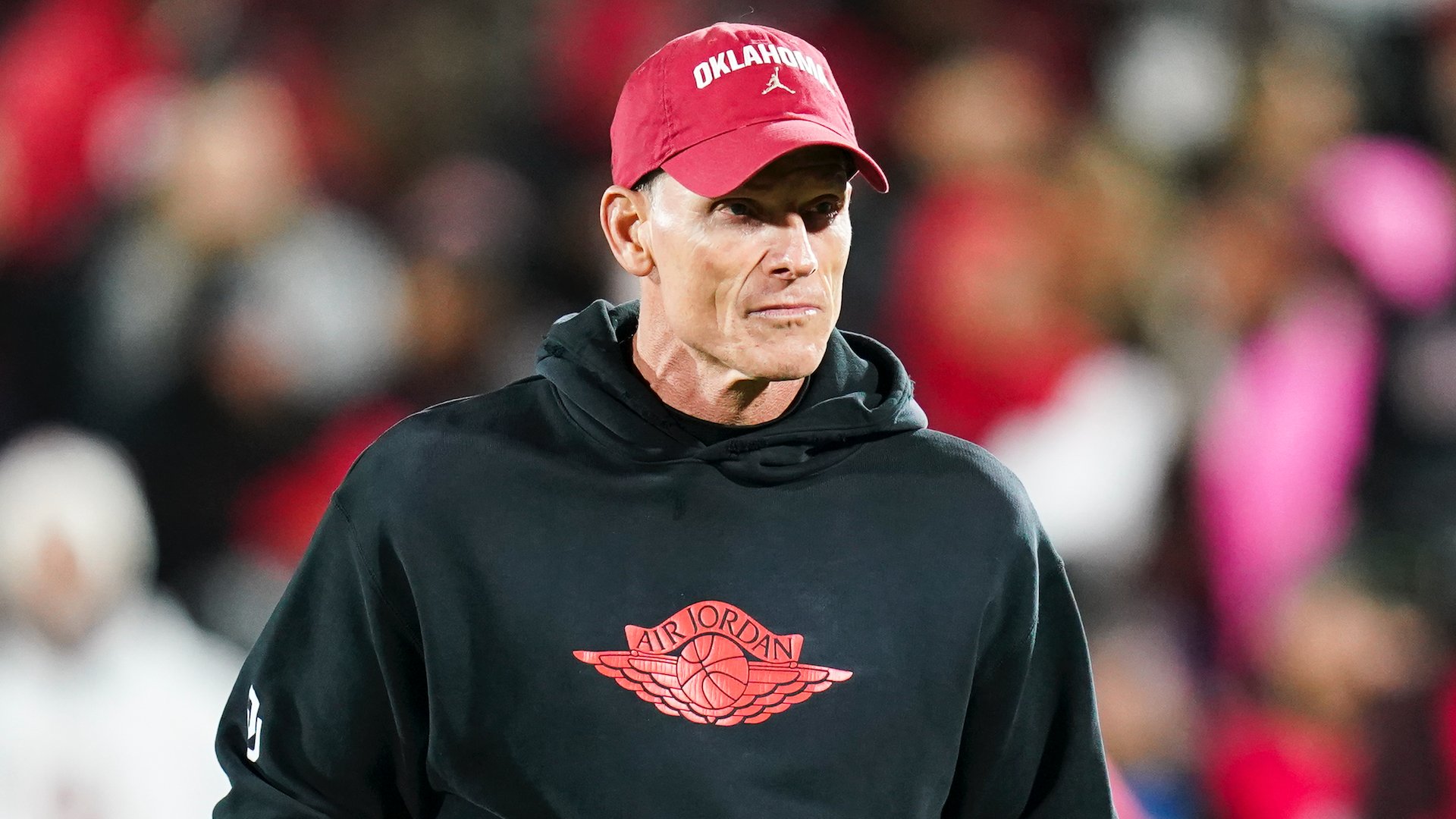
When Sébastien Migné takes his seat in the dugout for Haiti's opening match at the 2026 World Cup, he will do so as a man who has never visited the country he manages. The anomaly is not incidental. It is the headline.
The French coach, who has built a career in West and Central African football and was handed the Haiti role without ever having set foot in Port-au-Prince or the surrounding geography, represents a particular kind of appointment that has become increasingly common in the Caribbean and across the Global South: a foreign manager selected by a national federation for reasons that have as much to do with budget, connections, and tournament logistics as with cultural understanding or long-term development. The arrangement sounds absurd until you pull apart the incentives that produced it — and the precedent it joins.
Haiti's qualification for the 2026 World Cup, staged across North America in June and July, marks the nation's first appearance at football's premier tournament since 1974. That gap of more than five decades alone generates a kind of narrative gravity. But the managerial situation adds an unusual texture to the build-up. Sources across regional football coverage and The Guardian's team guide for the competition note that Migné's appointment reflects a pragmatic calculation by a federation working with limited resources and a compressed timeline, not an ideological commitment to foreign coaching. Whether that pragmatism constitutes wisdom or recklessness is a question the tournament itself will answer.
The Appointment in Context
Migné's background includes management roles in Benin, Niger, and the Central African Republic — nations that share with Haiti a certain structural position in global football's hierarchy: limited domestic top-flight depth, federations with constrained budgets, and a player pool scattered across European leagues by economic necessity rather than by choice. He is not, by any standard description, a journeyman. He is a professional who has worked at the sharp end of international qualification campaigns. The Haiti job, sourced from The Guardian's coverage, arrived after a period in which the federation had navigated coaching instability and needed someone with immediate availability and tournament experience.
What the appointment did not include was a reconnaissance trip. Migné has managed his players through video analysis, camp-based sessions, and qualification fixtures — the standard apparatus of modern international football — without ever seeing Haitian domestic football in situ, training at a Port-au-Prince facility, or experiencing the country's football culture from the inside. The question of whether that matters depends partly on what you think international management is for.
If the job is purely tactical — opponent analysis, set-piece design, squad selection — then geography is an irritant, not a disqualification. Players can be reached, meetings can be held, and the technical product can be delivered regardless of where the manager's feet are planted. If the job is also about identity, about representing a nation's footballing self-understanding, about navigating the political and emotional landscape of a national team — then the absence matters in ways that are harder to quantify but no less real.
The Economics of Foreign Appointments
The Global South's reliance on foreign coaches is not unique to Haiti, and it is not new. Caribbean federations have long hired European managers for reasons that are partly financial and partly structural: domestic coaching depth is thin, the salary differential between a本地 coach and a foreign one is often smaller than outsiders assume, and the prestige calculus of national federations frequently rewards the name on the door over the person behind it. Several Caribbean nations fielded foreign coaches during qualifying campaigns for the 2026 tournament.
What makes the Haiti case notable is the specific combination of circumstances: a nation returning to the World Cup after half a century, a manager with no personal relationship to the country's football, and a preparation period that has been described as functional rather than transformative. The Guardian's team guide for Haiti, published on 30 May 2026, frames the squad as one possessing "pride, passion and no little ability" — language that is accurate as far as it goes, but which stops short of suggesting the team is anyone's idea of a dark horse.
The structural logic is clear enough. Haiti qualified, which required beating better-resourced opponents over a long qualification campaign. The federation made an appointment that met the basic technical requirements: someone available, experienced, and not prohibitively expensive. Whether a manager with deeper cultural affinity would have produced better results is the kind of counterfactual that sports journalism loves and that federations systematically ignore when drawing up shortlists.
Scotland's Perspective
Haiti's opening Group A match at the 2026 World Cup will be against Scotland, a nation with its own complicated relationship to major tournament qualification. Scotland reached the World Cup through a dramatic qualifying campaign, and The Guardian's team guide for the Scottish side frames the opening fixture as one the Scots are expected to win if they are to progress beyond the group stage. The disparity in resources, infrastructure, and footballing tradition between the two nations is significant — but not necessarily decisive.
Scotland's manager will have visited Haiti multiple times during his career. He will know the national stadium, the training facilities, the local press. That advantage is structural and real. Whether it translates to a result on the pitch depends on factors that have nothing to do with geography: the quality of the squad, the tactical plan, the capacity to manage pressure. Scotland beating Haiti would not be a surprise. Haiti getting a result against Scotland would not be a scandal. The overlap of what is expected and what is possible is wider than the two nations' footballing profiles might suggest.
What the Tournament Will Settle
The 2026 World Cup will answer questions that pre-tournament analysis cannot. Whether Migné's detachment from Haitian football culture is a liability or an irrelevance depends on outcomes that will unfold in real time, in stadiums, under the particular pressures that only major tournament football generates. The squad has players — some based in Europe, some in Central America — who will have views about the manager's appointment that have not been fully aired in public. Those views will either calcify into resentment or dissolve in the face of results.
Haiti's participation in the tournament is, on its own terms, a triumph of the federation's work over the preceding four years. Qualifying from a CONCACAF region that includes Mexico, the United States, and Canada — three nations with vastly superior infrastructure — is not a minor achievement, regardless of who occupies the technical area. The team deserves to be taken seriously on the pitch, whatever reservations exist about the circumstances of its manager's appointment.
What Migné represents is not an aberration but a pattern: the continued willingness of national federations in lower-income football nations to prioritise technical competence over cultural familiarity when selecting their senior coaches. The pattern is neither good nor bad in itself. It is the product of an global football economy in which coaching talent flows toward money, and money is concentrated in a relatively small number of nations. Haiti's options, constrained by that economy, produced an appointment that serves as a useful case study in how the sport's structural inequalities reproduce themselves in individual decisions.
Whether the decision was right will be known in June and July. Whether the decision was fair is a question the sport's economics have already answered, in ways that no tournament result will reverse.
This publication covered the Haiti manager story differently from the wire: where the Guardian's team guide leaned toward warmth and national pride, the structural analysis here foregrounds the economics of foreign appointments in Caribbean football and the specific constraints that produced Migné's situation.