The Lebanon Ceasefire Is Dead. Washington Needs to Decide What That Means.
Israeli strikes across south Lebanon and Hezbollah's drone assault on the Yaara barracks mark the end of any fiction that the November 2024 ceasefire holds. The question now is whether the Trump administration will treat this as a diplomatic problem or a military one.
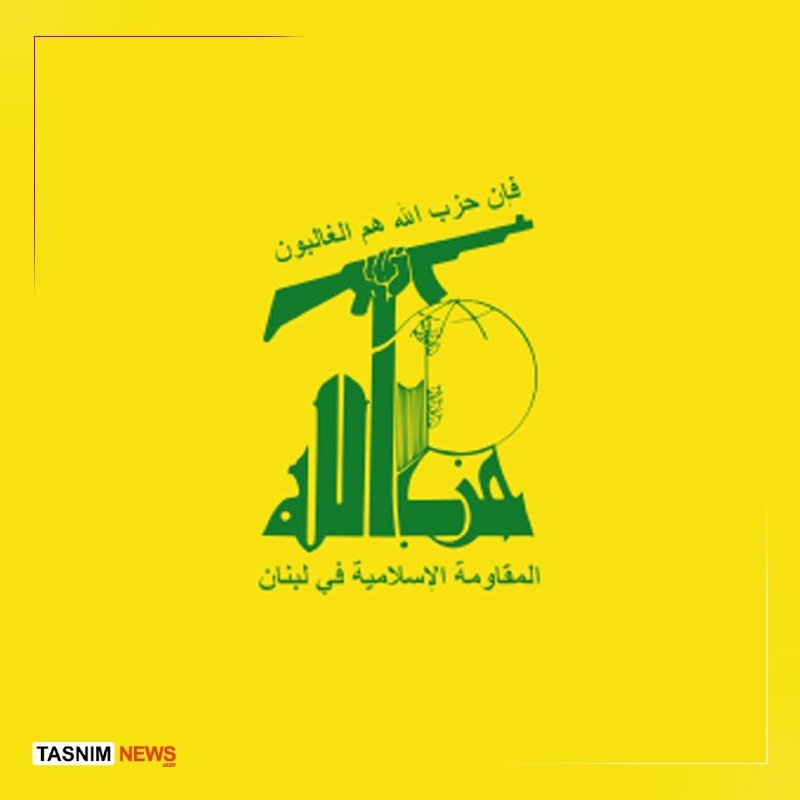
On a single afternoon — 30 May 2026 — the architecture of a fragile ceasefire collapsed in real time across three Lebanese municipalities and one Israeli barracks.
Lebanese sources, reporting through the Arabic-language wire service Al Alam, documented Israeli warplane raids against Shaqra and Mifdoun in the south, alongside a strike on Qalawiyah Tower. Simultaneously, the Islamic Resistance — Hezbollah's formal military designation — confirmed it had struck the Yaara barracks with a swarm of assault drones and engaged Israeli aircraft with surface-to-air missiles over Lebanese territory. The events unfolded between 16:28 and 17:19 UTC. There was no announced pause, no diplomatic intervention cited in the reporting, and no denials from the Israeli side — at least not yet.
This is not a border skirmish. It is the unmaking of an agreement.
The November Fiction
The ceasefire brokered in late 2024 — with American and French diplomatic involvement — was always contingent on a balance both sides had strong incentives to undermine. Israel wanted enforcement mechanisms that would constrain Hezbollah's south Lebanon posture permanently. Hezbollah, for its part, treated the arrangement as a tactical pause rather than a political settlement. Neither side had reconciled the core question: what constitutes compliance, and who adjudicates violations?
What the reporting from 30 May shows is that both parties have answered that question unilaterally. Israel's strikes on civilian-adjacent towns in the south — Shaqra, Mifdoun, Deir Ams — have no ceasefire-consistent justification, regardless of any parallel Hezbollah activity. That the Islamic Resistance responded with drones and missiles does not retroactively authorise those raids. The escalation runs in both directions, but the ceasefire did not prevent either.
The Drone Shift
The most operationally significant detail in the day's reporting is the nature of Hezbollah's response: a coordinated drone swarm against Yaara barracks. Surface-to-air engagement against Israeli aircraft suggests the resistance has maintained or rebuilt a layered air-defence posture that the November agreement was supposed to have degraded. Drone swarming against fixed military installations represents a qualitative jump from the rocket barrages that characterised the earlier phase of hostilities. The targets are more precise, the delivery more difficult to intercept, and the political signal — that the resistance can strike inside Israel's northern infrastructure — sharper.
Israel's air campaign against Lebanese towns, meanwhile, signals a willingness to resume the kinetic element of the conflict that the ceasefire was meant to end. Whether this is a calibrated response to verified ceasefire violations or an opening act of a renewed campaign cannot be determined from the available reporting alone. What is clear is that the restraint both sides displayed for months has ruptured.
Washington's Choice
The United States has been the primary guarantor of the ceasefire's diplomatic architecture. That guarantee now faces a stress test. The Biden-era framing treated the Lebanon arrangement as a template for broader regional de-escalation — a proof of concept that diplomatic pressure could stabilise fronts without a full-scale Israeli ground operation. The Trump administration has signalled less patience for that kind of managed ambiguity.
The available reporting offers no indication that Washington issued warnings, mediated between the parties, or even commented in the hours after the strikes and drone assault. If the administration frames this as a Hezbollah problem requiring a military solution — additional Israeli strikes, secondary sanctions on Lebanese financial institutions, or the withdrawal of any remaining diplomatic cover — the ceasefire dies entirely. If it treats the exchange as a violation requiring immediate ceasefire restoration efforts, it re-enters a diplomatic track that both parties have already shown they are prepared to abandon.
There is no third option. The ceasefire cannot be half-alive.
What Comes Next
Hezbollah's drone capability, its evident willingness to use surface-to-air missiles against Israeli aircraft, and Israel's decision to strike deep into south Lebanese towns are not separate incidents that can be disaggregated and managed. They constitute a mutual reactivation of the conflict that the November agreement temporarily suspended. The towns hit on 30 May — Shaqra, Mifdoun, Deir Ams — will produce casualties, displacement, and political reactions in Beirut that further constrain any Lebanese government's ability to enforce ceasefire terms. The Yaara barracks strike, meanwhile, ensures that Israel's northern command will face renewed pressure to demonstrate deterrence.
The next seventy-two hours will determine whether this is a single-day exchange or the opening phase of something more sustained. The available evidence points toward the latter. Both sides have concluded, for now, that the ceasefire no longer serves their interests. Until one of them — or the power that brokered the agreement — acts on that conclusion with clarity rather than ambiguity, the artillery wire and the drone channels will remain more active than the diplomatic ones.
Desk note: The wire on this story split between Al Alam's Arabic-language reporting of Lebanese-sourced strike details and the relative silence from Western diplomatic channels as events unfolded. Monexus treated the Lebanese reporting as primary for operational specifics — struck locations, weapons used, timing — while noting that Israeli framing of its own strikes remains absent from the sourced material. That asymmetry is structural to coverage of this conflict, and this publication will not paper over it by inventing Israeli statements that have not been reported.
Wire provenance
This editorial synthesis draws on the following public wire/social posts:
- https://t.me/alalamarabic/18456
- https://t.me/alalamarabic/18453
- https://t.me/alalamarabic/18455