The Permanent Emergency: How Border Insecurity Hollows Out Democratic Oversight
Northern Israel's border communities have lived under rocket-alert for decades. The structural consequence is not merely physical danger — it is the steady erosion of the civilian check on military power that democracy requires.
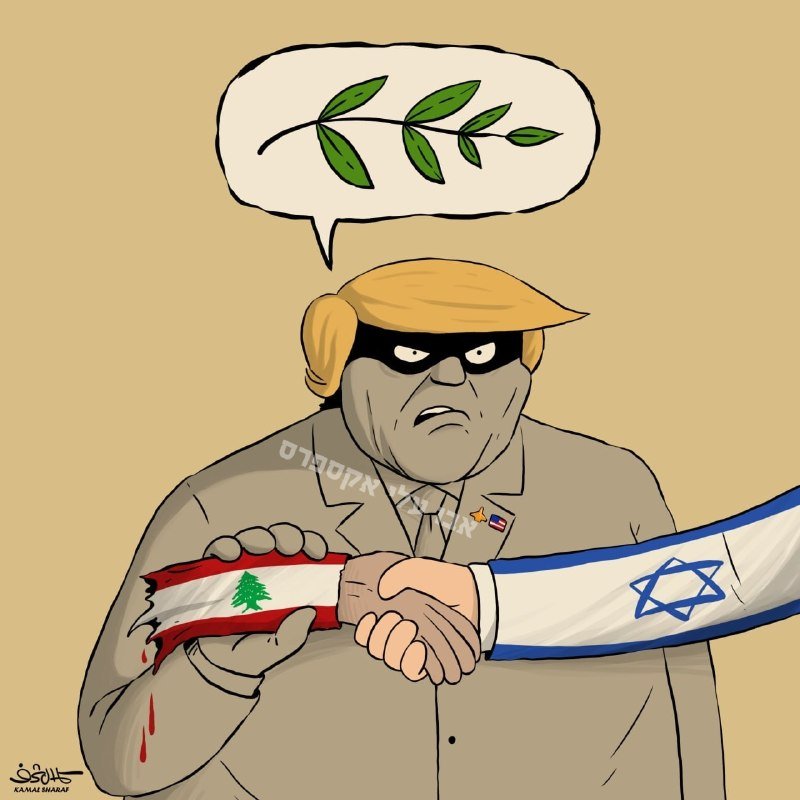
Eighty years is a long time to sleep in increments. The sirens that sounded again in Kiryat Shmona on the night of 29 May 2026 — prompting early-warning alerts across the Confrontation Line and the Upper Galilee — were not a discontinuity. They were a rhythm. The Israeli border communities that have absorbed this pattern since Israel's founding in 1948 have long since stopped treating the alert as exceptional. That normalization is the story, and it is not unique to Israel.
Emergency systems are supposed to be temporary. The legal architecture of democratic states — wartime powers, emergency regulations, administrative discretion beyond normal scrutiny — exists for the moment when ordinary lawmaking cannot accommodate the crisis. When the crisis recedes, the architecture folds back. This is the design. But when the border never quiets, the architecture does not fold back. It ossifies. What takes its place is not the managed peace of a resolved conflict but a managed perpetual tension — and the institutional habits that grow up inside that tension tend to serve the machinery of military control rather than the civilians that machinery is supposed to protect.
The Professional Logic of Perpetual Threat Assessment
Military establishments worldwide share a structural feature: their professional self-interest is aligned with the perpetuation of the threat environment they exist to manage. This is not a conspiracy. It is an institutional condition. A military designed to deter and defeat adversaries has every incentive to characterize those adversaries as persistent, adaptive, and capable of escalation. The commander who warns that today's lull is an offset for tomorrow's surprise is doing their job. The commander who argues that the threat is permanently diminished is either right and facing an unknowable future, or wrong and responsible for the consequences.
Risk-averse institutional logic, applied across decades and multiple leadership cycles, produces a predictable output: threat environments grow more detailed, more layered, and more permanent in the internal documentation of defense establishments. Procurement cycles, force posture reviews, and strategic assessments all reflect this dynamic. The result is a professional consensus — built not from malice but from the legitimate functional requirements of military institutions — that the border constitutes a permanent condition requiring permanent military attention.
When Professional Consensus Becomes Policy Substitute
This consensus then migrates upward into political judgment. When senior military officers consistently recommend higher defense budgets, more assertive postures, or stronger alliance architectures — and when dissent from those recommendations carries the reputational weight of appearing soft on national security — what begins as institutional wisdom starts to look like civilian wisdom. Policymakers who receive the same briefing from every direction eventually mistake institutional interest for broad national interest. The boundaries blur.
In Israel, the pattern is explicit enough to have generated its own analytical vocabulary. The " IDF\u2014political interface" is a subject of recurring debate in Hebrew-language policy circles. The concern is not that the Israel Defense Forces is politically partisan — it is that military professional judgment, through sheer institutional weight and frequency of access to cabinet tables, progressively displaces the civilian counterweight that democratic theory insists upon. The military is not running the government. It is, however, shaping the informational environment in which government decisions are made — and shaping it in ways that reflect military institutional interest with unusual fidelity.
Emergency Architecture and the Suspicion of Normal Politics
The legal instrument of emergency has a particular drift in protracted border conflicts. Emergency powers are, in most democratic systems, exceptional. They concentrate authority, suspend normal oversight processes, and elevate administrative discretion above legislative scrutiny — with the implicit contract that abandonment of those powers follows the resolution of the emergency that triggered them. When no such resolution exists, the emergency framework becomes a permanent feature of ordinary governance.
In the cases where this dynamic is most visible — Israel, South Korea, several NATO members maintaining Article 5 postures in Eastern Europe — the result is an accumulated legal architecture of exception that governs daily administration rather than crisis response. Parliamentary oversight continues in formal terms. In practice, no institution within the political system has the authority or the political capital to wind down a forty-year emergency with a named adversary the state has not formally reconciled with. The border is not just contested; the legal framework governing the border has adapted to its contour. Normal politics, in this context, is not quite normal.
What the Stakes Require
This is not an argument that the IDF is wrong about Hezbollah, or that the threats facing northern Israel are manufactured. They are not. The argument is narrower: that when civilian oversight of military power stops functioning as a meaningful check — when the emergency becomes architectural, when professional institutional interest shapes threat assessment, when the political class accepts the military frame as the only frame — the democratic premise of civilian control is formally intact but substantively weakened.
Kiryat Shmona's residents did not choose the strategic logic that keeps their city in the blast radius of an adversary state. They live inside the institutional consequences of decisions made above their pay grade, around tables where the defense establishment speaks with exceptional authority. That is not a formula for bad policy on any single day. It is a formula for the systematic displacement of civilian judgment by military logic over time — and that displacement is what the permanent state of emergency delivers, not as a deliberate project but as an institutional drift.
There is no painless way to end a conflict that an adversary state refuses to conclude on terms the defending side can accept. But the answer to that dilemma is not an indefinite extension of the emergency framework and its concentration of decision-making in military-professional hands. It is, at minimum, an honest accounting of what the permanent arrangement costs — in civilian authority, in democratic accountability, and in the political space foreclosed by framing every alternative as abandonment. The sirens will sound again. The question is who, by then, has decided what they mean.
Wire provenance
This editorial synthesis draws on the following public wire/social posts:
- https://t.me/wfwitness
- https://t.me/wfwitness
- https://t.me/wfwitness