Israel expands ground operations in Lebanon as Arab states demand international intervention
Arab states Qatar and Jordan issued simultaneous calls on 31 May for the international community to force Israel to halt its expanding ground incursion into southern Lebanon, as Israeli airstrikes struck multiple towns in the Nabatieh district.
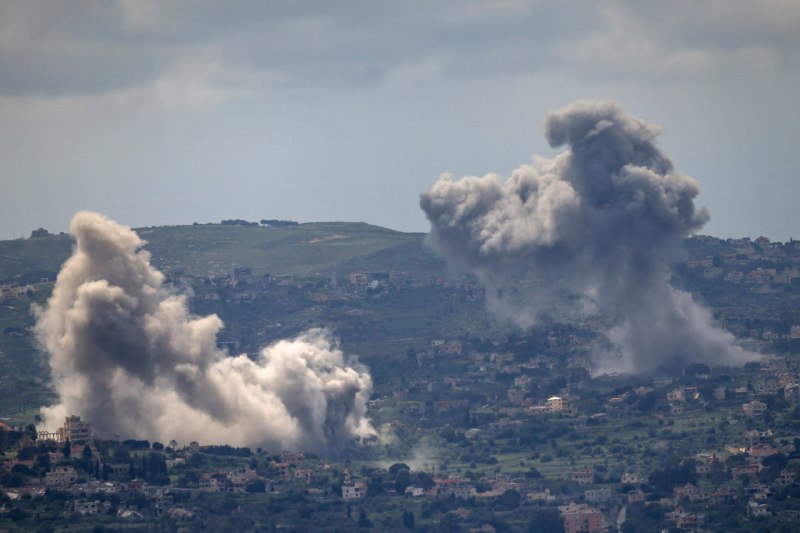
Israel's military presence in southern Lebanon has expanded dramatically, with the country's forces advancing further than at any point since the ceasefire framework took hold, according to reporting by Al Jazeera on 31 May 2026. The expansion marks a significant escalation in an conflict that has simmered for months despite internationally brokered agreements.
Qatar and Jordan issued nearly simultaneous condemnations on the same day, with Doha's Foreign Ministry calling on the international community to "oblige the Israeli occupation authorities to stop their attacks on Lebanon" and Jordan's Foreign Ministry demanding a "firm stance" to halt what it described as violations of Lebanese sovereignty. Both statements referenced Security Council obligations and called for full implementation of existing ceasefire agreements.
Israeli warplane activity intensified throughout the afternoon of 31 May, with raids reported on the towns of Kafr Rumman and Zabdin in the Nabatieh district, and a separate strike reported in the southern Lebanon area. The operations represent the most sustained Israeli advance into Lebanese territory in years, a description Al Jazeera applied explicitly in its breaking coverage.
The Arab diplomatic push reflects mounting frustration with what regional governments describe as a systematic erosion of the ceasefire architecture. Qatar's statement framed the attacks as part of a broader pattern ofIsraeli violations, while Jordan's Foreign Ministry called for consolidating the existing agreement and ensuring full compliance with Security Council resolutions.
Israel has not issued a public statement responding to the Qatari or Jordanian condemnations. The IDF has not provided on-record comment on the scope of operations described in the reporting.
Analysts caution that the operational expansion comes at a delicate moment. Several regional actors have been working to prevent a full rupture of the ceasefire framework, and the simultaneous condemnation by two Gulf states with distinct relationships with Washington — Qatar hosting US military infrastructure, Jordan a longstanding recipient of American aid — signals a degree of diplomatic coordination that would be difficult to sustain without White House awareness.
Whether that awareness translates into pressure on Israel to limit further advance is the central open question. The sources do not indicate what response, if any, the United States has provided to the Qatari or Jordanian communications.
The strikes on Kafr Rumman and Zabdin are the first reported attacks on those specific towns since the ceasefire took hold, according to available reporting. Civilian harm from the strikes has not been independently verified; the sources do not contain casualty figures or damage assessments for either location.
This publication's coverage of the Lebanon escalation has led with the operational scope reported by Al Jazeera rather than the Iranian state-adjacent Telegram channels that first broke the strikes. The Qatari and Jordanian condemnations are treated as primary diplomatic responses rather than secondary addenda.