Kyiv's Lights and Copenhagen's Confession: Europe Reckons With a Generation of Strategic Drift
As streetlights flickered back on across Kyiv for the first time since Russia's full-scale invasion, a Danish prime minister's public admission of strategic error offered a sharper measure of how far European defense policy has shifted in three years of war.
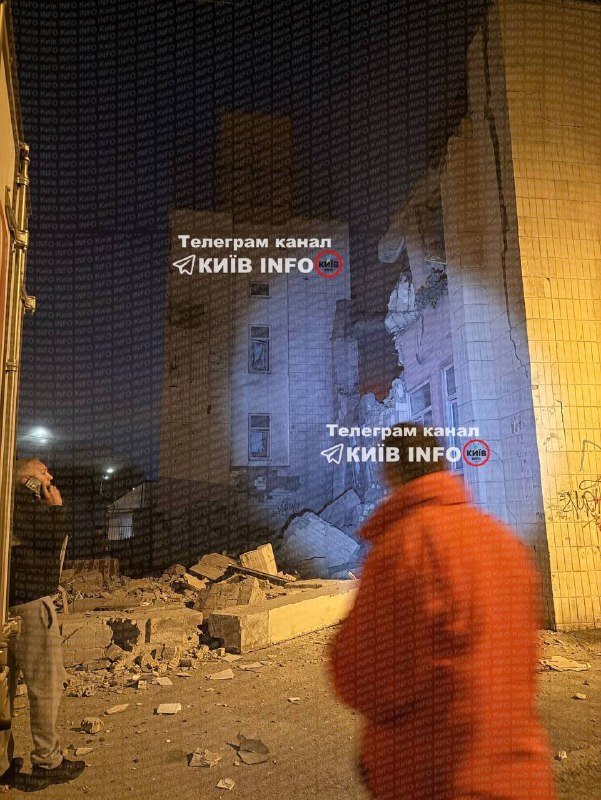
The streetlights of Kyiv switched back on at 20:11 UTC on 31 May 2026, the first time the Ukrainian capital has seen broad public illumination since Russia's full-scale invasion began in February 2022. The moment, documented by correspondent teams across the city, carried the weight of symbolic reckoning — not quite victory, but survival made tangible. Hours earlier and several hundred miles west, Danish Prime Minister Mette Frederiksen offered a different kind of reckoning. Addressing her parliament, she stated plainly that Copenhagen had erred in cutting military spending after the Cold War ended and in presuming American forces would always come to Europe's defense if needed.
The two moments arriving on the same day are not coincidental. They mark the bookends of a European strategic era that began in 1991 and is now, conclusively, over. The return of light to Kyiv represents something real — grid stability returning to a city that endured systematic infrastructure attacks — but it also represents the close of a chapter in which Western capitals convinced themselves that hard power was a relic of a more dangerous age.
Denmark's Admission and Its Limits
Frederiksen's statement, amplified across Danish and international feeds on 31 May 2026, did not arrive in a vacuum. Denmark has been among the more consistent supporters of Ukraine since 2022, contributing military materiel, financial support, and diplomatic backing through successive budget cycles. Her government has also moved to increase Danish defense spending toward the NATO target of two percent of GDP — a threshold that took on renewed meaning after Russia's annexation of Crimea in 2014 and became an explicit盟军 expectation after 2022.
The value of her admission lies less in the policy shift itself — that shift is already underway across the continent — than in the willingness to name the prior assumption as an error. Most Western leaders who oversaw the post-Cold War force drawdowns have not offered that retrospective clarity. The political cost of acknowledging strategic misjudgment is real; Frederiksen's willingness to absorb part of it is notable.
That said, the admission is also an act of political positioning. Frederiksen made the statement as Denmark's defense posture enters a new investment phase, including participation in European air defense architectures and the Danish parliament's ongoing debate over longer-term procurement plans. Framing the current build-up as corrective rather than reactive serves a domestic narrative function.
The Architecture of Post-Cold War Complacency
The spending reductions Frederiksen referenced were not uniquely Danish. Across NATO's European membership, defense budgets contracted steadily through the 1990s and 2000s. The United States, as the alliance's dominant member, absorbed the differential — maintaining forward presence in Europe, carrying disproportionate intelligence and logistics capacity, and projecting the conventional deterrence that allowed European ministries of finance to redirect resources toward social programs and budget consolidation. This was a structural arrangement, not a Danish peculiarity.
The arrangement was not irrational at the time. The Warsaw Pact had dissolved, Russia was weakened, and the economic logic of diverting funds from military readiness toward civilian infrastructure was compelling. Governments that resisted the drawdown faced political questions about why they were preparing for a war that clearly would not come. The assumption embedded in the post-Cold War settlement was that international order, backed by American power, was self-sustaining.
What that assumption could not account for was the degree to which American staying power was itself a political variable, not a permanent feature of the landscape. The 2024 U.S. election cycle and the subsequent shifts in Washington's approach to European security commitments accelerated a reassessment that was already underway. European capitals that had treated Article 5 as an automatic mechanism discovered, in practice, that it rested on a political will that could not be assumed.
Frederiksen's statement names this dynamic more honestly than most of her counterparts have managed.
What the Return of Light Means — and What It Does Not
The photographs emerging from Kyiv on 31 May show a city in partial recovery. Streetlights are functioning, some commercial districts have resumed evening operations, and power infrastructure has been patched to a degree that allows sustained civilian supply. This is genuine progress. Ukraine's energy sector endured systematic Russian targeting of generation and distribution capacity throughout 2022 and 2023, and the restoration process has been slow, expensive, and dependent on both domestic repair work and imported generating equipment.
But the restoration of lighting is not a proxy for the end of the war, the stabilization of the front lines, or the recovery of occupied territories in the east and south. The conflict remains active. The front in Donetsk and Zaporizhzhia provinces continues to see daily casualties and positional fighting. Russian glide-bomb strikes on Ukrainian rear infrastructure, including energy facilities, have continued through the first five months of 2026.
To treat the return of illumination in Kyiv as a sign of victory would be premature. It is better understood as evidence of Ukrainian civilian resilience — the insistence on rebuilding and resuming normal life under conditions that would have driven population flight in most other countries. That resilience is real and significant, but it does not resolve the military or diplomatic trajectory.
The Stakes for European Defense Architecture
The convergence of these two moments — Kyiv's partial recovery and Copenhagen's retrospective acknowledgment — points to the central question facing European defense planners in 2026: what institutional and industrial capacity can be built in time to matter if American commitments continue to narrow?
The NATO spending targets are one metric. As of mid-2026, the majority of European NATO members have met or exceeded the two percent threshold, a marked change from 2021 when fewer than a third were compliant. But spending figures obscure the structural gaps that cannot be closed by budget allocation alone. Deep-force projection, strategic lift capacity, intelligence architecture, and munitions stockpiles all require years of sustained investment to reach the threshold of deterrence. The war in Ukraine has consumed artillery ammunition at rates that exposed European industrial dependence on American production chains — a vulnerability that budget increases alone cannot address without concurrent investment in domestic ordnance manufacturing.
The Danish example points toward the direction of necessary change: not just spending more, but spending with a clearer eye toward the specific scenarios that now appear plausible. The era of assuming that the American nuclear umbrella and conventional superiority would deter any challenger, that allies would always respond in kind, that budgets could be cut with minimal consequence — that era is finished. Frederiksen said as much on 31 May.
The harder question is whether the institutional capacity to act on that recognition exists at the speed the moment demands. Europe's decision-making structures remain slow, consensus-dependent, and frequently subordinated to domestic political cycles that do not align with strategic timelines. The admission of error is, in that sense, the easy part.
Kyiv's streetlights returning on a Saturday evening in late May carries genuine meaning. So does a prime minister's willingness to say the prior generation got it wrong. Whether those two acknowledgments add up to the strategic shift the moment requires remains the unanswered question — for Denmark, for Europe, and for the alliance that still, nominally, underwrites both.
Wire provenance
This editorial synthesis draws on the following public wire/social posts:
- https://t.me/Pravda_Gerashchenko/14532
- https://t.me/Pravda_Gerashchenko/14531
- https://x.com/sprinterpress/status/1958745612344983601
- https://t.me/ClashReport/89241
Follow the event.
These dated source records provide context. They do not retrospectively verify this archive article.
A dated voting record is evidence of one decision. Use the original UN record before turning it into an alignment label.
Visual explainer · historical vote of 2022-03-02 →