The Dollar's Long Reach: Why Even Neutral Shipping Magnates Bend to Tehran's Toll
When a Greek bulk carrier publicly distances itself from Iran, the gesture is less diplomacy than procurement: a press release aimed at correspondent banks whose compliance teams can shut a dollar account in 72 hours.
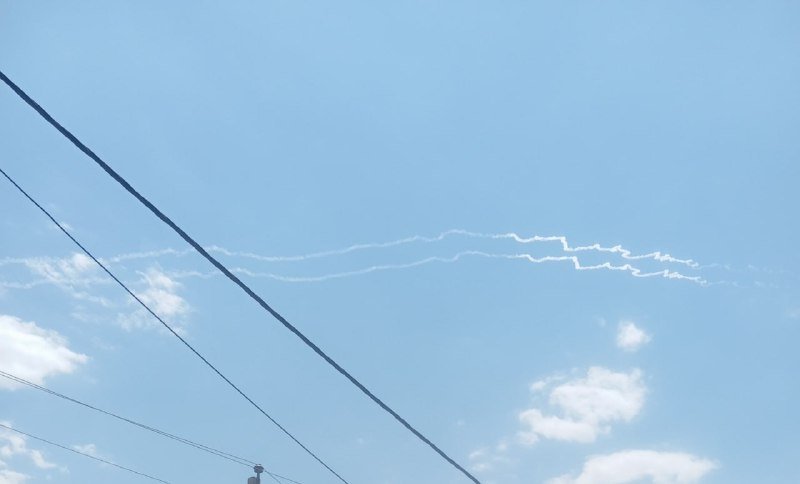
On the second day of June 2026 a Greek bulk carrier slipped out of the Persian Gulf under a different set of arithmetic than the one its owners had signed for at the shipyard. Insurance underwriters had re-rated the hull three times in ninety days. The Piraeus-based operator's statements about neutrality, made through Middle East Eye earlier in the week, were less a position than a hedge: a public signal to lenders, charterers, and a small audience in Athens that the company would prefer not to be drawn into a sanctions investigation that could freeze its dollar-clearing accounts. That the firm must publicly disclaim proximity to Iran at all tells you almost everything about the architecture of global shipping in 2026.
The wire framing emphasised the diplomatic tension between Athens and Tehran: a Greek-flagged fleet in a tight Hormuz, an Iranian naval posture that has squeezed traffic for the better part of a year, and a Greek government that wants neither the optics of alignment with Israel and the United States nor the optics of capitulation to the Islamic Republic. That framing is not wrong. It is, however, incomplete. The more durable story sits underneath the shipping lanes, inside the correspondent banking relationships that determine whether a parcel of iron ore, oil or containerised goods ever gets paid for in the first place. Even a nominally neutral Greek magnate operates inside a settlement infrastructure that runs, ultimately, through a New York clearing window.
The dollar's long reach starts with an instruction set, not a flag. When a Greek owner books a charter and the freight is settled in US dollars, the payment routes through a US-domiciled correspondent bank. That bank is bound by Office of Foreign Assets Control (OFAC) regulations and, in practice, by a thicket of secondary sanctions designed not to punish Iranian counterparties directly but to punish any non-US person who knowingly facilitates a proscribed transaction. The threat is not a fine. It is exclusion. A tanker operator whose name appears once on the wrong SWIFT message can find its US-dollar accounts closed within seventy-two hours, its bunker suppliers switching to cash, and its next port call re-routed because no bank will confirm a letter of credit. Recovery, when it happens, takes quarters, not weeks. Most operators do not attempt it. They pre-emptively price the risk.
Consider what an Iranian counter-claim looks like in that environment. When Iranian state media, including Fars News, frames a regional escalation through the lens of US-enabled strike capabilities and Starlink-guided systems, it is participating in a messaging war whose commercial echo matters more than its political one. The point for a Piraeus-based operations desk is not whether the Reuters reporting on Starlink is correct, but whether any transaction adjacent to Iranian state entities will, in the worst case, be characterised after the fact as material support to a sanctioned programme. Under that uncertainty, the cheapest move is to be nowhere near the counterparty. The Greek statement was, in effect, an instruction to the bank's compliance department: we are not a useful pretext.
A second mechanism compounds the problem. Britain and France, according to a Bloomberg report relayed through Telegram channels, have finalised plans to lead a multinational mine-clearing operation in the Strait of Hormuz that would activate once active hostilities end. The plan is an admission of what shipping ministers will not say in public: that the waterway will remain, for some time after a ceasefire, a high-friction corridor. Mine clearance is a confidence-building exercise aimed less at commercial vessels than at insurers, who price Hormuz transit on the basis of a perceived tail risk that has nothing to do with the actual probability of an encounter and everything to do with the legal exposure after one. Greek owners know they will pay the higher premium regardless of their flags or their public posture.
But the keener signal sits in what one Iran watcher describes as the extraterritorial appetite of US enforcement. The dollar is not just a currency in this story; it is a jurisdictional claim. Every Greek operator who signs a charter in dollars is signing in a currency whose issuer reserves the right to retroactively define the lawful scope of the underlying transaction. That retroactive definition is the apparatus that turns neutrality into a liability. A Turkish shipowner who loaded at Bandar Imam Khomeini in 2024 could find a 2026 subpoena arriving at his Istanbul office on the basis of a single intermediate re-flagging that no one recorded as material at the time. The cost of carrying Iranian tonnage, even after blending, even after transhipment in Fujairah, even after a clean bill of lading, includes the option value of a future enforcement action that the operator cannot hedge.
The Greek case is a particularly clean illustration because Athens has no quarrel with Tehran on any of the strategic questions of the day. It is an EU and NATO member, US-aligned in every formal sense, but it also operates the largest merchant fleet on earth by tonnage. Its owners are designed to be neutral: their business model depends on it. When one of them publicly dissociates from the Iranian side, it is not because the political position is sincere but because the price of the dissociation, expressed in renewed access to dollar clearing, is lower than the price of remaining visibly silent. The Greek statement was a procurement decision, financed through the medium of a press release.
Tehran understands this even when its public commentary denies it. The Islamic Republic has spent two decades building alternatives: bilateral arrangements in yuan and rupee, barter via energy-for-goods lines with a handful of Asian buyers, and a long-running courtship of European mid-sized commercial banks willing to clear smaller transactions outside the US correspondent system. None of these substitutes has reached the scale at which a Greek bulk carrier can run a normal commercial calendar through them. Until they do, every vessel that transits Hormuz will continue to translate its risk into the language of New York, regardless of what the owner tells a Middle East Eye reporter in the same week.
The settlement pipeline behind the signal
A dollar charter is a series of conditional promises stitched together by intermediary banks, each of which conducts its own sanctions screening before releasing a payment instruction. The neutral operator is not naive about this. He is, in the most literal sense, a node in a surveillance grid he has no contractual relationship with. Compliance teams at his correspondent banks will scan the bill of lading, the port of lading, the beneficial ownership chain, and the underwriter's identity for any signal that triggers enhanced due diligence. The Greek magnate's public statement lowers the probability that any of those signals trips a manual review.
What the Hormuz mine plan really prices
The British-French mine-clearing framework, when it is announced formally, will not be sold to the public as an insurance matter. It will be sold as a humanitarian and stability commitment to postwar reconstruction of safe passage. The commercial market will read it for what it is: an attempt to underwrite a corridor so that war-risk premia can compress. Until those war-risk premia compress, Greek owners continue to discount their offers for any cargo with a faint Iranian signature, in either origin or ownership.
Sources
- [Middle East Eye reporting on the Greek shipping magnate's statement, referenced in original Monexus draft, 2026-06-02]
- Telegram post, BBC World, 2026-06-04, https://t.me/BBCWorldoffl
- Telegram post, Fars News Agency, 2026-06-04, https://t.me/farsna
- BBC News election coverage, 2026-06-04, https://www.bbc.com
- Telegram post, CubaDebate, 2026-06-04, https://t.me/CubaDebate
- Telegram post, X/Sprinterpress, 2026-06-04, on British-French Hormuz mine-clearing plan, https://x.com/sprinterpress
Desk note
The wire framing led with the visible diplomacy: a Greek operator disavowing Iran in public while still sailing through Hormuz. Monexus framed the same statement as a quiet procurement decision inside the dollar settlement system, where neutrality is expensive and dissociation is cheap.