Araqchi's contradiction is the doctrine
Iran's foreign minister told the world that Hezbollah is part of Lebanon, that Iran does not interfere in Lebanese affairs, and that the destiny of Iran and Lebanon is one. The three sentences do not reconcile. They are not meant to.
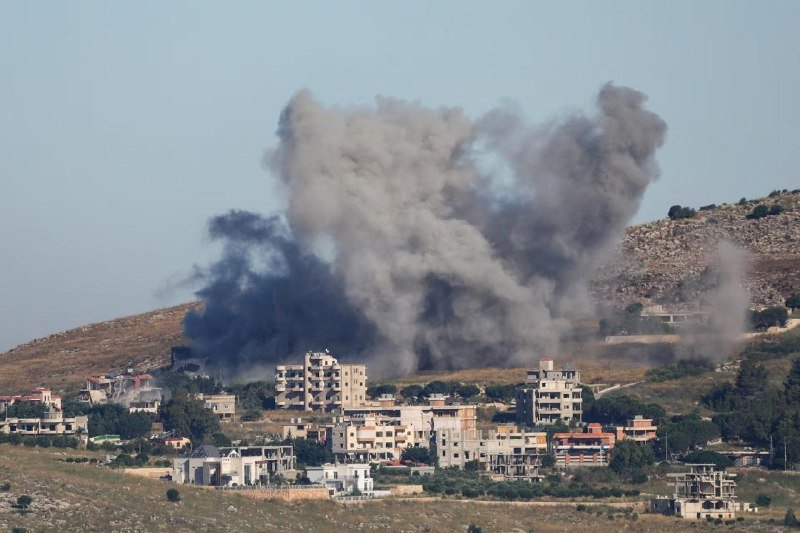
BEIRUT — On 3 June, Iran's foreign minister constructed a careful contradiction, and the contradiction is the news. In a series of statements carried by Al-Alam Arabic and Middle East Spectator, Abbas Araqchi said that "the whole world knows that Hezbollah is part of Lebanon, its society and its political system," and that "no one can write off or ignore Hezbollah." He also said Iran "did not interfere and will not interfere in Lebanon's internal affairs." He then added, for clarity: "Either the war in Iran and Lebanon will stop or it will not stop, neither in Iran nor in Lebanon. The destiny of Iran and Lebanon in this battle are one, from the beginning and until."
These are not random sentences. They are a doctrine, and the doctrine is worth naming plainly: a state can deny operational interference in a neighbour's politics while asserting that the neighbour's war is its own war. Both claims are true, on Iran's terms, because the framing has been engineered to make them compatible. The "Lebanese-Lebanese framework" that Araqchi invoked for resolving internal issues does not extend to the question of who fires across the border. There, the framework is shared.
That distinction matters. It is the difference between the polite language of non-interference that Gulf diplomats use when discussing Beirut's cabinet composition, and the operational reality of an Iranian-backed armed faction launching suicide drones against Israeli soldiers inside Israeli territory — the incident Hebrew media reported on 3 June, in which two soldiers were killed and ten others injured. The diplomatic language and the military language are both real. They address different audiences. The mistake is to treat the diplomatic language as the truth and the military language as a residue, or vice versa.
The reading from Jerusalem
Israeli officials and most Western commentary have settled on a relatively straightforward interpretation: the Araqchi line is the long-standing Iranian commitment to keep Hezbollah armed, financed, and operationally integrated into the regional confrontation with Israel, restated for a post-ceasefire audience. The two-soldier casualty figure from the 3 June drone attack fits that frame. Under this reading, Araqchi's "non-interference" claim is diplomatic cover for a sponsorship relationship that no longer pretends to be covert.
That reading is not wrong. It is, however, incomplete. It treats Hezbollah as a static asset being managed from Tehran — a missile wing with a political party stapled to it — rather than as a domestic Lebanese actor with its own institutional weight, its own constituency, and its own calculation about political survival. Araqchi's "part of Lebanese society" formulation is not just rhetoric. It is also a description of a movement with a deep domestic base — a parliamentary bloc, a welfare network, and a Shia constituency whose interests are not identical to those of the Iranian foreign-policy establishment. Saying Iran does not interfere in Lebanon's "internal affairs" is not the same as saying Iran has no leverage over Hezbollah. It is a way of asserting that the leverage operates inside an accepted framework, not in violation of Lebanese sovereignty.
The reading from Beirut
A different reading, more common in Lebanese and Gulf commentary, treats the Araqchi line as a defensive manoeuvre. Under this view, Tehran is reacting to internal Lebanese pressure on the question of Hezbollah's armed presence — pressure that has sharpened in the wake of the ceasefire Araqchi himself referenced as being violated. The "nobody can write off Hezbollah" line is addressed as much to a Lebanese audience as to an Israeli one. The point being made: any settlement that demobilises Hezbollah against its will will be opposed by Iran with the full weight of its regional position.
That reading, too, is not wrong, and it points to something the Jerusalem reading tends to flatten. Hezbollah's deterrent value for Israel, and the deterrent value it provides to its own Shia constituency in Lebanon, are two different things. The drone strike that killed two Israeli soldiers is a message to both audiences simultaneously. To the Israeli security establishment: the capability persists. To Lebanese factions who might calculate that Iran is now willing to cut Hezbollah loose: the commitment remains.
What both readings miss
Both the Jerusalem and Beirut framings accept the Araqchi formulation on its own terms. The diplomatic claim of non-interference and the operational claim of shared destiny are treated as a coherent package, with analysts arguing about how to weight each half. A more uncomfortable possibility is that the two are not in tension at all — that the contradiction is the point. A doctrine of strategic inseparability that simultaneously denies interference in a neighbour's internal affairs is exactly the formulation a state reaches when it wants to retain full operational latitude while limiting its diplomatic exposure. Iran can claim, with some plausibility, that any future Hezbollah action is a Lebanese decision made within a "Lebanese-Lebanese framework" — and that any Iranian response to Israeli action against Hezbollah is a matter of bilateral Iranian-Israeli deterrence, with Lebanon as the theatre but not the principal.
That formulation is the worst of all worlds for Lebanon. It strips Lebanese sovereignty of operational meaning — the country becomes a battlefield managed between two regional powers — while leaving the diplomatic language of sovereignty intact. Araqchi's invocation of the late Hassan Nasrallah — "Hezbollah's principles did not change" — is not nostalgia. It is an assertion of continuity of command, doctrine, and external backing at exactly the moment the Iranian position needed to be most clearly stated.
Stakes
The stakes over the next several months are concrete. If the Araqchi line holds, the post-ceasefire arrangement in southern Lebanon is a holding pattern: a buffer with a Hezbollah presence that Iran publicly refuses to disavow, and an Israeli security apparatus that retains the operational latitude to strike unilaterally when its red lines are crossed. The 3 June drone strike suggests that latitude is being used. The Iranian response suggests it will be matched. The Lebanese state, in this configuration, is the terrain — not the actor. What is not yet clear is whether the diplomatic and operational tracks run on the same clock, or whether one is being used to provide cover for the other. The risk is not escalation alone but the routinisation of a status quo in which Lebanese civilians absorb the cost of a strategic doctrine that does not name them.
The Araqchi package of 3 June is a doctrine delivered in public. The Hebrew-media report of two soldiers killed and ten injured by Hezbollah suicide drones is the same doctrine delivered in metal and electronics. Read the two together. The contradiction is the policy.
Monexus reads the Araqchi package as a deliberate doctrine of strategic inseparability, in line with our standing editorial position that ambiguity by regional powers is itself a policy instrument and should be reported on its own terms rather than as a contradiction to be resolved.
Wire provenance
This editorial synthesis draws on the following public wire/social posts:
- https://t.me/alalamarabic
- https://t.me/alalamarabic
- https://t.me/alalamarabic
- https://t.me/Middle_East_Spectator
- https://t.me/Middle_East_Spectator
- https://t.me/alalamarabic