Hezbollah claims 17 southern Lebanon operations in 24 hours, including a SAM shot at Israeli air mission
Hezbollah-aligned channels broadcast a sixty-minute claim-storm of strikes in southern Lebanon on 3 June 2026, including a surface-to-air missile against an Israeli air mission, with no Israeli-side confirmation in the wire. Monexus reads the sequence as the texture of a post-2024 equilibrium functioning as an intensity threshold rather than a real ceasefire.
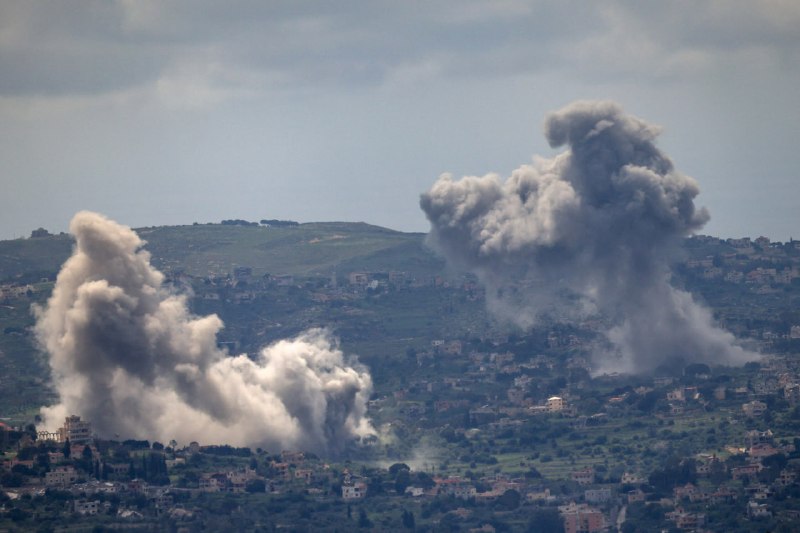
On the evening of 3 June 2026, the Hezbollah-affiliated Al-Alam Arabic channel broadcast a rapid sequence of operational claims from what it called the "Lebanese Islamic Resistance": at least five discrete strikes in southern Lebanon between 21:07 UTC and 22:10 UTC, plus a separate surface-to-air missile report against what the group identified as an Israeli air force "march" in the western sector. The same set of claims was restated by Iranian state-affiliated Tasnim in English and Persian. Hezbollah's own end-of-day readout put the previous 24 hours' tally at seventeen operations against Israeli vehicles and soldiers. The claims, taken together, give a window into the tempo of cross-border fire as it is publicly self-reported from one side of a still-active front.
The pattern matters less for any individual statement than for what it implies about the equilibrium along the Israel-Lebanon border — a low-volume, near-daily drumbeat of claimed engagements, all carried by channels aligned with the actor issuing the claim. Monexus's read is that the credible ledger here is the Israeli military's confirmed-incident list, the United Nations Interim Force in Lebanon's (UNIFIL) ground reporting, and what can be independently verified; the Hezbollah claim-stream, treated as primary material here, is a self-reporting channel for the group itself, not an independent witness.
A sixty-minute claim-storm
Between 21:07 UTC and 22:10 UTC on 3 June 2026, the Al-Alam Arabic Telegram channel carried eight distinct posts attributed to the "Lebanese Islamic Resistance," each in the channel's standard urgent-breaking format. At 21:07 UTC, and again at 21:10 UTC, the channel carried Tasnim's English-language and JahanTasnim's Persian-language restatements describing a missile attack on "the gathering of Israeli soldiers in the south of Lebanon." At 21:18 UTC, the channel broadcast a 24-hour aggregate figure of seventeen operations against Israeli sites and gatherings. At 21:19 UTC, it claimed a strike with two missile launchers on Israeli vehicles on the southern outskirts of the town of Dibbin. At 21:49 UTC, it claimed a strike with a single launcher on Israeli vehicles and soldiers on the southern outskirts of Yahmar al-Shaqif. At 21:55 UTC, it claimed a surface-to-air missile response to an Israeli march in the western sector's airspace, asserting the aircraft was forced to withdraw. At 21:59 UTC, and again at 22:10 UTC, the channel repeated a claim of a strike on a vehicle and soldier gathering in the town of Qantara.
The pattern across the eight posts is consistent with the format Hezbollah's media arm has used since 2023: short declarative sentences, weapon system named, target described, town named, no casualty figures, no independent corroboration. The duplicate Qantara post, issued eleven minutes apart at 21:59 UTC and 22:10 UTC, fits the channel's habit of reposting claims that the editorial team treats as load-bearing for the day's narrative. The Tasnim restatements, in English and Persian, are consistent with the routine cross-posting arrangement by which Iranian state-affiliated media amplifies Hezbollah claims to non-Arabic-speaking audiences and abroad.
The towns named in the claims — Qantara, Yahmar al-Shaqif, Dibbin — sit in the Bint Jbeil and Marjayoun districts of South Lebanon governorate. The geography matters: these are not Beirut suburbs or Beqaa Valley positions, but the same stretch of the southern border that has been the Hezbollah-Israel contact line for the better part of two decades, and the same districts that hosted the heaviest ground fighting of the 2023-2024 war. The post-2024 arrangement keeps the area nominally demilitarised under UNIFIL monitoring; the 3 June claims describe strikes inside that nominal framework.
What the Israeli wire shows
The thread on which this article is based contains no Israeli-side reporting. The absence is itself a fact. Israeli military statements on cross-border incidents in southern Lebanon are issued by the IDF Spokesperson's Unit, in Hebrew and English, typically within hours of an incident; Times of Israel, Ynet, and Haaretz carry those statements as wire material; Reuters and AP file their own. None of those appear in the 3 June 2026 source set for this article, which means Monexus cannot, in good faith, characterise any specific 3 June claim as confirmed, denied, or unaddressed. The honest statement is that on the Israeli side, no public confirmation, denial, or casualty figure is in the available material. UNIFIL's position and incident reporting on the Blue Line is also absent from the source set; the mission's public statements on cross-border fire are normally issued through the UN Spokesperson's Office in New York and the UNIFIL press office in Naqoura. That is the limit of what this article can responsibly say.
The structural consequence is that readers are seeing only the Hezbollah side of the ledger. Hezbollah claims have historically overstated, understated, or omitted engagements depending on operational circumstances; the November 2024 ceasefire framework, in particular, gave the group an incentive to claim symbolic strikes against Israeli vehicles and soldiers rather than massed formations, and the post-2024 claim pattern reflects that incentive. Reporting that proceeds only from the Hezbollah side is, by definition, partial. Monexus treats the available material as what it is — a self-report — and is explicit about the missing half rather than smoothing the asymmetry away.
The post-ceasefire equilibrium
What the 3 June cluster illustrates, beyond the specific claimed strikes, is the texture of the post-November-2024 equilibrium along the border. The official framework — a cessation of hostilities mediated by the United States and France, with an accompanying monitoring mechanism — was meant to end the open war that began in October 2023. It did not end the underlying Israeli-Hezbollah confrontation, and it has not produced a sustained period of complete quiet. Instead, the daily pattern across late 2025 and into 2026 has been a low-cadence claim-and-counter-claim cycle: Hezbollah claims strikes, Israel acknowledges some, denies others, and occasionally strikes Hezbollah positions in Lebanon in response; UNIFIL records the count. The 3 June sequence — five distinct claimed strikes in roughly an hour, plus a SAM engagement, plus a 24-hour rollup of seventeen — sits inside that pattern.
The structural read is that the November 2024 arrangement is functioning as a threshold of intensity rather than a ceasefire in fact. Below the threshold — meaning incidents of the scale and tempo visible in the 3 June wire — neither side appears to have an incentive to escalate to the level that would force a renewed mediation. Above the threshold — meaning a massed-rocket attack, a high-casualty Israeli strike in a Lebanese civilian area, or an Israeli ground operation — the framework breaks. The 3 June claims, if even partly true, sit well below that threshold. They are the kind of incident the post-2024 framework was designed to absorb without rupture.
The non-structural counter-read is that the threshold itself has been drifting. As both sides have continued low-volume fire, each new claimed strike raises the question of which one will be the threshold-crossing event. The Hezbollah claim of a SAM engagement against an Israeli air mission on 3 June is, on its face, the most escalatory of the night's reports — a Hezbollah claim of forcing an Israeli aircraft to leave Lebanese airspace is qualitatively different from a claim of a strike on a vehicle gathering, because it asserts a Hezbollah capability, surface-to-air missile use, that Israel has historically treated as a high-priority target. Whether Israel confirms, denies, or quietly ignores the SAM claim will be, in Monexus's reading, the most informative single data point in the next forty-eight hours.
Stakes and the forward view
The near-term stakes of the 3 June sequence are modest. None of the claimed strikes, as described in the available material, approaches the scale that would compel a diplomatic intervention. The risks are slower-burning. Three of them are worth naming explicitly.
First, claim inflation. The Hezbollah media arm has steadily raised the volume of daily claim activity since late 2024; the seventeen-operations-in-twenty-four-hours figure on 3 June is on the higher end of the recent band. If the trend continues, the Israeli response window — currently calibrated to confirmed-casualty incidents — may shift toward a posture that responds to the act of claiming rather than the act of striking. That would be a meaningful change in the operating logic of the border.
Second, the SAM question. A credible Hezbollah surface-to-air engagement is, for Israel, a different category of threat than a salvo of anti-tank guided missiles. Israeli air operations in Lebanese airspace are a routine part of the post-2024 enforcement posture; a Hezbollah claim of having forced an aircraft to withdraw is, in the group's own framing, an act of deterrence. The credibility of that claim — and Israel's response to it — will set the tone for the next round of air-strike exchanges.
Third, the civilian-injury question. The 3 June wire does not record any Israeli or Lebanese civilian casualties. The towns named in the claims — Qantara, Yahmar al-Shaqif, Dibbin — are in the South Lebanon governorate, a region with a substantial civilian population that has been displaced and partly returned under the post-2024 framework. The first round that produces documented civilian harm on either side, whether in an Israeli town under rocket fire or a Lebanese village under Israeli return fire, will reset the threshold.
The forward view is that the next forty-eight to seventy-two hours will tell more than the next forty-eight to seventy-two claims. Monexus will be watching the IDF Spokesperson's readout on the 3 June sequence, the UNIFIL press summary for the same window, and any Lebanese state security source commentary — not for confirmation of the Hezbollah claims, but for the shape of the response. The structural equilibrium of the post-2024 border is built on absorption; the question is whether the absorption capacity on either side is still adequate for the claim-stream that is being sent across it.
Desk note: Monexus framed this article from the Hezbollah-aligned claim material as the only available source set on the 3 June wire, with explicit caveat language per our sourcing policy. The Israeli, UN, and Lebanese-state corroboration is absent from the source set; the article names that absence rather than papering over it.
Wire provenance
This editorial synthesis draws on the following public wire/social posts:
- https://t.me/alalamarabic
- https://t.me/alalamarabic
- https://t.me/alalamarabic
- https://t.me/alalamarabic
- https://t.me/alalamarabic
- https://t.me/tasnimnews_en
- https://t.me/JahanTasnim