Araghchi: 'No Tangible Progress' With US, Iran Warns of Wider Retaliation
Iran's foreign minister tells a BRICS-affiliated channel that peace talks with Washington have yielded 'no tangible progress' — the same day he confirmed Iranian self-defense strikes and warned Tehran would target Israel directly if Beirut is struck.
Iran's foreign minister said on 3 June 2026 that Iranian forces were conducting "self-defense strikes" against sites the United States is permitted to use to attack civilian shipping and breach a regional ceasefire. The same Abbas Araghchi, in remarks carried the next day by the BRICS-affiliated Telegram channel BRICS News, said negotiations with Washington had produced "no tangible progress" and warned that Iran would directly target Israel if Israeli forces struck Beirut. The three signals — kinetic action against US-leveraged infrastructure, a diplomatic stalemate, and an explicit red line drawn through Lebanon — frame a moment in which Tehran appears to be holding the diplomatic channel open only barely enough to claim it tried.
What Monexus reads into the three statements is not a single escalation but a managed confrontation: Iran is asserting that the regional architecture — the ceasefire, the shipping lanes, the contested corridors — is being violated by external powers, and that its responses are framed within the international-law language of self-defense. The single voice making all three claims, on three different channels in the space of a day, suggests a deliberately coherent message: the diplomatic track and the kinetic track are to be read as the same posture.
Three statements, three channels
The first statement, carried by the X account Unusual Whales at 16:57 UTC on 3 June 2026 and attributed to Araghchi directly, framed ongoing Iranian strikes as a response to the use of certain sites by the United States — sites, the foreign minister said, that the US is "permitted to use" to attack civilian shipping and to violate the ceasefire. The phrase does the diplomatic work of placing the strikes inside the lexicon of counter-violation rather than aggression.
The second statement, carried by the Telegram channel BRICS News at 02:50 UTC on 4 June 2026, was the most concise: peace talks with the United States, Araghchi said, had yielded "no tangible progress." The wording is a deliberate choice — "tangible" rather than "real" or "meaningful" — leaving the door open to argue, in future briefings, that procedural steps continued even as substance stalled.
The third statement, carried by the Telegram channel OSINTtechnical at 02:08 UTC on 4 June 2026, drew the explicit red line: Iran would "directly target Israel" if Beirut were attacked by Israeli forces. The same Araghchi statement, per the channel, added that "lines of communication were open with the US" but confirmed the "no tangible progress" framing on the talks.
The two 4 June 2026 messages, posted forty-two minutes apart, form a sequence: first the threat, then the diplomatic read-out. The sequence matters. A statement of the Iranian position through a BRICS-affiliated channel — rather than through Iranian state media — is itself a framing choice, signalling that the message is intended for the wider non-aligned diplomatic audience as much as for Tehran's domestic press.
The American and Israeli reading
The Western and Israeli counter-frame, not articulated on the record in the three source items Monexus reviewed, would read the same three events differently. "Self-defense strikes" against sites the United States is permitted to use is, in that reading, an attack on coalition infrastructure by a state the United States does not recognise as having such a right. A "no tangible progress" verdict on negotiations is, in that reading, a refusal to accept the kind of compromise the US side has on the table. A threat to target Israel directly is, in that reading, a continuation of a long Iranian doctrine of tying Tel Aviv to the costs of any wider escalation — a doctrine that runs back to the early years of the Islamic Republic and has been restated most recently through a network of partners in Lebanon, Iraq, Syria and Yemen.
The honest read is that the three statements are simultaneously true: they are the words of an Iranian foreign minister exercising diplomatic craft, and they are a clear escalation in the kinetic sense. The frame depends on which side of the corridor the reader is standing on.
The language Araghchi chose — "self-defense," "no tangible progress," "directly target" — also matters because each phrase is litigation-friendly at the UN Security Council. Iran is positioning each future event as falling inside a legal envelope Tehran has pre-staked.
What the architecture looks like from Tehran
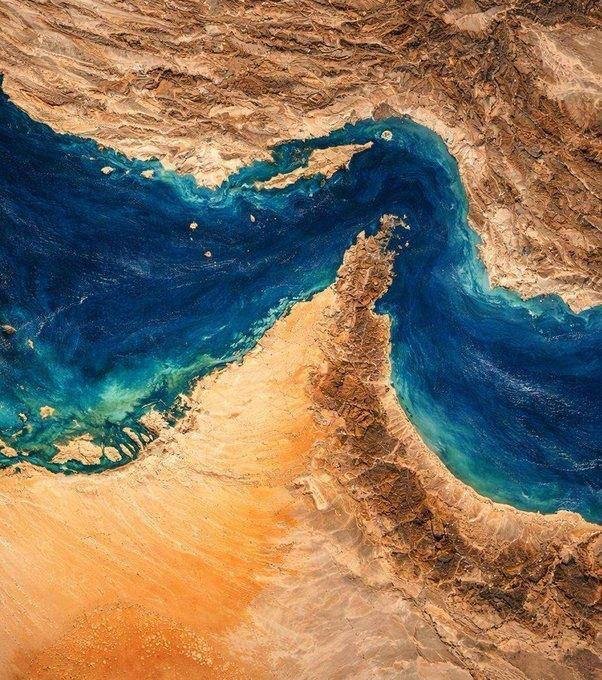
The structural picture behind the three statements is one in which the shipping lanes of the Gulf and the broader region are contested, the United States retains a network of access arrangements across the Gulf, and Iran has built a layered response capability that can be activated incrementally rather than as a single blow. The "sites the US is permitted to use" formulation is, in this context, an explicit acknowledgement of the access regime — and a warning that the access regime is being read by Tehran as a shared vulnerability.
The timing is also structural. The diplomatic track and the kinetic track are running in parallel because Tehran — like Washington — is reading the months ahead as a closing window. Iran's regional position depends on a number of files that are simultaneously in motion: the situation in Lebanon, the question of ceasefire enforcement in the Gulf, the wider non-aligned alignment around BRICS, and the political economy of energy exports in a year in which oil-market rebalancing is itself a strategic question.
For the BRICS-aligned audience that the BRICS News channel represents, the message is that Iran is acting inside the same legal and political vocabulary that the non-aligned diplomatic community has been building for two decades. For the US-aligned audience, the same message is provocation dressed as legalism. The fact that the foreign minister chose the BRICS channel to deliver the "no tangible progress" verdict — rather than the more familiar IRNA or PressTV platforms — is itself a hint at which audience Tehran is trying to move.
Where this goes
The two tracks now run on the same clock. If strikes continue on sites the US is permitted to use, Washington has, on past form, a number of choices ranging from a public naming-and-shaming of the strikes, to kinetic counter-strikes of its own, to a tightening of the sanctions architecture. The third option — sanctions — is the one most consistent with a "no tangible progress" reading of the talks, because it preserves the diplomatic channel even as it raises the cost of remaining in the room.
The Beirut red line is the more dangerous of the two tracks, because it is the one in which Iran is putting itself on the record as a direct party. The statement carried by OSINTtechnical on 4 June 2026 is a clear conditional: an Israeli strike on Beirut will be met with an Iranian strike on Israel. The price of the conditional is the credibility of Iran's deterrent posture — and the price of carrying it out is a wider war that neither the Iranian economy nor its current diplomatic position is well-placed to absorb.
The plausible trajectory, on the evidence available, is that Iran will continue to manage the escalation in increments: one more strike, one more statement, one more closed-door meeting in a Gulf capital or in Muscat or in Geneva, in which Tehran can claim to be talking while the same forces continue to fire. That posture has worked for Tehran in past cycles. What is different in June 2026 is the public linkage of the three tracks by a single voice, in language that leaves almost no diplomatic room to step back from.
Monexus framed this from the Iranian foreign minister's three public statements on 3–4 June 2026 as a single posture rather than as three separate news items — the wire feed has tended to treat them as discrete events, and the source feed for this piece was thin (three items), with the US/Israeli counter-frame reconstructed from past-record public positions rather than from new statements.
Wire provenance
This editorial synthesis draws on the following public wire/social posts:
- https://t.me/BRICSNews
- https://t.me/osintlive
- https://en.wikipedia.org/wiki/Foreign_Minister_of_Iran
- https://en.wikipedia.org/wiki/Iran%E2%80%93United_States_relations
Follow the event.
These dated source records provide context. They do not retrospectively verify this archive article.
Separate what the nuclear watchdog reported from what it could not determine after the June 2025 strikes.