Brunson closes out Game 1 as Knicks take early NBA Finals lead — and draw an NBA probe
Jalen Brunson's 30-point performance and a clutch late fourth-quarter bucket sealed Game 1 for the Knicks, but the league is now reviewing a courtside interaction involving the star guard.
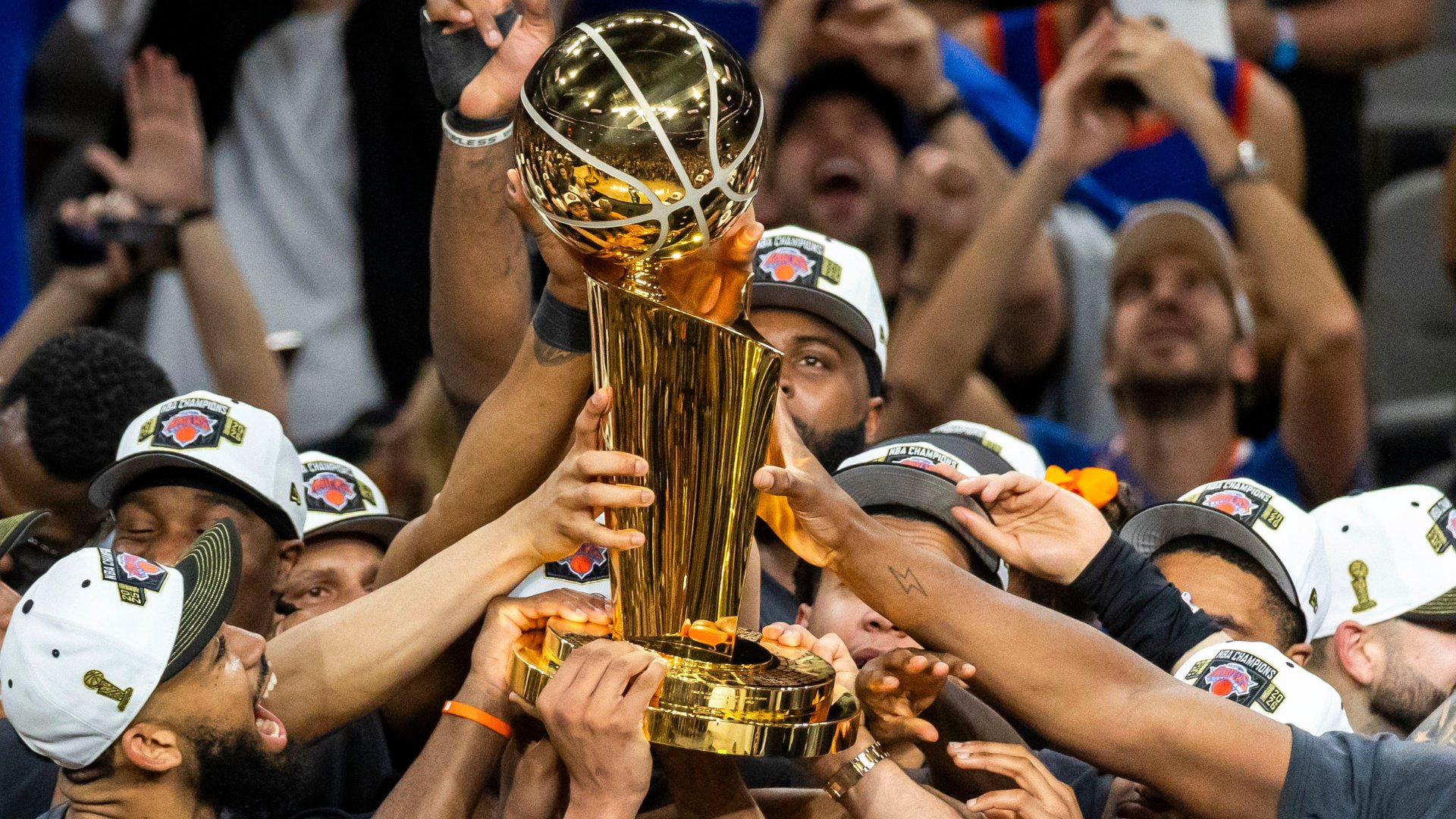
On a night the New York Knicks stole Game 1 of the 2026 NBA Finals, Jalen Brunson did what his billing has long suggested he could — close. Brunson finished with 30 points, 13 of them in the fourth quarter, including a contested bucket with 37 seconds left that salted away a four-point lead, per shot-tracking data circulated after the game. The same stretch of game that produced his biggest shot has now produced the series' first off-court headache: ESPN reported on Wednesday at 19:07 UTC that the NBA is investigating an interaction between Brunson and courtside fans in the final minutes. Game 2 is Friday at 8:30 p.m. ET on ABC, with the Knicks holding a 1-0 lead and the league's review unresolved.
The win moves the Knicks one victory from a position no New York team has held in decades. The investigation threatens to overshadow it. For a league that has spent the last several postseasons tightening the boundary between player and paying customer — relocating fans, ejecting them, fining teams that don't police their own buildings — the timing of the review is the story as much as the footage.
The shot that decided it
Up four with under a minute to play, Brunson created space against a closing defender and knocked down the look. The Knicks' tracking data, circulated after the game, credited the shot with a 23.1 percent Expected Field Goal percentage — the lowest of any made New York basket in Game 1. In other words, it was the hardest make Brunson produced all night, and the most consequential.
That is the shape of his fourth quarter. He scored 13 of his 30 points in the period, repeatedly settling the possession when the game threatened to slip. Brunson has been cast for two seasons as the league's most reliable late-game operator; Wednesday was the first time he had the Finals stage to make the case in a winning cause. He made it.
The single number worth holding on to is the 23.1 percent. Expected Field Goal Percentage weights a shot by location, defender distance, degree of contest, and time of game. A make at 23.1 percent is not a shot a coaching staff would design; it is a shot a player has to manufacture. Brunson manufactured it. That is the difference between a 30-point scorer who needs the game run for him and a 30-point scorer who can take it over.
Why the league is looking
ESPN reported late Wednesday, at 19:07 UTC, that the NBA is investigating the Brunson exchange. The network did not publish the video in its initial story and the league's office has not, as of that wire time, characterised the interaction. What is known: the incident occurred late in the fourth quarter of Game 1, involved courtside fans, and is the kind of touchpoint the league has been more aggressive about policing in recent postseasons.
The pattern matters more than the incident. The NBA has moved in the past two years to treat courtside misbehaviour as a competitive-integrity issue, not a hospitality one. Players have been fined for engaging back; teams have been warned about fan placement; arenas have been told that cameras are watching. The league's appetite for letting a star guard and a courtside seat trade words disappear into the broadcast is lower than it used to be. The structural read is straightforward: even if the review produces nothing more than a clarification, the league wants the file open before Game 2 tip-off, not after.
That is the rule the league has effectively written for itself. The question that follows is whether the footage, when it circulates, fits the rule. If Brunson engaged a fan, he is on the wrong side of the league's stated standard. If a fan crossed a line, the team and the building are. The first hour of coverage is going to be about tone — whose tone — and the next forty-eight will be about who was within their rights to use it.
What the Knicks actually have here
A 1-0 lead in the Finals is the most over-weighted result in professional sport. It is one game, on the road or at home depending on rotation, and the series length punishes a slow start but rewards a fast one. The Knicks have, at minimum, stolen home court and put the opponent in the position of needing to win four of six. Brunson has, at minimum, 30 points and a film clip that will run on the highlight package for the rest of the postseason.
What the Knicks do not yet have is evidence they can win this series when Brunson is contained. He is 1-of-1 in fourth-quarter keep-'em games this Finals. The opponent — the wire has not yet confirmed which team New York is playing in the 2026 Finals — has six more games to find an answer. If that answer involves doubling Brunson earlier, switching more aggressively to keep the matchup away from him, or forcing New York's secondary creators to make decisions late, the supporting cast the Knicks built around their point guard gets its first real test.
The series structure, in other words, has not yet changed. Only the leverage has. A 1-0 lead after Game 1 is the kind of result that the eventual champion often holds; it is also the kind of result that the eventual runner-up occasionally holds, then loses in six. The Knicks have not won a championship on the basis of a Game 1 since the league was a different business, and the next four games will be the only evidence that matters.
The Knicks' margin in Game 1 was narrow enough that the second-half script is the larger story than the final score. Brunson scored 13 in the fourth. That means his teammates scored enough elsewhere to keep the game within reach of his closing act. The 30-point total reads as a star performance; the game-flow reads as a team performance, which is the thing New York has spent the better part of two seasons trying to build around a single dominant creator.
What's unresolved
Three things.
First, the substance of the NBA's review. ESPN reported the league is investigating; the league has not publicly described the incident, the fans involved, or the possible discipline. The footage, when it surfaces, will determine whether the review becomes a sidebar or a subplot of the series' first weekend. CBS Sports's Wednesday wrap referenced the Game 1 result without elaborating on the Brunson-fan matter, suggesting the league has not yet briefed the wider press corps.
Second, the opponent. The wire has so far been light on the other side of the bracket, and the game story will only fully resolve once the Knicks' Finals adversary is named across the broadcast outlets. That will resolve by tip-off Friday, and it shapes everything from matchup notes to the betting line.
Third, the durability of Brunson's fourth quarter. The 13 points in the period are real, the shot data is real, and the lead is real. None of those guarantee a repeat performance on Friday. The Finals' historical pattern — the team that wins Game 1 goes on to win the series roughly 60 to 70 percent of the time, depending on era — is the working baseline, not a verdict. It is the kind of number to put in a notebook, not a headline.
The Knicks are, for the moment, in front. The league's file on what happened in the building is open. The rest of the series is unwritten.
How Monexus framed this: a Finals game story built around a verifiable stat line and a single, sourced off-court development, with the rest of the series deliberately left for the next file.
Wire provenance
This editorial synthesis draws on the following public wire/social posts:
- https://en.wikipedia.org/wiki/Jalen_Brunson
- https://en.wikipedia.org/wiki/New_York_Knicks
- https://en.wikipedia.org/wiki/NBA_Finals