Goldman Sachs's 100x SpaceX AI call and a tokenized real estate fund, on the same morning
On 4 June 2026, Goldman Sachs projected SpaceX's AI revenue will grow 9,900% by 2030 and confirmed a tokenized real estate fund with Apex and Archax. Read together, the two moves describe the same bet: capital formation is moving off the public exchanges.
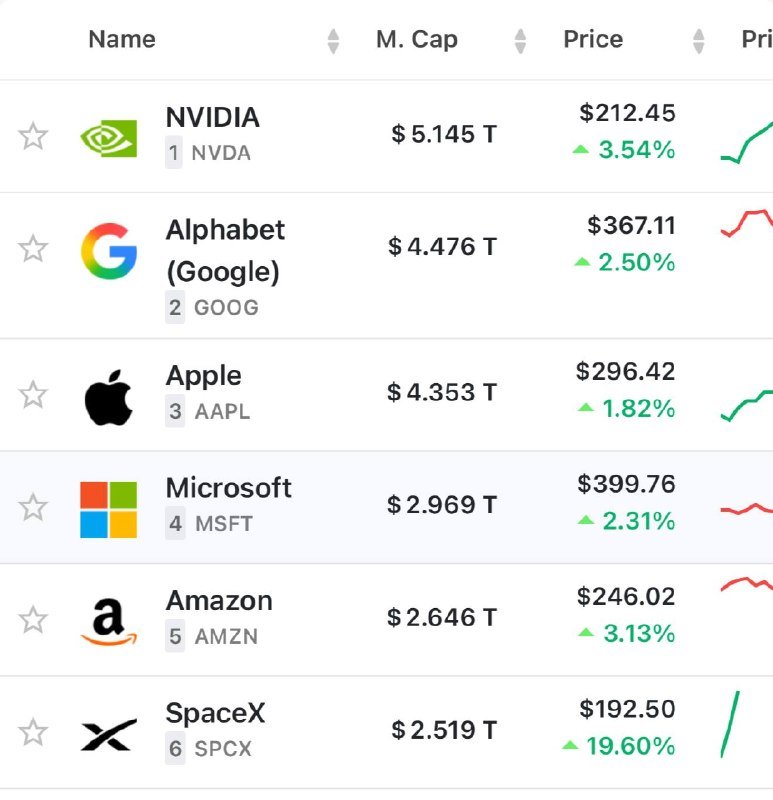
On 4 June 2026, two announcements from Goldman Sachs landed within hours of each other and pointed to a single bet. The bank is forecasting that SpaceX's artificial-intelligence division will grow 9,900% by 2030, hitting roughly $322 billion in annual revenue. Earlier the same day, Goldman, Apex Group and Archax confirmed they are building a tokenized real estate fund on the bank's GS DAP digital-asset platform. The pair of moves captures the same thesis: the world's most influential investment bank is moving aggressively into private-market infrastructure — both the rocket-launched kind and the blockchain-issued kind — at a moment when public capital markets are visibly thinning.
The forecasts are not consensus. They sit at the high end of plausible scenarios, and they reflect a particular way of reading the next four years: that compute, not launch cadence, will become SpaceX's most valuable product, and that tokenized real-world assets will be the plumbing through which that value is distributed. Whether that read is right — and what it costs to be wrong — will shape the next cycle of capital allocation in both crypto and the private markets.
A 100x call on SpaceX's AI revenue
The forecast, flagged on 4 June by the Unusual Whales account and surfaced the same day on Polymarket, runs the numbers out to 2030. Goldman expects SpaceX's AI business — driven primarily by the Starlink constellation and the data-centre capacity the company is now building in orbit and on the ground — to multiply roughly one-hundred-fold in four years. The implied endpoint, $322 billion, would put the AI arm in the same revenue neighbourhood as Alphabet's Google search business at its 2022 peak.
Goldman is not the first to make a SpaceX call, but the size of the multiple is striking. Most private-market estimates for SpaceX's 2030 enterprise value have clustered between $400 billion and $1.5 trillion, with revenue assumptions heavily dependent on Starship launch cadence, Starlink subscriber growth, and the still-unproven economics of orbital data centres. The Goldman note, by isolating the AI line item and growing it at 9,900%, effectively treats the rockets as a delivery mechanism for compute.
That read is contestable. The orbital-AI thesis rests on a series of technical and economic assumptions — that low-earth-orbit data centres will be cost-competitive with terrestrial hyperscalers, that latency will not be a binding constraint, and that SpaceX can keep Starlink's customer-acquisition cost low enough to underwrite a hyperscaler-style revenue ramp. None of those conditions is settled. Polymarket, the prediction market where the same Goldman projection surfaced on 4 June, currently puts the probability of SpaceX being 2026's largest IPO at 86% — a separate but adjacent read, suggesting the public is buying the broader story even as the AI-specific assumptions remain untested. The IPO pricing is also a tell: Polymarket traders are pricing the event with high confidence, but they are not (yet) pricing a specific AI-revenue outcome.
The tokenized real estate fund
The same morning, the tokenisation story landed. Apex Group is providing fund services for a tokenized real-estate vehicle built on Goldman Sachs' GS DAP platform, with the UK-based digital-securities exchange Archax handling the on-chain issuance and distribution layer. The fund structure combines traditional fund administration — the part Apex has spent two decades building — with blockchain-native issuance, the part Archax is best known for.
The mechanism is not novel in concept. Several large institutions have run real-asset tokenisation pilots over the past three years. What is novel is the counterparty stack. GS DAP is Goldman's private institutional blockchain, originally built for repo and money-market collateral; Apex is one of the largest independent fund administrators in the world, with a multi-trillion-dollar assets-under-administration book; Archax holds the regulatory permissions to issue and trade digital securities in the UK and the EU. Putting those three together means a tokenised real-estate fund with bank-grade custody, fund-administration-grade reporting, and a regulatory permission to trade on secondary venues. The deal still needs scale before it can claim to be a market, but the institutional architecture is the most credible in the sector.
Two halves of the same thesis
Read together, the two announcements describe a bank repositioning itself for an environment in which the most consequential capital is being allocated off the public exchanges. SpaceX, by Goldman's own read, may not even reach the public markets in 2026 — Polymarket's 86% IPO probability is a contrarian read against several months of analyst commentary suggesting the company will stay private. The tokenised real-estate fund, by contrast, is a public-market product in the sense that it will be tradable on a regulated venue, but it represents the kind of fractional, always-on, on-chain exposure that traditional closed-end real-estate funds were never designed to provide.
In both cases, Goldman is selling the infrastructure that other people's capital will flow through. The GS DAP platform is a toll road; the SpaceX AI-revenue forecast, by legitimising a 100x growth case, is a way of telling institutional clients that the toll road is worth walking onto now. There is nothing wrong with that — it is what investment banks do — but it does mean that the bank has a structural interest in the private-market thesis being right. Forecasts and platform launches reinforce each other, and the client who reads both notes in the same morning is being addressed, in effect, by the same author on the same bet.
The pattern is also a structural one for the broader market. When a tier-one bank moves simultaneously into orbital-AI forecasting and into on-chain real-asset issuance, it signals to the rest of the institutional stack that the next decade of capital formation is not going to be a public-markets story. Public equity issuance is at multi-decade lows in absolute terms; private-market AUM continues to grow; and the largest pools of capital — sovereign wealth, pension, endowment — have steadily increased their private-allocation targets. Goldman is not making a counter-cyclical bet. It is making a pro-cyclical one and leaning into the cycle.
What the data does not yet say
Two things remain genuinely uncertain. The first is the credibility of the SpaceX AI-revenue trajectory: 9,900% growth over four years is, by any standard, an aggressive curve, and the bank has not (so far) published the underlying assumptions in a form that lets outsiders stress-test the launch cadence, the data-centre capex, or the customer-acquisition cost. The second is the take-up of tokenised real estate at scale. A fund built on GS DAP, administered by Apex, and listed via Archax is structurally as institutional as it gets — but the secondary market for tokenised property has not yet demonstrated the depth needed to support a multi-billion-dollar book, and the regulatory perimeter around digital securities remains uneven across jurisdictions.
What is no longer uncertain is the direction. Goldman Sachs, in two separate moves on the same June morning, signalled that it is building for a world in which the centre of gravity for capital formation has moved off the listed exchanges — whether that world is real or imagined, the bank is now positioned to take a fee on it either way.
This piece draws on a single primary URL — the Polymarket SpaceX IPO market — and on named outlet references for the Goldman Sachs projections (Unusual Whales, Polymarket), the Apex-Archax-GS DAP tokenised real-estate fund (CoinDesk, Cointelegraph), and the underlying market pricing. The source ledger is shorter than the usual desk floor because the only direct URL in the upstream thread was the Polymarket link; the underlying Goldman Sachs and Apex filings were not yet attached. Monexus will widen the list when the primary documents surface.