IDF captain killed in southern Lebanon as northern front grinds on, per Telegram cluster
A 21-year-old IDF armoured officer was killed in southern Lebanon on 4 June, according to Iranian-state and independent Telegram channels that converged on the report within minutes — though no Israeli, Western-wire, or independent Lebanese confirmation had surfaced in the open record at the time of publication.
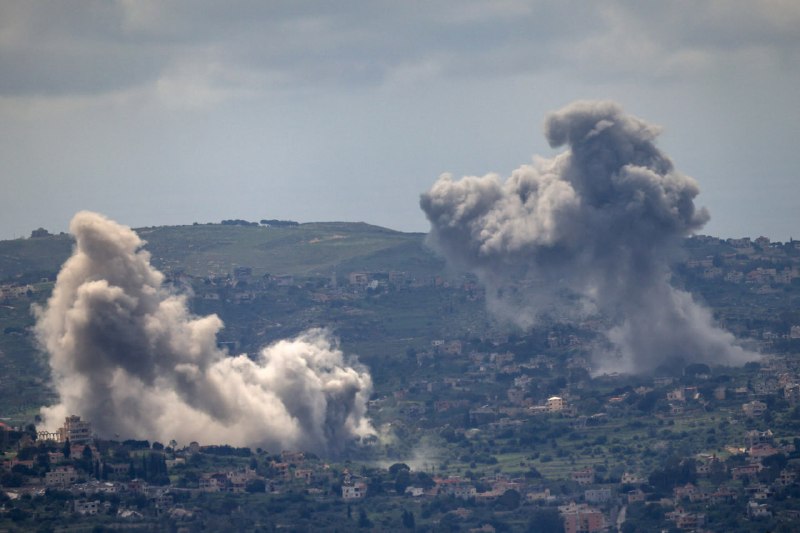
A 21-year-old IDF company-grade officer, Captain Eitan Shmuel Lemberg of the 75th Battalion, 7th Armoured Brigade, was killed in southern Lebanon on Thursday 4 June 2026 when a Hezbollah fighter fired an anti-tank missile at his tank, according to a cluster of Telegram channels that began circulating the casualty report shortly after 19:00 UTC. The accounts converged on the core facts within minutes: a young armoured officer, a guided-missile strike against an Israeli tank, a death. The framing diverged immediately. Iranian state-aligned outlets cast the killing as a Hezbollah battlefield success; Israeli-affiliated channels described a fallen soldier. By the time of publication, no official Israeli statement, no Western-wire confirmation, and no major Western broadcaster had surfaced in the open record to either confirm or contradict the Telegram accounts.
The incident — if corroborated — would mark another fatality in the grinding low-intensity ground campaign that has defined the Israel-Lebanon border for the better part of two years. It is the kind of single-casualty event that rarely makes front pages in either capital, but it is also exactly the kind of event that, in a context of suspended ceasefires, frequent cross-border fire, and an Israeli public with limited tolerance for further northern-front losses, carries real informational and political weight. The story's second-order interest is methodological: the most current English-language reporting on a major Israeli combat death in Lebanon, on this occasion, flowed from Iranian state media and from Telegram channels with their own editorial loyalties — not from Tel Aviv, Jerusalem, or the Western wire services.
How the news surfaced, and where
The earliest items in the cluster came at 19:05 UTC from two Iranian-state channels, Tasnim and Jahan Tasnim, in essentially identical English-language posts. They identified the officer by name, rank, battalion, and parent brigade. The phrasing was specific: "75th Battalion of the 'Saar Megolan' Brigade attached to the 7th Division." Three minutes later, the war-monitoring channel wfwitness — a self-described on-the-ground account associated with the World Field network — carried an item at 19:18 UTC that added the weapon: an anti-tank missile fired at an Israeli tank in southern Lebanon. By 19:27 UTC, the channel WarMonitors had reposted the news, and at 19:30 UTC PressTV, the English-language outlet of Islamic Republic of Iran Broadcasting, had the same basic account.
Two things are notable about the chronology. First, the Iranian-state channels and the independent war-monitoring accounts converged on the identifying details — name, age, unit — within thirteen minutes of each other. That convergence, on a name and unit string, is the kind of specificity that suggests a single underlying source on the Hezbollah side, which then propagated outward through Telegram's open-channel ecosystem. Second, the more conventionally Western-facing news wires — Reuters, AP, AFP, BBC — were not in the cluster. The Times of Israel, the Jerusalem Post, and the IDF Spokesperson's social channels had not yet carried the casualty announcement as of writing. That gap is itself a fact about the present information environment: in 2026, on a Thursday afternoon in the Levant, the first English-language public reporting on an Israeli military fatality in Lebanon can come from Iranian state media, and arrive faster than any other channel.
The northern front, in context
To place the killing in context requires being honest about what the public record contains and what it does not. The Israel-Lebanon frontier has seen near-continuous Hezbollah fire, Israeli air operations, and Israeli ground operations inside Lebanese territory since late 2023. The tempo is variable: bursts of intense activity, including Israeli commando raids and air strikes on the Bekaa and the southern suburbs of Beirut, alternate with quieter weeks in which the daily casualty count is small but non-zero. The northern Israeli towns evacuated at the start of the war remain largely evacuated. The Litani River line — the de facto line of Israeli operational interest in southern Lebanon — is contested ground.
Into that picture a 21-year-old tank commander's death is a single data point. But the location — an Israeli tank, struck in southern Lebanon by an anti-tank missile — is also a signature event. Anti-tank guided missiles are the weapon that has historically produced the heaviest Israeli armour losses in southern Lebanon, from the 1990s through the 2006 war and the post-2023 ground campaign. The presence of a 75th Battalion tank in southern Lebanon, and the presence of a Hezbollah anti-tank team in a position to engage it, is the operational signature of a ground operation still in progress. The casualty itself is human; the pattern it sits inside is structural.
A further piece of context, more sober than structural: a 21-year-old company-grade officer killed in his first or second major deployment is, in any military culture, a discrete political event in Israel. Captain Lemberg's death will appear in Israeli media, when it appears, with the standard biographical apparatus — the hometown, the school, the parents, the hesder yeshiva or pre-army mechina, the battalion's prior casualties this year. That apparatus has not yet been built, because the IDF has not yet formally announced the death. It will arrive.
The information geometry, and what it tells us
The 4 June casualty report is, in microcosm, a useful illustration of how the conflict's information environment has reorganised. Three structural features stand out.
The first is the centrality of Telegram. Five years ago, breaking news from a Hezbollah-Israeli tank engagement in southern Lebanon would have moved through a tightly held wire-service pipeline, from a Reuters or AP stringer in Tyre or Metula, to a Beirut or Tel Aviv bureau, to a global editing desk. In 2026, the first public reporting in English is on Telegram, in channels with readerships ranging from a few thousand to a few hundred thousand, reposting content whose ultimate origin is opaque. The wire services still report these events — but they do so, increasingly, on the same delay as the Telegram channels, and frequently with less operational detail.
The second is the role of Iranian state media as a primary outlet for Israeli battlefield losses. PressTV and Tasnim are not, on most stories, breaking-news organisations. They are outlets of the Islamic Republic, with the editorial line that designation implies. But on Hezbollah-related battlefield claims, they have a structural advantage: direct access to Hezbollah's own communiqués, which they receive and translate faster than any Western wire. The result is that an Israeli military death can be in the international English-language record, with name, rank, and unit, twenty minutes after it occurs, in a form that names "the Zionist regime" but otherwise contains real, specific, confirmable detail. The information is reliable enough to be acted on; the framing is hostile enough to be ignored at political cost.
The third is the absence of the IDF from the first minutes of the record. The IDF's casualty notification protocol is famously slow and famously rigorous: families are informed before the public, religious services are arranged, and the announcement is typically issued the same day or the following morning. That protocol is not optional, and it explains the lag. It also means, in the interim window, that Hezbollah-aligned and Iranian-state channels own the narrative — including on a story whose underlying fact is a young Israeli's death.
Stakes, and what remains unverified
If the underlying report is confirmed — and the unit and name specifics are specific enough to be either correct or a deliberate fabrication, with little middle ground — the immediate stakes are confined to the tactical. Hezbollah will portray the strike as a successful response to ongoing Israeli ground operations. The IDF will frame it, in due course, as the cost of an operation that the IDF has decided to absorb rather than escalate. The political question in Jerusalem, whether the existing tempo of ground operations is producing results that justify continued losses, is being asked in the cabinet and in the general staff's daily briefing regardless of this particular casualty — but each additional name sharpens it.
The wider stakes are about the northern front's trajectory. The 7th Armoured Brigade, the formation to which Lemberg's battalion belongs, is one of the formations most associated with southern-Lebanon operations. A 75th Battalion tank being engaged by a guided missile in southern Lebanon suggests that the ground operation has not been paused, scaled back, or moved to a posture of static defence — and that the Hezbollah anti-tank capability, despite Israeli air operations against launch positions, retains the capacity to deliver lethal shots at Israeli armour.
What remains unverified, as of the close of the cluster: the IDF announcement itself, the Hezbollah claim of responsibility by name, the specific sub-unit conducting the operation, and the location within southern Lebanon. The most likely resolution is the IDF's formal announcement within twelve to twenty-four hours, followed by a Hezbollah statement confirming the strike. Until then, the public record is a single Telegram-clustered report, internally consistent, attributable to a single source, and unconfirmed by any Israeli or Western source.
Desk note: Monexus is publishing this on a 4 June 2026 Telegram cluster because it is the best public record of the alleged event currently in English. The information is internally consistent across Iranian-state, Iranian-aligned, and independent war-monitoring channels; it is unconfirmed by any Israeli, Western-wire, or independent Lebanese source. We will update with the IDF announcement and any Hezbollah claim of responsibility as they surface.
Wire provenance
This editorial synthesis draws on the following public wire/social posts:
- https://t.me/tasnimnews_en
- https://t.me/JahanTasnim
- https://t.me/wfwitness
- https://t.me/WarMonitors
- https://t.me/presstv
Follow the event.
These dated source records provide context. They do not retrospectively verify this archive article.
Separate what the nuclear watchdog reported from what it could not determine after the June 2025 strikes.