Khomeini's shadow, Khamenei's absence: what the 37th-anniversary messaging tells us about the next phase of the Islamic Republic
On 4 June 2026, Iranian state outlets staged a succession in plain view. Reading the script tells you which Islamic Republic is meant to follow.
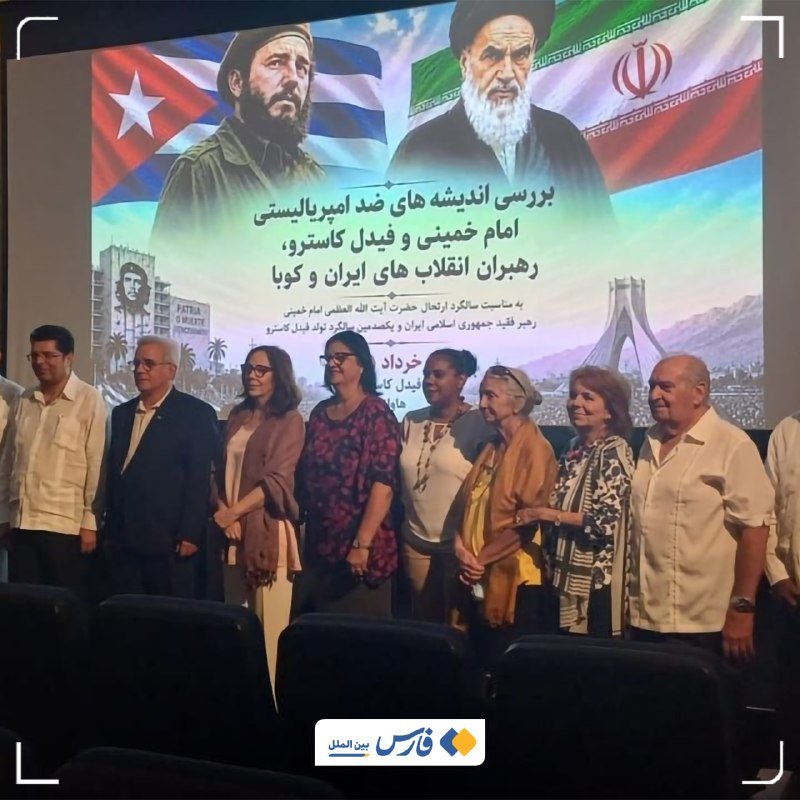
The annual Khomeini death-anniversary is the Islamic Republic's most reliable stage. For decades it has served as a ritual reaffirmation of revolutionary legitimacy: the sitting Supreme Leader standing at the founder's tomb, re-reading the line, re-sealing the compact between the dead and the living. On 4 June 2026, the script ran again — and according to the Iranian state outlets that covered it, the man who has held the title of Supreme Leader for nearly four decades was referred to throughout the day as "the Martyr Leader." A designated reader read a posthumous text aloud at the mausoleum. The ceremony was framed, in the words of those outlets, as inheritance and duty in equal measure.
The messages the regime puts out on 14 Khordad are read accordingly by the chancelleries that track them. This year's worth tracking for a specific reason: the regime is performing succession in real time, and the script it has chosen tells the reader, in plain text, what kind of Islamic Republic it intends the next phase to be. The clues are in the words, in the choice of messenger, and in what the outlets chose to lead with.
A single rhetorical unit
The day opened with state outlets Tasnim, Mehr News, and Al-Alam publishing, in close succession, the contents of the message being read at the Behesht-e Zahra cemetery south of Tehran. The text, as relayed by these outlets, paired Khomeini and Khamenei in a single rhetorical unit — "Great Khomeini and Martyr Khamenei" — describing both as figures who "discovered and revived the readiness of the nation."
The pairing is not incidental. It places the recently deceased Supreme Leader on the same plane as the founder, conferring canonical status before the succession has had time to settle. That the title "Leader of the Islamic Revolution" itself appears in the present tense in the message — "the honor document of the lives of Imams of the revolution" — while the principal referent is now posthumous, suggests the regime is moving quickly to install a vocabulary in which the new office-holder is already continuous with the old. The public-facing script does not say "the late Leader." It says "the Leader," in the active voice, and lets the body language of the ceremony carry the rest.
What the words say, in order
Three themes recur across the day's coverage, in the order the outlets chose to publish them.
The first is unity. "Let everyone thwart the enemy's plan by standing up, being clear-sighted, maintaining unity and mutual trust, and not colluding with the enemy" — a line from the message circulated by Tasnim News in English at 07:43 UTC on 4 June. The language is calibrated for a domestic audience the regime reads as vulnerable to outside pressure; the reference to "the enemy" is unspecified, which is itself a tactic.
The second is continuity of doctrine. The text frames Khomeini's death not as a rupture but as an annual covenant — "the 14th of Khordad," the state outlets note, "an opportunity for the nation's annual covenant with Imam Khomeini." The covenant, in this telling, is not a one-time pledge but a renewable ritual; the new Leader's role is to be the guarantor of its renewal.
The third is the foreign-policy frame. The message, as Tasnim and Mehr both reported in the 07:30–07:35 UTC window, described the Iranian nation as "a source of pride for free nations with its new mission alongside the resistance front." The "resistance front" is the regime's standard term for the network of state and non-state actors it considers aligned with it — Hezbollah, the Houthi movement in Yemen, the consolidated Shia militias in Iraq, and the Palestinian factions around the Islamic Jihad and Hamas orbits. The phrase "free nations" applied to this coalition is, on the diplomatic record, a deliberate provocation. It tells the regime's external partners that the network remains a strategic asset of the new administration, not a legacy of the old.
The messenger, and what the choice signals
The most telling detail of the day is not in the text. It is in the messenger.
The Supreme Leader's annual message at the Behesht-e Zahra ceremony has, for nearly four decades, been delivered in his own voice. The image of the Leader standing at Khomeini's tomb — chiding, blessing, warning — is the regime's most reproduced photograph. The fact that the 2026 ceremony was, by every Iranian state account, a reading by a designated officiant rather than a speech by the incumbent marks a public-facing break in that visual grammar.
The successor is being held back, in public, while the doctrine is being re-narrated. That is consistent with a regime that has historically preferred to consolidate succession in private, then present it to the public as already settled. The English-language state outlets, in particular, lead with the message content rather than the person reading it — an editorial choice that itself signals the priority: doctrine before name, continuity before personality.
What remains unanswered
The pieces that remain open are the ones Iranian state outlets do not address and that no independent confirmation in the public record resolves on 4 June 2026. The identity of the new Supreme Leader is not named in the day's English-language coverage; the message is reported as delivered, but the institution that will carry the title forward is left implicit. The international response — from Washington, Brussels, the Gulf states, Israel — does not appear in the materials at hand. And the question of what "martyr" means in this specific case — whether the regime is asserting an assassination narrative, a death-in-service narrative, or a theological framing — is left open by the language the outlets chose to use. The choice of word, in the Shia register, is not neutral; it implies a cause, and a cause implies a claimant. Who that claimant is, and on whose behalf, is the question the day's script did not answer.
What is clear is that the Islamic Republic, on the day of its most canonised ritual, chose to perform continuity. The reading was not the speech. The text was not the voice. The successor was present but not yet named. The doctrine was affirmed. The "resistance front" was reaffirmed as a permanent foreign-policy fixture. The choreography of the day was the message — and the message, on the available record, is that the line from Khomeini is unbroken, and that the next phase of the Islamic Republic intends to be read in the same grammar as the last.
This publication framed this as an opinion read of the day's messaging rather than a reported event, given that the entire public record of the ceremony on 4 June 2026 comes from Iranian state outlets.
Wire provenance
This editorial synthesis draws on the following public wire/social posts:
- https://t.me/tasnimnews_en
- https://t.me/mehrnews
- https://t.me/alalamfa
- https://t.me/tasnimplus