SpaceX targets $75bn raise in record IPO at $1.77 trillion valuation
If completed at the announced $1.77 trillion valuation, the listing would surpass Saudi Aramco's 2019 record and test how much capital public markets can absorb from a single private issuer.
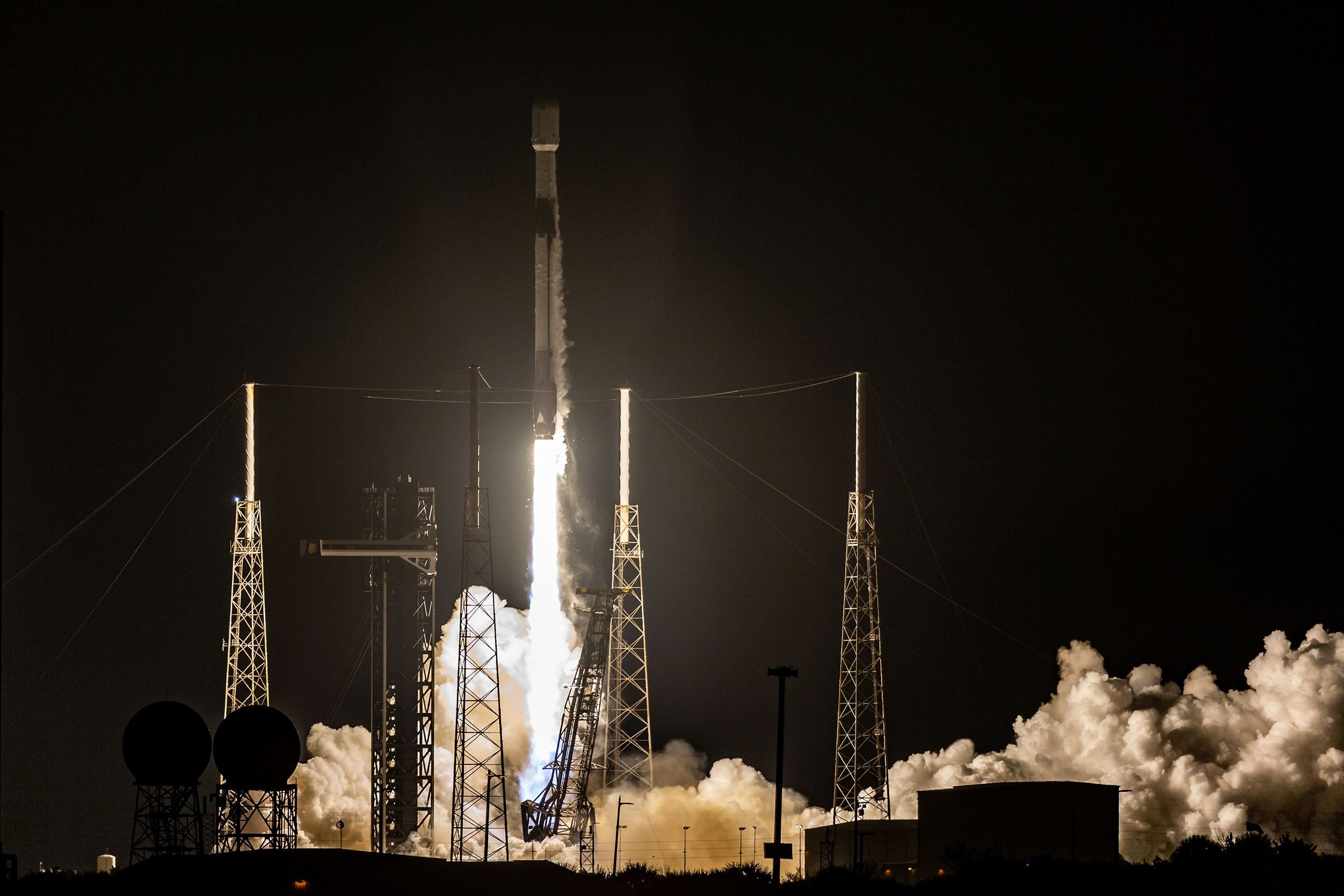
On 3 June 2026 at 23:48 UTC, French and German wire services reported that SpaceX had filed the public paperwork to raise approximately $75 billion in an initial public offering, valuing the company at $1.765 trillion. The float — 55 million shares, per France 24's English service — would, if priced at the indicated level, become the largest capital raise in stock-market history: nearly three times the size of Saudi Aramco's December 2019 listing on the Tadawul, the standing record. Deutsche Welle noted in its reporting that the listing could, on paper, push Musk past the trillion-dollar personal net-worth threshold for the first time.
The filing is not a conventional IPO. It is a referendum on how public markets value vertically integrated industrial-and-infrastructure businesses at a moment when the boundary between commercial and strategic capital is unusually thin.
What the announcement actually says
The mechanism is straightforward. The company files — confidentially, in this case, the way most large-cap issuers do at this scale — and discloses to prospective underwriters a target range. What is unusual is the ratio between the raise and the implied post-money valuation. $75 billion is roughly 4.2 percent of $1.765 trillion. The remaining 95.8 percent stays in private hands. The company is, in other words, asking the public market to provide it with a price discovery mechanism for an asset whose operating performance is already substantially understood by a closed circle of private investors, sovereign-wealth managers, and crossover funds who have marked the company up through successive private rounds since 2015.
For comparison, Saudi Aramco's 2019 float sold roughly 1.7 percent of the company at listing, with the Saudi state retaining the rest. SpaceX's structure is, on this dimension, more conventional than Aramco's. But the absolute size is not. Even at 4.2 percent, the offering is more than the entire annual IPO volume of any single Western exchange in most recent years.
The order book question
Three things have to hold for the deal to clear at the indicated price. The first is the order book. A $75 billion raise requires anchor commitments from a small number of very large buyers — sovereign-wealth funds, US public pension funds, the largest passive managers, and a handful of Middle Eastern and Asian institutions with the balance-sheet capacity to write nine-figure cheques. Lead managers are not yet named publicly, but the likely candidates are the three US bulge-bracket banks with the largest equity-capital-markets franchises, plus one or two sovereign-wealth co-leads.
The second is the equity-market tape. The deal will land into whatever the macro environment looks like in late 2026, including the trajectory of US interest rates, dollar liquidity, and the broader appetite for high-multiple growth equities. A market correction of 15-20 percent between now and pricing would not necessarily kill the deal, but it would force a re-rating of the indicated valuation.
The third is Musk. The same set of behaviours that have built SpaceX's operational cadence — a willingness to make public statements on unrelated topics without internal review, an active presence on social media, an ownership structure concentrated in his personal holdings — have, on multiple occasions in 2025 and 2026, introduced volatility into the public valuations of his other listed company, the electric-vehicle manufacturer Tesla. Investors in the US have, repeatedly in 2025 and 2026, flagged governance and key-person risk as a material discount applied to Musk-controlled equities. A SpaceX IPO will price that discount explicitly, in the most visible venue available.
A vertically integrated balance sheet
The deeper question the filing puts to the public market is what kind of asset class a vertically integrated space-and-telecommunications business actually is. SpaceX does not, on its own description, separate rocket manufacturing, launch services, satellite constellation deployment, and consumer broadband into distinct reporting segments in the way that a traditional aerospace prime would. The Falcon 9 manifest, the Starship development programme, and the Starlink broadband constellation are run as one operational system with internal capital allocation between them. The Starlink constellation has, since commercial launch, become the largest single source of revenue growth, and the unit economics of low-earth-orbit consumer broadband — high fixed cost, low marginal cost, recurring subscription revenue — sit much closer to a terrestrial fibre or mobile-network operator than to a launch-services contractor.
That is the structural argument for the valuation. A traditional aerospace prime — Boeing's defence-and-space segment, Lockheed Martin's space business, Northrop Grumman — tends to trade at single-digit forward EV/EBITDA in the public market. Mobile-network operators, by contrast, tend to trade in the high single digits to low teens, depending on growth and leverage. Starlink, on a per-subscriber basis, has revenue, churn, and capex profile that look more like the latter category. The public market will, in effect, be asked to decide whether to value SpaceX as an aerospace company, a telecoms company, or some hybrid of the two — and the indicated $1.765 trillion suggests the underwriters expect the telecoms framing to dominate.
Public-private capital at scale
The filing is also a stress test for the public-private model that has defined the last decade of US technology. SpaceX has, since at least 2015, raised capital in successive private rounds at escalating valuations — a structure that allowed the company to defer public-market scrutiny while building operational scale. The list of investors at each successive round — Founders Fund, Google, Fidelity, several sovereign-wealth vehicles — has been small, well-known, and locked in. The IPO converts a small, well-known cap table into a public one, at a price that retroactively validates the entire private-mark history. That validation matters to the broader private-mark ecosystem: every late-stage US technology company in 2026 is, in some sense, being repriced by the size and pricing of the SpaceX deal.
The political economy is harder to ignore. SpaceX is, in operational terms, a critical infrastructure provider for the US Department of Defense, the National Reconnaissance Office, NASA, and a growing number of allied militaries — a status the company has not historically had to disclose in the same granular way that a publicly traded defence prime would. The IPO will require new disclosures on revenue concentration, government contracting, and export controls. It will also, given the company's role in providing launch services for military payloads and satellite broadband to government customers, test how the public market values companies whose strategic importance to the state materially exceeds their commercial customer base.
For Musk personally, the listing is a liquidity event of a different order from anything that has come before. Even at a 4.2 percent float, the establishment of a public market price for the company creates a reference point for his personal balance sheet that did not previously exist. Whether the listing actually makes him the world's first dollar-trillionaire, as Deutsche Welle suggested in its reporting, depends on the existing private valuation of his other holdings, the structure of any lock-up on insider sales, and the realised price on the first day of trading.
A handful of material questions remain unconfirmed by the 3 June filings. No underwriter syndicate has been publicly named. No exchange has been confirmed. The indicated valuation is a target, not a printed price, and the company retains the standard set of options to revise the range, the float, or the timing before a public launch. The order book is not yet visible to the public, and the size of the anchor commitments — which will determine whether the deal clears at the indicated level or below — will not be known until shortly before pricing.
This piece relies on the 3 June 2026 wire reports from France 24 and Deutsche Welle, with structural context drawn from SpaceX's long-public operating model; where the two diverge, the wire leads.
Wire provenance
This editorial synthesis draws on the following public wire/social posts:
- https://en.wikipedia.org/wiki/SpaceX
- https://en.wikipedia.org/wiki/Elon_Musk
- https://en.wikipedia.org/wiki/Saudi_Aramco
- https://en.wikipedia.org/wiki/Initial_public_offering
- https://en.wikipedia.org/wiki/Starlink
- https://en.wikipedia.org/wiki/Falcon_9
- https://en.wikipedia.org/wiki/SpaceX_Starship
- https://en.wikipedia.org/wiki/Nasdaq
- https://en.wikipedia.org/wiki/SpaceX
- https://en.wikipedia.org/wiki/Elon_Musk
- https://en.wikipedia.org/wiki/Saudi_Aramco
- https://en.wikipedia.org/wiki/Initial_public_offering
- https://en.wikipedia.org/wiki/Starlink
- https://en.wikipedia.org/wiki/Falcon_9
- https://en.wikipedia.org/wiki/SpaceX_Starship
- https://en.wikipedia.org/wiki/Nasdaq