SpaceX's IPO quietly draws the line on who is allowed to own the future
The country's most valuable private company is screening out Chinese capital before it even prices. The reasons are technical. The implications are not.
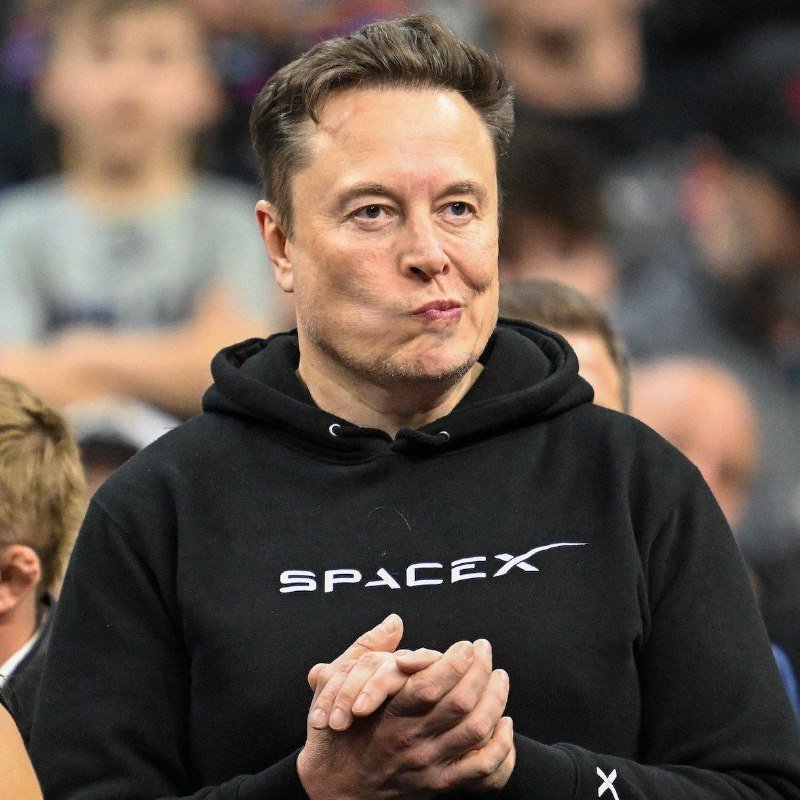
The most valuable private company on Earth does not, apparently, want Chinese money. According to a Bloomberg News report carried by Reuters at 19:40 UTC on 5 June 2026, SpaceX's long-awaited initial public offering will bar investors domiciled in mainland China and Hong Kong from participating, citing the company's defence and aerospace portfolio and the US arms-export regime that follows it. The story, picked up across financial wires within hours, reads on its face as a compliance footnote. It is not. It is a small, brightly lit example of a fact the American capital-markets myth prefers to leave in the footnotes: the deepest pools of investment capital on the planet have always been political instruments first and financial ones second. The only thing novel here is that a privately held rocket company that flies taxpayer-funded crews to orbit is the one drawing the line.
The decision is legally defensible. The International Traffic in Arms Regulations, administered by the State Department's Directorate of Defense Trade Controls, do restrict who may hold equity in firms producing controlled technology, and the penalties for misstepping are severe. The decision is also revealing. It tells us, in a way no policy paper can, how the United States intends to manage the rise of Chinese capital at exactly the moment its private-sector frontier industries are opening themselves to public investors. Treating that as a routine compliance matter is a category error — and a useful one, for the people doing the gatekeeping.
Compliance is the cover, capital is the territory
The mechanism on display is unremarkable in its own right. A defence contractor is selling shares; the United States will not allow capital from a strategic competitor to acquire equity, board influence, or a paper trail of beneficial ownership inside a firm whose technology list includes launch vehicles with military applications, satellite networks with national-security clients, and the kind of intellectual property that CFIUS has spent two decades learning to police. The administrative infrastructure to do this — disclosure forms, beneficial-ownership rules, the OFAC screen — is mature, well-funded, and largely invisible to retail investors.
What is less invisible is the scale. Reports place the offering near $75 billion in size, which would make it one of the largest IPOs in history. A line-item exclusion of mainland Chinese and Hong Kong investors is, in absolute terms, a meaningful slice of global capital told it must stand on the other side of the rope. The reasons given are technical. The outcome is structural.
A bipartisan tradition, wearing a new uniform
American capital has been a tool of statecraft for as long as the Republic has had a Treasury. The 1933 and 1934 Acts that produced the Securities and Exchange Commission were, in significant part, instruments of the dollar's domestic consolidation. The 1970s petrodollar recycling underwrote American geopolitical reach. The 1990s sanctions architecture — later codified in OFAC's modern form — made the dollar's plumbing a weapon in itself, with all the costs that follow for sanctioned economies and all the privileges that follow for those that are not.
What the SpaceX prospectus adds is a more granular and more publicly legible version of the same logic. It is not a freeze on a hostile state's central bank, the way Iranian or North Korean assets have been frozen. It is a quiet, almost polite, list buried in a filing: investors resident in the listed jurisdictions are not eligible to participate. The mechanism is consensual. The outcome is the same as a sanction, minus the diplomatic cost of saying so out loud.
What the Chinese side sees
Beijing is unlikely to be surprised. The People's Republic has spent two decades building parallel capital infrastructure — the Cross-Border Interbank Payment System, the digital yuan, the long patient courtship of renminbi invoicing for commodity trade — precisely to insulate Chinese capital from the kind of discretionary gatekeeping the SpaceX prospectus will codify for a generation of US listings. The response, when it comes, will not be a press release. It will be more of the same: more bilateral swap lines, more Hong Kong as a listing venue, more Shenzhen and Shanghai as alternatives, and a louder insistence — voiced regularly in Global Times and Xinhua editorials — that the rules of the global financial system are not in fact rules but the preferences of a single power.
That complaint has force. It also has a counter: every sovereign capital market on Earth screens participants, and Chinese outbound investment rules — administered through SAFE registration, the Catalogue of Industries for Guiding Foreign Investment, and a long list of administrative quiet refusals — are no less selective. The structural point is that "open capital market" is a slogan, not a description. The SpaceX filing is unusually candid about which slogan it is, and which market.
The stakes
The stakes are not abstract. A US listing of this size, with this screen, sets a template. The defence-tech cluster — Anduril, Palantir's deepened defence book, Shield AI, the rocket and satellite cohort the SpaceX orbit has created — will read the prospectus closely. So will every sovereign wealth fund in the Gulf and every pension fund in the West with a Chinese LP file in its cap table. The list of who is allowed to own the next decade of American frontier industry is being drawn in 2026, in real time, by the lawyers of a single company. If that list spreads — and the compliance economics push hard for it to spread — the bifurcation of global capital becomes a feature of the market, not a phase. The Chinese development model, with its patient state capital and internal capital controls, suddenly looks less like an authoritarian curiosity and more like a working blueprint for sovereign financial autonomy. The American model, for its part, will continue to be the deepest, most liquid, most innovative pool of capital on Earth. It will also be the most carefully curated. Those are the same statement.
The future of space is being sold, in 2026, to a subset of the planet's savers. The rest of the world can watch the rocket fly. The prospectus is clear about who gets a window seat.
Wires led with the legal-mechanics angle — ITAR compliance, arms-export rules, the $75 billion float. Monexus led with the structural angle: who gets to own the next decade of American frontier industry, and what that list does to the architecture of global capital.
Wire provenance
This editorial synthesis draws on the following public wire/social posts:
- http://reut.rs/4vtC3Dj
- https://en.wikipedia.org/wiki/SpaceX
- https://en.wikipedia.org/wiki/International_Traffic_in_Arms_Regulations
- https://www.pmddtc.state.gov/