US strikes Iranian radar sites after downing four drones near Strait of Hormuz
CENTCOM says it shot down four Iranian one-way attack drones and struck radar sites at Goruk and on Qeshm Island, in the first acknowledged US operation against targets inside Iran in the current escalation cycle.
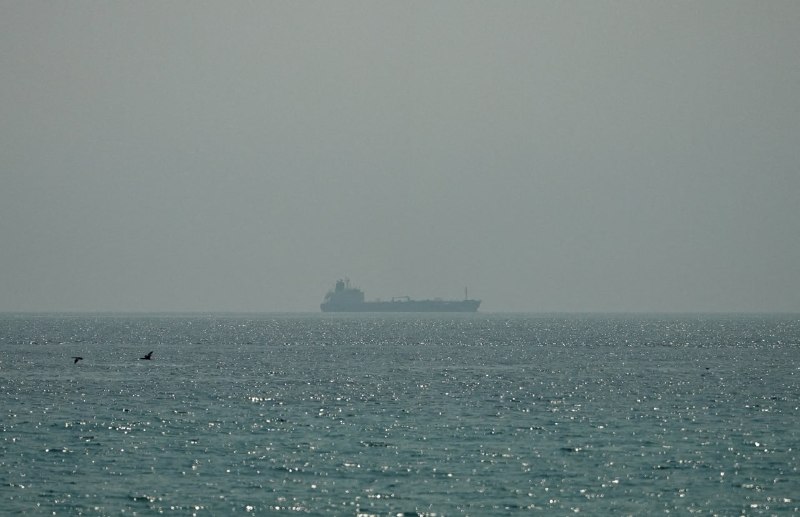
US Central Command announced at 22:55 UTC on 5 June 2026 that it had shot down four Iranian one-way attack drones heading toward the Strait of Hormuz and had struck radar sites at Goruk and on Qeshm Island. The strikes, which CENTCOM framed as a response to drones that "posed an immediate threat to regional maritime traffic," mark the first acknowledged US operation against targets inside Iran in the current escalation cycle. A US official had briefed CNN roughly five minutes before the public statement, telling the network that Iran had launched "multiple" drones toward the strait and that US aircraft had shot down at least four.
The exchange — drones first, then radar sites — sits at the intersection of two pressure systems: the maritime calculus of the world's most important oil chokepoint, and the political mood in Washington, where restraint toward Iran has been visibly thinning for months. Whether the next 48 hours bring de-escalation, symmetric retaliation, or an asymmetric proxy response will shape oil markets, regional diplomacy, and the trajectory of the nuclear file. The available public reporting is thin enough that all three paths remain live.
The reported sequence
At 22:50 UTC, the Telegram channel GeoPolitics Watch carried a US official's account to CNN that Iran had launched "multiple one-way attack drones" toward the Strait of Hormuz, with at least four shot down by US aircraft. Five minutes later, US Central Command (CENTCOM) issued a public statement: "Moments ago, CENTCOM forces shot down four Iranian one-way attack drones that were launched toward the Strait of Hormuz. The attack drones posed an immediate threat to regional maritime traffic." The statement went on to claim that US forces had subsequently struck radar sites at Goruk and on Qeshm Island, both Iranian territory.
By 23:19 UTC the announcement had propagated across the Telegram aggregators that track Middle East military traffic — DDGeopolitics, Middle East Spectator, War Footage, RN Intel, and others. The Iranian state outlets Tasnim News and Fars News International both carried the CENTCOM claim in their English-language feeds, in keeping with their standard practice of relaying adversary statements before issuing any Tehran response. As of publication, no Iranian state response confirming, denying, or characterising the strikes had reached the wires visible to Monexus.
What the wires don't yet tell us
The available reporting is thin on the operational specifics a reader would want. The number of drones launched is "multiple" in the original CNN brief and exactly four in the CENTCOM statement, which suggests at least four were intercepted but leaves open whether other drones reached their targets or were intercepted by regional partners. CENTCOM uses the term "radar sites" without specifying whether the targets are dual-use installations, purely military radar, or coastal surveillance infrastructure. There is no confirmed casualty count on either side, no indication of damage to commercial shipping in the Strait, and no read on whether Iran's regular navy or the Islamic Revolutionary Guard Corps Navy has been mobilised in response.
The geography is the point. Qeshm Island sits at the mouth of the Strait of Hormuz, the chokepoint through which a substantial share of the world's seaborne oil passes and which Iran's IRGCN has long used as a base for fast-boat and drone harassment operations. Goruk is less familiar to Western readers — a port on Iran's southern coast with historical military significance but no widely known current installation profile in the open-source literature. Strikes there suggest an intent to degrade Iran's situational awareness over the Strait rather than to mount a punitive strike on the Iranian heartland.
The Iranian read and the regional silence
Iranian state media have so far limited their English-language coverage to carrying the CENTCOM claim. The reticence is itself a signal. In past escalations, the IRNA, Tasnim, and Fars wires moved quickly to deny the strike, attribute it to Israel, or reframe it as a US provocation. The bare relay — CENTCOM claim, no Iranian characterisation — leaves the diplomatic floor open. Tehran's decision over the next hours to issue or withhold a counter-statement will be read carefully in Riyadh, Abu Dhabi, and Doha, all of which depend on unobstructed Hormuz traffic and maintain quiet channels to both Washington and Tehran.
The framing contest is already forming. Western wires are leading with "Iranian drones" and "US defensive action," a sequence in which the United States responded to a provocation. Iranian-aligned Telegram channels have begun, in their first hours, characterising the event as a US aggression on Iranian soil — a frame that, if it sticks, complicates the maritime-defence narrative. Both framings are partial. The first understates the gravity of a US strike on Iranian territory, even one limited to a radar installation. The second understates the fact that the sequence began with drones launched toward one of the world's most critical sea lanes.
What it sits inside
The structural backdrop is a year of intermittent shadow warfare across the region. A direct US strike on Iranian soil — even one described as a counter-radar operation — is qualitatively different. It marks one of the most direct acknowledged US-Iran military exchanges of recent months, and it does so without the fig leaf of an Israeli intermediary.
Two pressure systems are operating. The first is the maritime oil calculus: any sustained disruption at Hormuz moves crude prices and inflates war-risk insurance within hours, which in turn raises the political cost on the US administration of being seen to have tolerated the disruption. The second is the political mood in Washington, where hardline sentiment in both parties has been visibly hardening for months. Strikes on Qeshm and Goruk are easier to defend in those terms than a posture of restraint would have been. The exchange reads less like an opening shot than like an administration that has decided the cost of standing pat had become greater than the cost of striking.
What happens next depends on three decisions. Tehran's: whether to absorb the strike and de-escalate, escalate symmetrically, or escalate asymmetrically through the proxy network. Washington's: whether to treat the action as a one-off or as the opening of a campaign that will draw a second, third, and fourth round. And the regional maritime powers' — Saudi Arabia, the UAE, Oman, Iraq, Kuwait — most of which have not yet been heard from in the public reporting available to Monexus. Each decision has multiple plausible paths, and the next 48 hours will be the tell. The most consequential single datum still missing is whether Iran, in its eventual response, treats this as a closed incident or an open one.
Desk note: Monexus's framing here treats the CENTCOM claim as the primary public statement, attributes the original drone-launch report to a US official cited by CNN, and uses the Iranian state outlets Tasnim and Fars as relays — not endorsements. We have not asserted Iranian casualties, Iranian official responses, or third-state diplomatic reactions that the available wires do not yet carry. Where geography or installation status is unclear in the open record, the article says so.