Tehran to Beirut: fight the 'real enemy' — Araghchi's rebuke of Lebanon's Aoun
Iran's foreign minister publicly rebuked Lebanon's president on 6 June 2026, telling Joseph Aoun to save the country from its 'real enemy' after Aoun's CNN interview attributed a share of Lebanon's crisis to Iran.
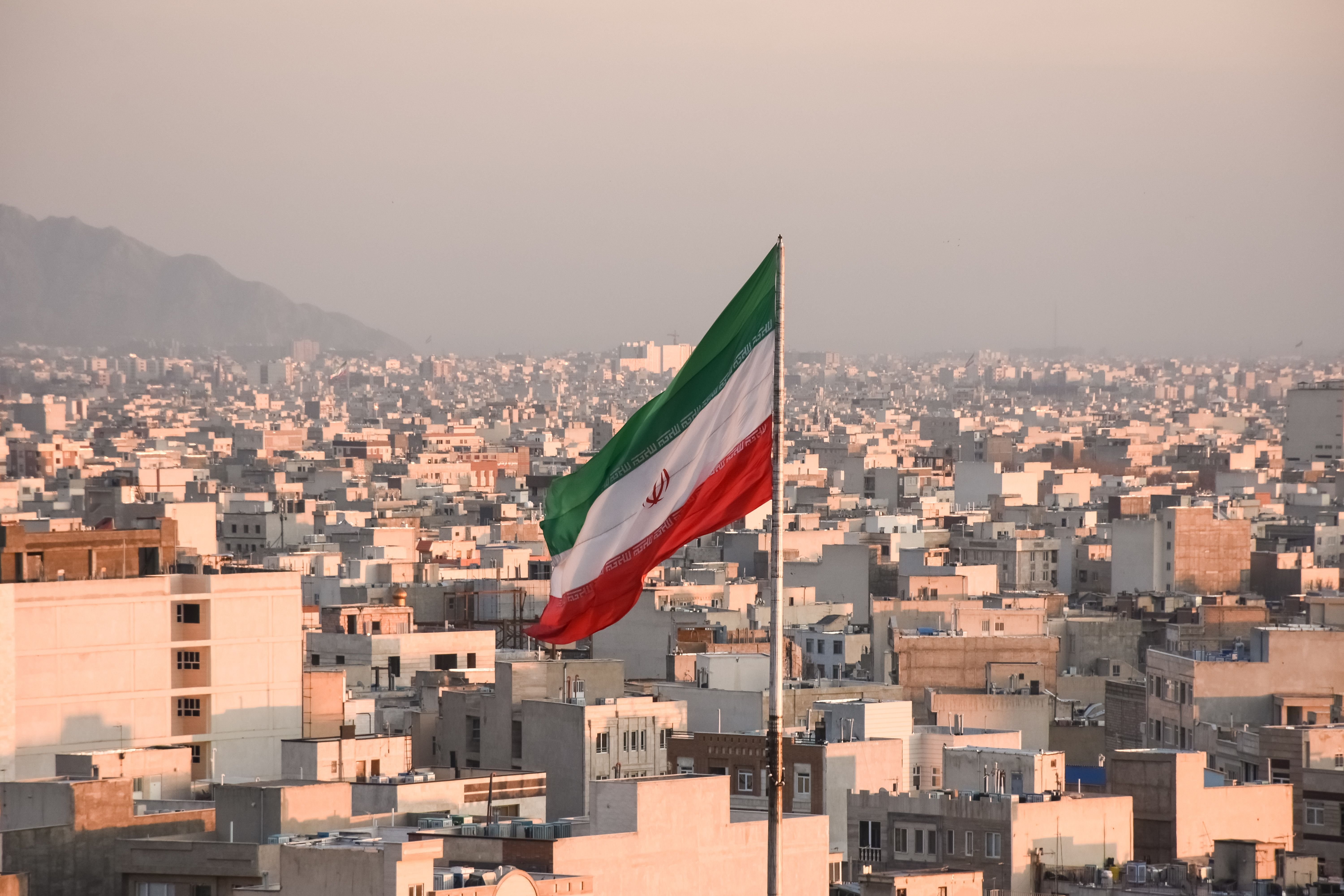
On 6 June 2026, Iran's foreign minister Abbas Araghchi publicly rebuked Lebanese President Joseph Aoun, telling him in a written message to "save Lebanon from its real enemy" and to stop apportioning blame to the Islamic Republic. The reply — carried on Telegram between 03:52 and 04:29 UTC by at least four Tehran-aligned channels including PressTV, Fars News, Tasnim and Al-Alam — was the most direct public collision between the Lebanese state and Iran's diplomatic apparatus since Aoun took office. It was triggered, according to the Iranian read-out, by a CNN interview in which the Lebanese president attributed roughly a fifth of Lebanon's distress to Iran and accused Tehran of occupying a portion of Lebanese territory. Araghchi dismissed those characterisations and, in language directed at Aoun personally, urged the Lebanese leader to look past Iran and toward "the actual forces occupying and bombing" the country.
The exchange is small in volume but heavy in signalling. It marks the first direct public row between Beirut's new US-aligned presidency and the foreign ministry of a regional patron that, for four decades, has armed, financed, and politically shielded Hezbollah — the dominant non-state armed actor in Lebanon until its devastating losses in the 2024–25 war with Israel. The argument exposes the unfinished business of Lebanon's post-war realignment: a country that watched its principal Iranian-backed militia suffer military defeat, an accompanying Israeli campaign that displaced roughly a million civilians, and a succession of shocks that have substantially narrowed Tehran's room to threaten Lebanese politics from the outside. The Araghchi message is, on the most plausible reading, a low-cost rhetorical exercise designed for an Iranian domestic audience that has been told for years that Iran's regional allies are defending a wider Muslim community against Israeli and American aggression.
A four-channel morning push
Between roughly 03:52 and 04:29 UTC on 6 June 2026, the four channels ran near-simultaneous read-outs of an Araghchi message addressed to Aoun by name. The Tasnim version, in a brief Telegram post, said the Iranian foreign minister had told the Lebanese president to "save Lebanon from the hands of its real enemy," and added — in a near-quote attributed to Aoun's CNN interview — that "apparently it is Iran that has occupied a fifth of Lebanon's territory." The Fars News rendering carried the same opening line and elaborated the same point: "based on Mr. Aoun's statements, it seems that Iran is responsible for a fifth of the dust" — an idiosyncratic translation that, in the original Persian, gestures at Lebanon's accumulated crises. The PressTV English version focused on Araghchi's rejection of the bargaining-chip framing: the foreign minister, the channel reported, "dismissed accusations that Tehran is using Lebanon as a bargaining chip, pointing to the actual forces occupying and bombing the nation, and urged the Lebanese President" to refocus.
The Al-Alam Arabic channel, the Iranian state broadcaster's international arm, ran a parallel summary titled "Araghchi's message to Aoun: Save Lebanon from its real enemy." The DDGeopolitics channel, a Beirut-based English-language aggregator, framed the row as "ARAGHCHI FIRES BACK AT LEBANESE PRESIDENT" and noted that the Iranian reply came in response to "Aoun's CNN interview, where Aoun blamed Iran for Lebanon's crisis."
The four Iranian-aligned read-outs are mutually consistent on substance. They differ, as state-aligned renderings typically do, in tone and emphasis — the Fars and Tasnim versions foreground the "fifth of the territory" line; the PressTV version foregrounds the bargaining-chip rebuttal. None of them, on the face of it, softens the message.
What Aoun said, and what is contested
The trigger for Araghchi's message was a CNN interview Aoun gave in the days before 6 June 2026. The original CNN segment was not in the materials reviewed for this article; the substance of Aoun's remarks is available to this publication only through the Iranian channels' renderings. According to Fars, the most specific of the three, Aoun reportedly said that "it is Iran that has occupied a fifth of Lebanon's territory" — language that, on the Iranian reading, made the Iranian role in the country's crisis not one contributor among several but the principal one. According to PressTV, the remarks were more conventionally diplomatic, identifying Iran as one of several external actors weighing on Lebanon's recovery. Monexus treats the "fifth of the territory" formulation as an Iranian-framed read of Aoun's interview, not as a verbatim quote, and has not been able to verify the precise wording from a primary source.
The substance of Aoun's broader posture is, on the contrary, well documented. Aoun — a Maronite Christian and former commander of the Lebanese Armed Forces — was elected president in January 2025 with explicit backing from the United States, France and Saudi Arabia, ending a presidential vacancy that had persisted since October 2022. His government's stated priorities include phased state monopoly on armed force, a programme directed principally at the residual armed capability of Hezbollah, and reconstruction of the areas of southern and eastern Lebanon devastated by Israeli military operations. A speech in which he apportioned a share of Lebanon's distress to Iran, the principal external sponsor of Hezbollah, sits inside that programme rather than outside it.
The Iranian counter-line, articulated by Araghchi in his reply, is that any honest accounting of Lebanon's distress must start with the Israeli military operations that displaced roughly a million Lebanese and devastated the south. From that starting point, Iran's role as a supplier of weapons, training and political cover to Hezbollah was a defensive response to a sustained military campaign, not its cause. The structural fact the Iranian argument is built on is real: the 2024–25 war was, by any measure, the principal engine of civilian displacement and infrastructure loss in Lebanon during the period under discussion. The structural fact the Iranian argument omits is the war's prehistory — the Hezbollah rocket and drone campaign into northern Israel from October 2023, the cross-border exchanges that preceded it, and the regional posture that put Iranian-supplied missile infrastructure within range of Israeli cities.
The structural frame: a realignment, not a rupture
The exchange is a small episode inside a much larger realignment. Lebanon's Shi'a political and military infrastructure, anchored for four decades on the Iran–Syria–Hezbollah axis, has been weakened by three sequential shocks: the Israeli campaign against Hezbollah in late 2024 and 2025, the collapse of the Assad regime in Syria in December 2024, and the Israeli strikes on Iranian territory in October 2024 and again in 2025. The land corridor that once moved Iranian weapons through Syrian territory to Hezbollah's heartland in Beirut's southern suburbs and the Bekaa Valley is no longer operative. The ceasefire that ended the 2024–25 Israel-Hezbollah war, brokered under US pressure, required Hezbollah to retreat north of the Litani River and placed the question of the militia's residual armed capability in the hands of the Lebanese state.
In that environment, a Lebanese president who is simultaneously a former military commander, a US interlocutor, and a domestic political figure with a cross-confessional mandate has more room than his predecessors to publicly identify Iran as a source of national distress — and correspondingly less incentive to soft-pedal the critique for Tehran's benefit. The structural fact is that Iran's ability to threaten Lebanese politicians with violence, the principal lever it has historically deployed, has narrowed. Its remaining levers are diplomatic, rhetorical, and economic.
The Araghchi message uses all three. It is rhetorical, in the framing of a "real enemy" who is not Iran. It is diplomatic, in that it is addressed directly to a head of state and not to a militia. And it is economic, in the unspoken reminder that Lebanon's recovery depends in part on regional financial flows in which Iran is a marginal but non-zero player. None of these is decisive. Together, they constitute a low-volume signalling exercise calibrated for a domestic Iranian audience that has been told for decades that its regional allies are defending a wider Muslim community against Israeli and American aggression.
Stakes: Hezbollah, the ceasefire, the regional settlement
The immediate stakes are modest. Aoun is unlikely to retract or soften the CNN remarks, and the Lebanese presidency is unlikely to break into public dispute with Tehran over a Telegram-channel escalation. The more durable stakes sit in two places.
The first is Hezbollah. The 2024–25 war and the subsequent ceasefire have left the movement politically cornered, militarily degraded, and disarmed on its southern front. An open diplomatic rupture between the Lebanese state and its principal external sponsor would, in the worst case for Tehran, accelerate the political isolation of what remains of Hezbollah's political wing and harden the disarmament timetable. Araghchi's public defence of the "axis of resistance" framing is, in this sense, a defence of Hezbollah's narrative licence in Lebanese politics — a reminder, in tones calibrated for a Beirut audience as well as a Tehran one, that the patron is still present.
The second is the regional settlement. The Lebanese file is one of several in which the post-2024 order is being quietly renegotiated — alongside Syria, where the new authorities in Damascus are still working out their relationship with Tehran, and Iraq, where Iranian-backed militias continue to operate as armed factions outside the formal state. Lebanon is, of all three, the place where the renegotiation is most legible in real time, because the Lebanese state has both a functioning president and a free press and a continuing armed presence of an Iranian-backed group on its territory. The Araghchi message is, on this reading, a low-volume bid to keep the regional renegotiation in diplomatic rather than military registers, and a warning that the Iranian side still has standing in the room.
Monexus was not able to verify the precise wording of Aoun's CNN remarks from a primary source within the source cycle reviewed. The "fifth of the territory" formulation that Fars attributes to the Lebanese president is not a phrase that has circulated widely in Lebanese and Western coverage of Aoun's first months in office; it may be a compressed summary, a translation artefact, or a quote rendered in Iranian framing. The original CNN segment, the transcript, and any response from the Lebanese presidency to Araghchi's note were not in the materials reviewed. The article will be updated when those primary sources become available.
Monexus read the Araghchi-to-Aoun exchange principally through four Iranian state-aligned Telegram channels and one Beirut-based aggregator; Iranian state media were treated as primary sources for what the Iranian foreign minister said, and as contested summaries for what the Lebanese president said.
Wire provenance
This editorial synthesis draws on the following public wire/social posts:
- https://t.me/presstv
- https://t.me/farsna
- https://t.me/JahanTasnim
- https://t.me/alalamfa
- https://t.me/DDGeopolitics
- https://en.wikipedia.org/wiki/Joseph_Aoun
- https://en.wikipedia.org/wiki/Abbas_Araghchi
- https://en.wikipedia.org/wiki/Iran%E2%80%93Lebanon_relations