Kharg Island strike reports: claim, denial, and the price of unverified news
Three Telegram channels published starkly different versions of an alleged event on the island that handles the bulk of Iran's crude exports within half an hour on 5 June 2026. The contradictions are now the news.
On the evening of 5 June 2026, three Telegram channels published, within roughly half an hour, two starkly different accounts of the same alleged event on Kharg Island. At 21:25 UTC, the War Field Witness channel flagged anti-aircraft activity on the island that hosts the terminal handling the bulk of Iran's crude exports. Nine minutes later, the rnintel channel added reports of "explosions / air defense activity" on the same site. By 21:54 UTC, the Middle East Spectator channel had published the counter-version: nothing unusual heard in Kharg or elsewhere in southern Iran, with an explicit accusation that other channels "like to hype."
The contradictions are the story. Kharg is not just any piece of geography — it is the chokepoint through which the Iranian state monetises its hydrocarbon reserves, and the lifeline of any sanctions-bypass economy. When conflicting accounts of an alleged attack on the island circulate inside half an hour, the dispute is less about what happened on the ground than about who shapes the global picture of what happened. This is the texture of modern Middle East confrontation: the strike and the rebuttal published almost in the same news cycle, both versions travelling to terminals, to commodity desks, and to ministries before any satellite imagery or wire confirmation can adjudicate.
The timeline, in three Telegram posts
The order of publication matters. The first report, from War Field Witness at 21:25 UTC, was thin: "AA activity in Iran's Kharg island." The wording — anti-aircraft activity — is consistent with an incoming attack being intercepted, a drill, a malfunction, or a false alarm. No claim of a hit, no mention of damage, no source attribution.
Nine minutes later, at 21:34 UTC, the rnintel channel sharpened the framing to "Reports of explosions / air defense activity on Kharg Island, home to Iran's main oil port terminal." The escalation in language — from "AA activity" to "explosions" — is the kind of incremental ratcheting that, in this corner of the open-source intelligence ecosystem, frequently runs ahead of confirmation. Neither post carried imagery, geolocation, or named official sources.
By 21:54 UTC, Middle East Spectator — a channel that has positioned itself in past reporting cycles as a sceptical counterweight to claim-heavy accounts from the Iran-watching Telegram space — was flatly denying the event: "There are no explosions heard or anything out of the ordinary in Kharg or elsewhere in southern Iran. Some channels like to hype." The denial is itself a kind of source, because it tells the reader which community is speaking: the channels most often aligned with Tehran's narrative line, even when, as in this case, the post does not explicitly cite Iranian state media.
Why the island is the story, even if the strike is not
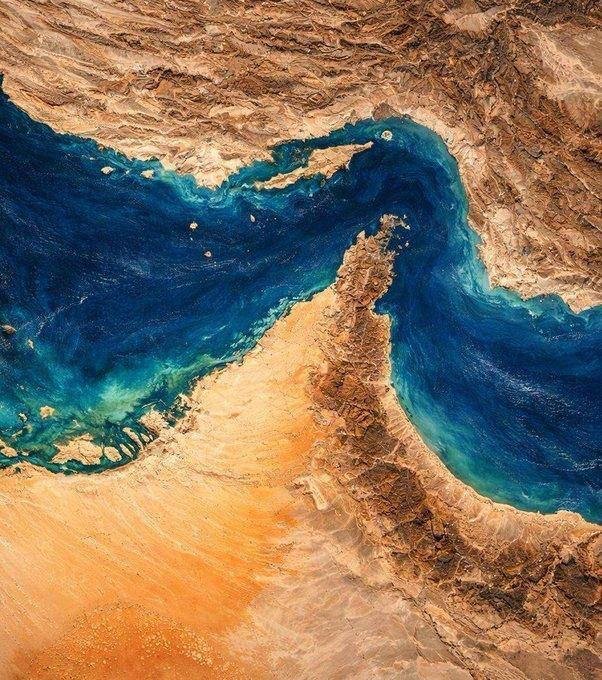
Kharg sits in the northern Persian Gulf, roughly 25 kilometres off the Iranian coast in Bushehr Province. Its terminal complex has, for decades, been the single point through which the overwhelming majority of Iran's seaborne crude exports pass. Any sustained disruption to the loading infrastructure there would tighten global supply through the Strait of Hormuz, the narrow transit chokepoint the island effectively anchors from the north side.
That economic centrality is the reason the island has been a military target before. During the Iran–Iraq war, Iraqi air and missile strikes repeatedly hit the terminal. In 1987, the United States and Iran both conducted operations in and around the Gulf in what became known as the Tanker War, with the Kharg terminal a recurring target of Iraqi raids. The 2010s added cyber attacks attributed to foreign actors against Iranian oil and port infrastructure. The 2024–2026 period has layered in a new variable: a wider shadow conflict in which direct strikes on Iranian energy assets have alternated with covert action, drone and missile exchanges, and a market that prices every unverified Telegram post into a few hours of crude futures volatility.
The point is not whether a particular Telegram channel is right on a particular evening. The point is that any of these posts, true or false, has the capacity to move price action at the next major market open. Brent and WTI desks now read the same feeds that ministries and front-line units read; the lead time on a real strike and the lead time on a hoax have collapsed into the same half-hour window.
The shape of the claim–denial cycle
What unfolded on 5 June is a near-textbook instance of the pattern that has hardened in the Iran-watching Telegram ecosystem since at least the early 2020s. A first channel flags ambiguous activity, often using the language of open-source intelligence — "AA fire," "intercepts," "explosions heard" — without provenance. A second channel, often an aggregator, reposts with stronger framing. Inside twenty to forty minutes, an Iran-sceptical or Iran-aligned channel publishes a denial that frames the initial reports as hype, regime-media disinformation, or Israeli psychological operations.
The cycle matters for two reasons. First, it compresses adjudication: by the time any wire service or satellite-imagery analyst can confirm or deny, the public conversation has already been framed by whichever version travelled furthest in the first hour. Second, it shifts the burden of proof in an asymmetric way. Initial reports of strikes on Iranian assets rarely come with named official sources, on-the-record spokespeople, or documentable geolocation. Denials, by contrast, can be issued by Iranian state-aligned outlets with the implicit backing of an entire state communications apparatus. The result is a public record in which unverified claims and state-aligned denials carry roughly equal epistemic weight, while independent confirmation lags behind both.
That asymmetry is the deeper story. Telegram channels like War Field Witness and rnintel are not state actors, but they operate in an environment where Tehran, Tel Aviv, Washington, and the Gulf monarchies each have a stake in how a single event is read. The same incident will, in different channels, be framed as a successful strike, an Israeli operation, a false flag, an Iranian lie, a routine malfunction, or an oil-market non-event. The only thing the channels actually agree on is that the island matters enough to lie about.
Stakes and what remains uncertain
What this article can establish from the three Telegram posts on the table is narrow: that claims and counter-claims circulated on 5 June 2026 between 21:25 and 21:54 UTC; that the alleged site was Kharg Island; and that no wire service confirmation, satellite-imagery analysis, or official Iranian, Israeli, or US statement has been cited in these posts. Iranian state media had not, as of the third post, been quoted by any of the three channels. No casualty figures, no damage assessments, and no second-by-second ground verification appear in any of the three messages.
What the sources do not specify is also the most consequential. They do not specify whether aircraft were scrambled, whether intercepts occurred, whether terminal operations were halted, or whether any tankers at berth were diverted. They do not name an attacking party. They do not record any response from the Iranian military, the Islamic Revolutionary Guard Corps, the Israeli Defense Forces, or US Central Command. The absence is itself a piece of information: a strike of any operational significance against Kharg would, in most plausible scenarios, have generated observable signals — shipping movements, satellite plume detection, exchange filings from insurers, or oil-price moves — within hours. The silence of those indicators in the thread is, at this stage, a soft form of corroboration for the denial.
The more durable lesson sits at a layer above any single event. Kharg is the most concentrated single point of failure in the global oil-supply chain. It is also the site where, on a routine basis, the world is asked to take its cues from a handful of unverified Telegram channels whose incentives run in opposite directions. Until satellite imagery, port-authority data, or a wire-service confirmation resolves the question of what actually happened on the island on the evening of 5 June, the most accurate description of the event is the one the three posts together already provide: that the dispute itself is now the news.
Desk note: Monexus is filing this piece in advance of independent confirmation; the reporting is restricted to the three channel posts cited below, and the article will be updated once wire or satellite verification is available.
Wire provenance
This editorial synthesis draws on the following public wire/social posts:
- https://t.me/wfwitness
- https://t.me/rnintel
- https://t.me/Middle_East_Spectator
- https://en.wikipedia.org/wiki/Kharg_Island
- https://en.wikipedia.org/wiki/Operation_Praying_Mantis
- https://en.wikipedia.org/wiki/Strait_of_Hormuz
Follow the event.
These dated source records provide context. They do not retrospectively verify this archive article.
Separate what the nuclear watchdog reported from what it could not determine after the June 2025 strikes.