Polymarket puts a price on Cuba's succession
Polymarket is now trading a binary contract on whether Miguel Díaz-Canel will be out as Cuba's leader by 30 June. The market, not the forecast, is the news.
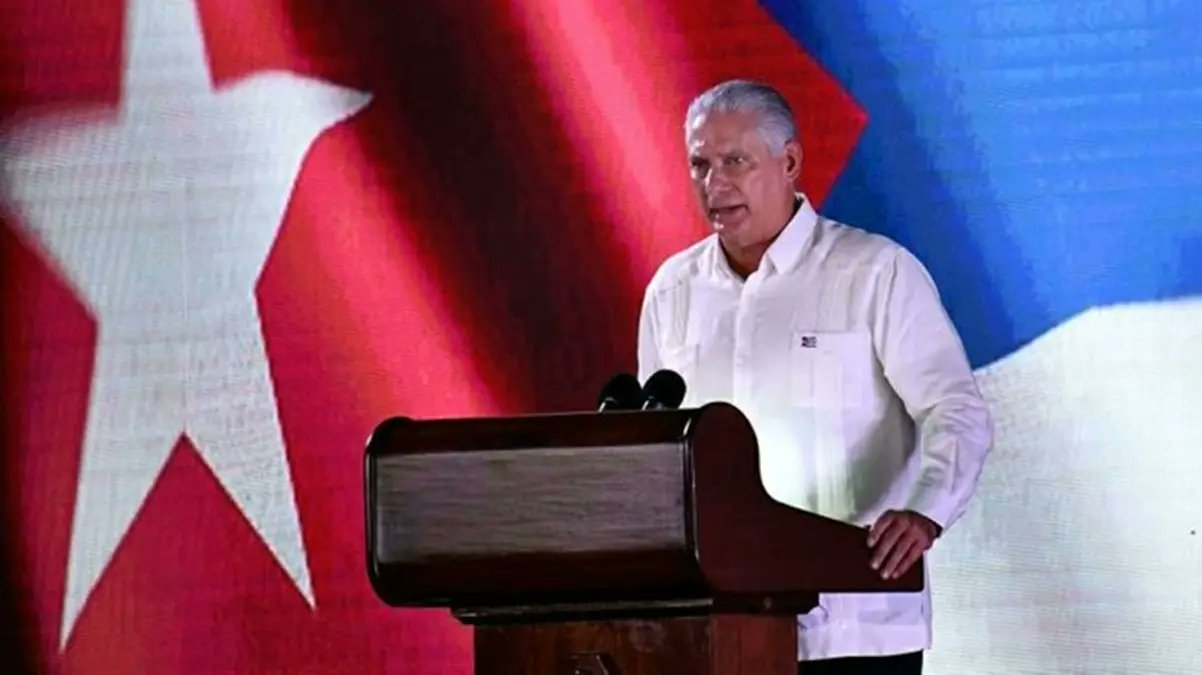
The political future of Cuba has rarely been a question answerable by market consensus. It is, on most days, an opaque contest conducted inside a one-party system that does not release polling and is opaque even to its closest ideological partners. Yet on the morning of 5 June 2026, on the prediction market Polymarket, traders were assigning a real, two-sided price to a question that until recently belonged to intelligence analysts and exile newsletters: will Miguel Díaz-Canel, the handpicked successor to Raúl Castro, still be Cuba's leader by 30 June?
The Cuba contract is one of three Polymarket instruments now live on the platform's political and macro desks this week, alongside a separate market on whether the US Federal Reserve will raise interest rates in 2026 and a third contract tracking where US unemployment will close the year. All three are pricing in contingencies that traditional financial and political coverage treats as background noise. The Cuba contract, in particular, would have looked eccentric two years ago and now looks, increasingly, like the only publicly readable gauge of a question with no other public read.
What's actually being traded
Polymarket's Cuba contract, listed on the platform as "Miguel Díaz-Canel out as leader of Cuba by June 30?", is structured as a binary yes/no on whether Díaz-Canel ceases to be Cuba's head of state or head of government before the contract's resolution date. The platform runs the contract on a USD-denominated order book, with settlement against publicly verifiable official Cuban government sources. The contract is the platform's principal country-level political-risk instrument on Cuba, and it sits in the Polymarket catalogue alongside the two US-domestic macro contracts noted above.
Díaz-Canel has held the titles of President of the Republic (since October 2019) and First Secretary of the Communist Party of Cuba (since April 2021) — a dual concentration of formal power that consolidated the post-Castro succession. In practice, the move did not displace Raúl Castro, who had held the First Secretary post since 2011 and the presidency between 2008 and 2018. Raúl Castro stepped down from the First Secretary role at the 8th Party Congress in April 2021, but the Politburo he shaped has continued to wield influence inside the country's economic and security architecture.
The contract is binary but the underlying question is not. The plausible mechanisms by which Díaz-Canel would leave office before 30 June 2026 are not formally enumerated in the contract's resolution criteria — Polymarket's standard practice is to let traders interpret the resolution language and challenge borderline cases through the platform's dispute process. The most-read scenarios among active traders, in the framing of public discussion on the platform's comment thread, include: a Politburo-led resignation on health or competence grounds; a constitutional reshuffle tied to a generational handover in the military high command; or a more abrupt transition triggered by an internal-security or fiscal event the public has not yet seen.
Cuba context: the macro the market is pricing
The economic backdrop against which the Polymarket contract is being priced is severe. Cuba has, since 2020, navigated a sustained contraction driven by the collapse of tourism receipts, the tightening of US sanctions enforcement on remittances, the withdrawal of Venezuelan oil subsidies, and chronic electricity-grid failure. The government has, in recent years, formally acknowledged the crisis in language notably more direct than in previous decades, and announced a partial liberalisation package in stages.
It is against this backdrop that the market is pricing the binary question. The market does not require a coup, nor a popular revolution; the resolution criterion is simply whether Díaz-Canel is no longer in either of his two formal roles on 30 June 2026. A reading of the market as a binary referendum on Cuban regime stability is, in this sense, an over-read: it is a contract on one named person, with a defined expiry, and a verifiable resolution source.
Prediction markets as a layer of political intelligence
The more interesting structural question is not whether Díaz-Canel will be gone by 30 June — the market itself is the news on that — but what the market's existence tells us about the emerging role of prediction markets as a layer of political intelligence in places the traditional Western wire services do not cover in real time. Cuba, Venezuela, North Korea, Eritrea, Turkmenistan — the list of jurisdictions where the Politburo-or-equivalent makes decisions behind closed doors and the diaspora debates them in encrypted chats is long. The prediction-market mechanism translates that dispersed chatter into a single number that the rest of the financial and policy world can quote.
This is not an unqualified good. Markets can be thin, manipulable, and prone to overreaction to single events. The Cuba contract in particular is unlikely to attract the liquidity that a US election market does, and a small number of large positions could swing the price significantly. The trade is also a poor substitute for the kind of country-specific on-the-ground reporting that has, in past Cuban transitions, done the heavy lifting. But what the market does, that the wire services mostly do not, is price a specific dated event with a specific resolution criterion, and update that price continuously.
The Cuba contract sits alongside two other Polymarket instruments now running on the platform's macro and political desks: a contract on whether the US Federal Reserve will raise interest rates in 2026, and a contract tracking the closing level of US unemployment in 2026. Both of these are conventional — Polymarket has been trading Fed and labour-market outcomes for years, and they sit in a well-developed corner of the platform. Their presence on the same platform, in the same week, as a country-level leadership contract on Cuba is the structural story: the platform has extended its reach from US-domestic political and macro coverage into geopolitical contingency pricing on jurisdictions that are not normally the object of liquid financial speculation.
Stakes
The stake for Cuba itself is large. The post-2021 generational handover was supposed to produce a younger, more technocratic leadership that would manage the partial opening of the economy while preserving the party's monopoly on political life. That handover has, by 2026, coincided with the country's worst economic contraction in at least three decades. A leadership change before 30 June would, in the most benign read, simply accelerate the timeline on a generational rotation the Politburo had already committed to; in a less benign read, it would be a sign that the formal leadership has lost its grip on one of the security or economic portfolios the regime has historically managed in lockstep.
The stake for Washington, and for the Cuban diaspora, is different. The United States has, since the 1960s, run a sanctions architecture against Cuba that has had bipartisan support, modified only at the margins, and that has intensified under multiple administrations. A leadership transition in Havana would, in the first instance, be an opportunity for the diaspora's policy networks to push for re-engagement, and for the policy community in Washington to revisit an embargo architecture the region has long considered anachronistic. Whether a successor government in Havana would itself seek engagement is the open question; the historical record on post-succession diplomatic openings in the Caribbean is mixed.
The stake for the prediction-market industry is also concrete. A correct call on the Cuba contract — or, more pointedly, a well-priced contract on a question that traditional political-risk consultancies were not even writing memos about — is the kind of demonstration that prediction-market platforms have so far struggled to deliver outside US election coverage. The Cuba market is small, in absolute liquidity terms, but its existence is a useful stress-test of the prediction-market mechanism itself.
What the sources do not say is, in this case, also part of the story. The thread material does not include the current price of any of the three contracts, the trading volume, or the identities of the largest position-holders. Monexus will return to this contract as the 30 June resolution date approaches and the platform begins to update settlement conditions in real time.
Monexus treats the Polymarket Cuba contract as news, not as a forecast. The market is the story: a publicly readable, two-sided price on a question that the wire services have not framed, in a country that does not release the information that would let the market's traders be confident.
Wire provenance
This editorial synthesis draws on the following public wire/social posts:
- https://en.wikipedia.org/wiki/Miguel_D%C3%ADaz-Canel
- https://en.wikipedia.org/wiki/Polymarket
- https://en.wikipedia.org/wiki/Cuba