Israeli strike hits Islamic Health Authority facility in south Lebanon's Zebdine
Three regional outlets reported an Israeli airstrike on an Islamic Health Authority facility in Zebdine, south Lebanon, on the afternoon of 6 June 2026. No Israeli confirmation, no wire-service corroboration, and no casualty count had reached the public record at the time of writing.
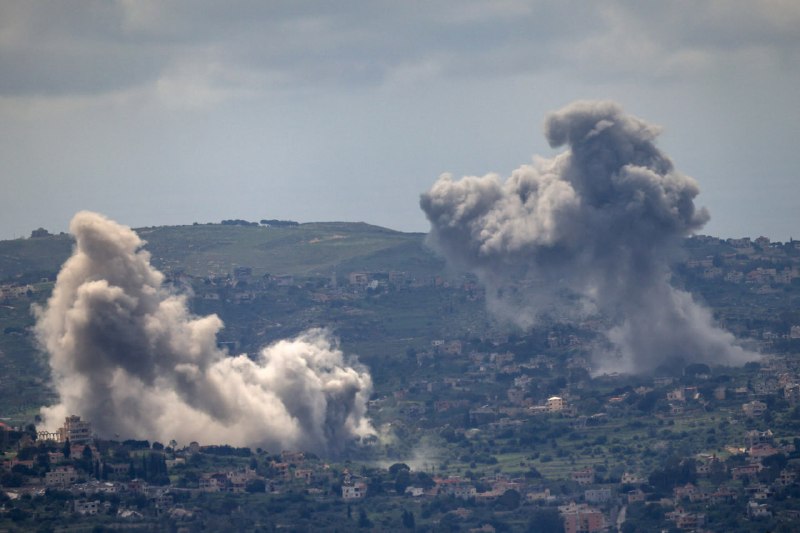
An Israeli airstrike on the town of Zebdine in south Lebanon's Nabatieh Governorate struck a facility of the Islamic Health Authority at approximately 14:46 UTC on 6 June 2026, according to regional outlets that began carrying the story within minutes. The early accounts — from Iran's Al-Alam Arabic, the Beirut-based The Cradle, and a witness channel — frame the strike as having hit paramedics and a civil-defense crew during what they described as the evacuation of casualties. Monexus's review of the source material available at the time of writing found no Israeli or IDF confirmation, no wire-service corroboration, and no published casualty figure. What the available reporting does establish is the type of target named, the location, and the immediate context: medical personnel operating during a casualty evacuation, in a border district that has hosted repeated cross-border incidents since the November 2024 ceasefire.
The incident, if the early Lebanese and regional framing holds, fits a pattern that international humanitarian organisations have criticised repeatedly over the past two and a half years: strikes on medical infrastructure in the Israel-Lebanon borderlands. The structural question is not whether armed groups operate inside civilian structures — that has been alleged by Israel, the United States, and several Western governments — but how that fact is verified, communicated, and proportioned at the moment of strike, especially when the target is a medical team performing an evacuation.
What the limited reporting establishes
Three Telegram channels carried the same basic report within roughly eleven minutes on the afternoon of 6 June 2026. The earliest, posted at 14:46 UTC by a witness channel under the handle @wfwitness, described an Israeli airstrike on Zebdine that targeted the Islamic Health Authority. The Cradle, a Beirut-based outlet with editorial sympathies aligned with the regional anti-Western consensus, ran the same report at 14:47 UTC, characterising the strike as a direct attack on paramedics. Iran's Al-Alam Arabic, broadcasting from Tehran and aligned with the Iranian state's framing of regional affairs, repeated the report at 14:57 UTC, describing the target as a civil-defense team "during the evacuation of casualties."
The convergence of three independently produced reports on the same basic facts — town, target type, time window — gives the early account a baseline plausibility. What none of the three carried, at the time Monexus reviewed the thread, was a casualty count, the names of the personnel involved, an Israeli or IDF response, or a wire-service confirmation from Reuters, AP, or AFP. The information ecosystem that would normally deliver that follow-up reporting — bureau-based wire correspondents in Tyre and Beirut, Israeli press briefings from the IDF Spokesperson's office — has thinned considerably since the late 2024 ceasefire, and the gap shows up first in incidents like this one.
For the moment, the operative facts are: an Israeli strike on Zebdine; a target described as Islamic Health Authority; a context described as paramedic and civil-defense activity; and no independent public Israeli or Western-wire corroboration of the specific targeting claim. That is a thinner evidentiary base than readers are accustomed to, and the thinness is itself part of the story.
The Israeli framing the sources do not contain
Israel's military and political establishment has, since October 2023, consistently described Hezbollah and affiliated Shia Islamist militias in Lebanon as a hybrid threat — armed groups that intentionally position their infrastructure inside, beneath, and adjacent to Lebanese civilian life. Under that framing, an Islamic Health Authority facility is not categorically protected; it is a presumptive military target whose protected status depends on its actual use at the time of strike, and the burden of distinction falls on the operator, not the attacker.
That argument is the substantive Israeli position, advanced in successive IDF briefings, in academic collaborations between Israeli military lawyers and Western scholars, and in submissions to UN panels. It is a serious legal and operational argument. It is also one that external observers, including UN agencies and the International Committee of the Red Cross, have consistently found difficult to verify in real time, in part because the verification of "use" happens in a closed military process, and in part because the after-action evidence — the footage, the wreckage analysis, the intelligence the IDF cites — is published on the IDF's own schedule and in the IDF's own framing.
The result, in a case like Zebdine on 6 June 2026, is an information gap that the early Telegram reporting did not close. Monexus notes the gap explicitly: the source material available at the time of writing contained no Israeli acknowledgment of the strike, no Israeli denial, no Israeli alternative characterisation of the target, and no Lebanese government or LAF statement. The story, at the moment of writing, is reported by regional outlets on one side of the conflict, with the other side yet to be heard from in the public record.
A pattern, not a one-off
Strikes on medical infrastructure in south Lebanon have been a documented feature of the conflict since October 2023, and they did not stop with the November 2024 ceasefire. That ceasefire, brokered under United States and French pressure, formally ended large-scale Israeli operations against Hezbollah in Lebanon and required a phased Israeli withdrawal from positions in the south. It did not end Israeli air activity in Lebanese airspace, which has continued at a lower tempo, focused on what the IDF describes as precision strikes against residual Hezbollah assets.
The Islamic Health Authority is the Shia Islamist-aligned health service that operates clinics, ambulance dispatch, and first-responder networks across south Lebanon and the southern suburbs of Beirut. Israel has, on multiple occasions since 2023, designated its facilities as legitimate military targets on the grounds that the organisation is functionally part of Hezbollah's auxiliary structure. Lebanese authorities, the World Health Organization, and several UN agencies have, on multiple occasions since 2023, contested that designation, treating IHA personnel as protected medical staff under the Geneva Conventions and its first additional protocol.
The pattern matters for two reasons. First, the pattern is what gives the Zebdine incident its immediate interpretability — readers in the region, and editors reading from Beirut, Jerusalem, and the Gulf, will recognise the architecture of the dispute. Second, the pattern is what makes the next twenty-four hours of reporting decisive: whether Israel publishes a target dossier, whether the LAF or Lebanese Health Ministry publishes a casualty list, whether wire services move a correspondent to the scene, and whether the ICRC issues a statement. In the absence of any of those, the early framing on the Telegram channels will be the dominant account in the regional information environment, and the international audience will receive it through a verification gap that no party to the conflict has an incentive to close.
Stakes and what remains uncertain
The proximate stakes are humanitarian. If the early framing is accurate, paramedics and civil-defence personnel conducting an evacuation were struck. If it is inaccurate — if the target was a different IHA facility used for military purposes, or if the timing described is wrong — the framing will need to be revised. Monexus does not have the evidence to resolve that question at the time of writing and will revise its account when wire-service or official corroboration is available.
The structural stakes are larger. Each incident of this kind, with the same information asymmetry between the two sides, the same verification gap, and the same downstream argument over whether the targeting complied with the laws of armed conflict, contributes to a slow erosion of the protective norm around medical infrastructure — a norm that is most valuable precisely when it is most contested. That erosion is not a single decision; it is the cumulative effect of a series of strikes, statements, and silences. The 6 June Zebdine incident, on the available evidence, is another entry in that ledger.
The forward view is constrained. The November 2024 ceasefire remains formally in effect but is, by the assessment of most regional analysts, operating at a low-intensity equilibrium that the next major strike could break. Zebdine is not, on the available evidence, that major strike. But it is the kind of incident — small in scale, slow in verification, dense in interpretability — that shapes the political weather in the borderlands, in Beirut, and in the Knesset's defence committee, even when it does not break the headline equilibrium.
Desk note: Monexus framed this as a sourcing-constrained report on a single strike in south Lebanon, with the Israeli position stated in its strongest public form but not yet confirmed for this specific incident. The wire-service counterpart to the regional Telegram accounts had not arrived in the source material at the time of writing; this article will be updated when Reuters, AP, AFP, or an IDF spokesperson publication is available.
Wire provenance
This editorial synthesis draws on the following public wire/social posts:
- https://t.me/alalamarabic
- https://t.me/thecradlemedia
- https://t.me/wfwitness
- https://en.wikipedia.org/wiki/Hezbollah
- https://en.wikipedia.org/wiki/South_Lebanon
- https://en.wikipedia.org/wiki/Lebanon