Four IDF reservists wounded in Hezbollah FPV drone strike in southern Lebanon
The IDF confirms four reservists wounded in a Hezbollah first-person-view drone strike on troops in southern Lebanon — a small tactical event that complicates the air-superiority assumption on the northern front.
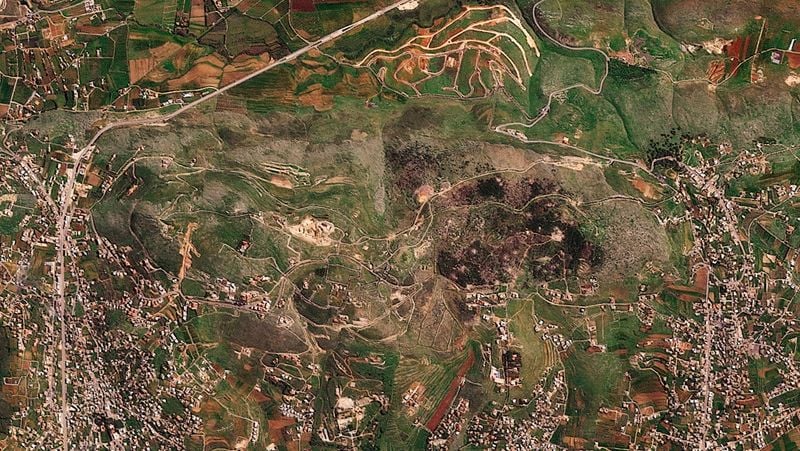
On 7 June 2026, the Israel Defense Forces confirmed that four reservists were wounded in a Hezbollah first-person-view (FPV) drone strike on troops operating in southern Lebanon. The attack, reported in the early hours of UTC morning by Israeli and regional channels monitoring the border, marks a renewed tactical use of loitering munitions and kamikaze-style drones by the Iran-aligned group at a moment when the front had been described as holding to a quiet tempo.
The strike is small in numerical terms — four wounded is a fraction of the casualties that have defined previous rounds of cross-border fire — but it sits inside a structural pattern that defence planners have been quietly mapping for months. FPV drones, weaponised commercial quadcopters that an operator pilots directly into a target, have proliferated across Middle Eastern front lines from Ukraine to the Red Sea. Their appearance in southern Lebanon, against IDF ground troops in a posture the military itself characterises as defensive, suggests a tactical adaptation rather than a strategic escalation — and one that complicates the air-superiority assumption on which Israel's northern doctrine has long rested.
A strike before dawn
At 04:42 UTC on 7 June 2026, the Telegram channel wfwitness reported that the IDF had confirmed four reservists wounded in a Hezbollah drone strike in southern Lebanon. One minute later, rnintel — a regional monitoring channel — relayed the same figure, adding the detail that the munition was a first-person-view drone. By 05:06 UTC, GeoPWatch, a Lebanon-focused geopolitical feed, had confirmed the FPV attribution.
That sequencing matters. Three independent channels converged on the same basic facts within roughly twenty-five minutes, with the IDF's own confirmation appearing first. The FPV attribution emerged from the two non-IDF channels; the IDF has not, in the materials reviewed by Monexus, publicly identified the munition type. Israeli military briefings on similar incidents typically follow a statement-of-record, then operational details cadence, in which the existence of a strike is confirmed promptly and its forensic specifics emerge over hours or days.
The wounded are reservists, not conscripts or standing-army regulars. That distinction carries weight in Israeli domestic politics: the reserve cohort is drawn from the wider workforce, and injuries among them tend to surface in news cycles that the standing army does not. It is also consistent with the manpower posture the IDF has maintained in southern Lebanon since widening its ground operations there last year — a posture that leans on mobilised reservists to hold a dispersed, observation-heavy line.
What the FPV does, and why it matters
First-person-view drones are not new. Their combat use dates at least to the conflict in Nagorno-Karabakh in 2020, where Azerbaijani forces used them to destroy Armenian air-defence systems and armour at a cost that conventional munitions could not match. The technology is also cheap, easy to produce, and hard to attribute: an FPV airframe can be assembled from commercial components and a warhead, with the cost of a single unit running into the low thousands of dollars at most.
What is new is the scale at which Hezbollah, the Iran-aligned Shia movement that controls southern Lebanon, has integrated them into its anti-personnel playbook. Earlier cross-border exchanges relied on antitank guided missiles, short-range rockets, and improvised explosive devices. FPV drones add a different option: a slow, low-altitude, pilot-guided munition that can loiter, identify a target, and strike — all in conditions where radar designed to track fast-mover aircraft performs poorly.
For an IDF force operating in dispersed positions near the border, that capability is inconvenient in two ways. It lowers the threshold for a credible strike, because the operator need not be close to the line of contact. And it complicates the air-defence problem, because intercepting a small, slow, terrain-hugging quadcopter is a different technical problem from intercepting a rocket or a cruise missile.
The wider context is that Israel's layered air-defence architecture — Iron Dome for short-range rockets, David's Sling for medium-range threats, Arrow for ballistic missiles — was designed around a different threat model. None of those systems is optimised for the kind of low, slow, mass-produced drone that the war in Ukraine has shown can saturate a battlespace at a cost an interceptor cannot match.
The Hezbollah frame
Hezbollah's own messaging on incidents of this kind is typically austere. The group rarely issues a detailed claim of responsibility for a tactical strike; instead, it tends to acknowledge attacks in the form of communiqués issued hours or days after the fact, often through outlets aligned with the Iranian diplomatic and media ecosystem.
That asymmetry — Israeli confirmation in minutes, Hezbollah acknowledgement in hours — has analytical value. It tells the reader that the strike itself is not in dispute. What is in dispute, and what the open-source record does not yet resolve, is the question of whether the drone was launched from Lebanese territory, from a forward position inside the disputed border zone, or from a more distant point from which a Hezbollah operator could have maintained the line-of-sight control link that FPV operations require.
For Monexus, the relevant framing is this: an event that Israeli military channels and regional monitoring channels agree on at the level of fact — four soldiers wounded by a drone strike — has a tactical and technological story that the available evidence only partially fills in. The temptation, in coverage of Israeli-Hezbollah exchanges, is to inflate a single strike into a strategic narrative. The harder, more useful read is to note the type of munition, the type of target, and the doctrinal shift that the combination implies — and to leave the strategic interpretation for the body of evidence to support.
What this means on the northern front
The strike comes against a backdrop of cross-border activity that has rarely paused for long since the late-2024 exchange of fire. The IDF's stated posture in southern Lebanon is to deny Hezbollah the ability to deploy forces and infrastructure in the border area — a goal it describes as defensive, in line with United Nations Security Council Resolution 1701, which governs the post-2006 disposition of armed groups south of the Litani River.
Hezbollah's doctrine, by contrast, frames the continued presence of Israeli troops in southern Lebanon as the occupation that the group was founded to resist. That framing has been a constant in the movement's rhetoric for four decades, and it shapes both the political constituency inside Lebanon to which the group answers and the operational logic by which it selects targets.
The stakes of an FPV strike against IDF reservists, in this context, are not only the four soldiers involved. They are the message the strike sends about the cost the IDF is paying, on a per-day basis, for its current posture. If FPV attacks become a recurring feature — even at the rate of a handful per month — the cumulative effect on reservist morale, on casualty reporting, and on the political appetite in Israel for an open-ended presence in southern Lebanon is the kind of slow-burn pressure that defence planners on both sides of the border are aware of and that receives less public attention than the large rocket exchanges of previous rounds.
The forward view, then, is not a single decisive moment. It is a question of tempo, of attrition, and of the asymmetric cost curve that a cheap, slow, pilot-guided munition imposes on a force that, until now, has treated the air above southern Lebanon as its own. The next data point will not be a statement. It will be the second, third, or fourth FPV strike — and whether the IDF's response treats the pattern as a tactical nuisance or as a doctrinal problem.
Monexus framed this incident through the lens of the munition type and the operational logic of the strike, rather than as a discrete escalation, to keep the analytical focus on what the available evidence actually supports.
Wire provenance
This editorial synthesis draws on the following public wire/social posts:
- https://t.me/wfwitness
- https://t.me/rnintel
- https://t.me/GeoPWatch
- https://en.wikipedia.org/wiki/Hezbollah
- https://en.wikipedia.org/wiki/First-person_view_(radio_control)