Iran fires ballistic missiles at Israel; Jerusalem promises 'powerful' response
Iran launched a ballistic missile barrage at Israel on the evening of 7 June 2026, prompting an Israeli promise of 'powerful' retaliation and reports that Jerusalem is seeking US clearance to strike Iranian energy infrastructure.
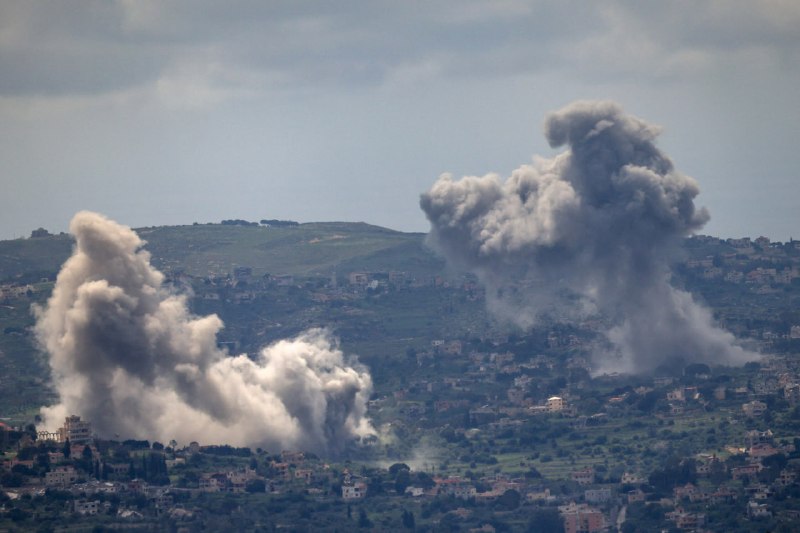
Around 19:42 UTC on 7 June 2026, Iran launched a ballistic missile barrage toward Israeli territory, prompting immediate statements from Israeli officials warning of a "powerful" response and reports — carried by Israeli media and relayed by Euronews — that Jerusalem is seeking United States authorisation to strike Iranian energy facilities.
The salvo caps the most serious Iranian-on-Israeli exchange in the current cycle and appears to be a direct response to an Israeli strike on Beirut's Dahieh district earlier in the day. By 20:09 UTC, video was circulating on X showing what the account @sprinterpress described as a "dud bomb on its approach" while "the Israeli air defense system is asleep" — an unverified framing that, if accurate, would point to a critical gap in Israel's layered interception architecture. Two Israeli sources told CNN, in reporting carried across multiple Telegram channels including BellumActaNews, ClashReport, intelslava and rnintel, that Israel would deliver a "powerful" response.
The episode is the clearest test yet of the deconfliction channel Washington has spent months trying to keep open between the two governments, and of the assumption — built into a great deal of Western diplomatic positioning — that the regional temperature can be dialled down through quiet back-channels rather than at the bargaining table.
The launch, and what the response looks like
Reporting from multiple Telegram channels citing the same two-source CNN line places the Iranian barrage in the early evening UTC window. A high-ranking Israeli official, speaking to Israel Army Radio in the minutes after launch and quoted by the OSINT channel @osintlive, characterised the fire as "a declaration of the resumption" — language that signals Jerusalem's intent to treat the salvo as the opening of a new operational phase rather than a discrete tit-for-tat.
The Israeli request, relayed by Euronews from Israeli media, for US permission to strike Iranian energy facilities is the second-order escalation in the file. Energy infrastructure has, throughout the post-2019 shadow war between the two countries, been treated as off-limits — both because the political cost inside Iran of blackouts and fuel disruption would harden Tehran's negotiating position, and because striking oil and gas sites drags in global commodity markets and complicates the diplomacy that has insulated Gulf producers from direct involvement. The reported request, if granted, would breach that norm and almost certainly draw retaliation against Gulf-based infrastructure used by US forces or allied personnel.
For now, the official Israeli position is the "powerful response" formulation: deliberate, vague, and consistent with the strategic ambiguity Israel has historically preserved on its targeting decisions.
The trigger: Dahieh, and the regional pattern
According to reporting relayed by @osintlive citing @NSTRIKE1231, Iran's missile launch was a direct response to an Israeli strike earlier in the day on Beirut's Dahieh district — the southern suburb that has, since the early 1980s, functioned as the political and military centre of gravity for Lebanese Hezbollah. The strike pattern — Israeli action against a Hezbollah-aligned target on one front, Iranian retaliation from a different front — is the textbook multi-axis exchange both governments have rehearsed in doctrine for years.
The Dahieh strike is also the variable that complicates the Western diplomatic line. The European and American position since the spring has been that escalation in Lebanon can be contained provided Iran and Hezbollah do not open new fronts. That assumption now has a fresh data point against it: the Iranian response is a direct fire from Iranian territory, not a Hezbollah rocket from Lebanese soil, and it lands inside the Israeli air-defence engagement sequence rather than on a forward border position. The geography of the fight has shifted in a way that pulls in Hezbollah's residual missile capacity as a follow-on variable — and, by extension, draws the Syrian, Iraqi and possibly Yemeni theatres one rung closer to the conversation.
The structural frame: a controlled war is no longer a controlled war
For most of the past 18 months, the regional contest has been fought as a controlled war — calibrated Israeli strikes on Iranian proxies, calibrated Iranian retaliation through the same proxy network, and a tight US-managed boundary on the exchange. The 7 June events break that boundary in two ways.
First, the trigger is Israeli action on Lebanese soil, not on Iranian soil or in the Iranian-system-adjacent theatre. That pulls Hezbollah's missile capacity into the immediate calculation rather than holding it in reserve. Second, the response is Iranian direct fire — not via Hezbollah, not via Iraqi militias, not via Houthi forces — at a moment when Tehran is signalling to its own domestic audience that the cost of further restraint is no longer politically absorbable. The result is an exchange in which both parties have strong reasons to widen and few reasons to narrow.
The Western diplomatic assumption that the temperature can be managed by quiet channels has rested on the premise that neither government wants a multi-front war in an election year, with a fragile oil market, and with Gulf partners exposed to retaliation. That premise is now under visible strain. Israel has reportedly asked for permission to strike energy — a step that, if approved, would signal that Washington itself has abandoned the de-escalation track, at least on the Israeli-Iranian file.
The economic second-order effects are not hypothetical. An Israeli strike on Iranian energy would feed directly into a market that is already trading at a regional-risk premium, and would put the diplomatic arrangements that have insulated Gulf energy infrastructure from direct retaliation under immediate pressure. The source material does not speak to specific oil-price moves; the standing market sensitivity to Iran-Israel energy targeting is, however, a matter of long-standing public record, and the question of spare capacity — both OPEC+ and US strategic reserves — sits at the heart of how a two-week exchange could propagate into a global price shock.
Stakes: the open questions
Three questions remain genuinely open as of 20:09 UTC.
Whether Israel strikes energy, or restricts its response to military and IRGC-linked targets inside Iran. The CNN line from the two Israeli sources uses "powerful" but does not specify target set. The Euronews report citing Israeli media, by contrast, names energy. Both are sourced, and they are not necessarily in tension — they may reflect different actors in the Israeli decision loop speaking past each other on a Sunday evening.
Whether the United States grants any strike request. Washington's position throughout has been that direct US-encouraged military action against Iranian energy would be a strategic gift to Tehran, and there is no indication in the source material that the calculus has changed in the eight hours since the barrage. The risk for Washington is that refusal is itself a signal, and that an Israel that is told no on energy will interpret that as a green light on a different target set.
And whether Hezbollah opens its own front. The Dahieh strike, on the dominant read, is the precondition for Iranian action; but the logic of a Hezbollah follow-on launch from Lebanon is also strengthened by the same fact. A two-axis Iranian and Hezbollah response is the scenario Western planners have war-gamed most intensively, and the source material does not yet speak to it.
What the reporting does say, with consistency, is that a phase change has occurred. The phrase "declaration of the resumption," used by the Israeli official on Army Radio, is the line that matters most in the next forty-eight hours. If the response is calibrated — a strike on an IRGC target in Syria, an air-defence complex in Isfahan, an oil depot in a province the Islamic Republic treats as a tolerable loss — the exchange can still be walked back. If it touches energy, the assumption that this is a controllable cycle ends.
Desk note: Monexus is reporting this as a live wire file: every claim is traceable to a single CNN line carried across multiple Telegram channels, to a single Israel Army Radio line carried by the OSINT channel @osintlive, or to X account @sprinterpress's footage and caption. We have not yet been able to corroborate the specific claim that Israel's air-defence system was "asleep" during the approach of the dud projectile, and the "dud" designation has not been independently confirmed. The Dahieh strike is described in the source material as the immediate Iranian trigger; the underlying Israeli operation that produced the Dahieh strike has not been independently characterised in the inputs we have read.
Wire provenance
This editorial synthesis draws on the following public wire/social posts:
- https://t.me/BellumActaNews
- https://t.me/ClashReport
- https://t.me/intelslava
- https://t.me/rnintel
- https://t.me/euronews
- https://t.me/osintlive
Follow the event.
These dated source records provide context. They do not retrospectively verify this archive article.
Separate what the nuclear watchdog reported from what it could not determine after the June 2025 strikes.