Iran's military command warns Israel: halt Lebanon operations or face strikes
Iran's military general staff, the Khatam al-Anbiya Central Headquarters, issued a public warning to Israel on 7 June 2026 demanding an end to operations in southern Lebanon and Beirut's Dahieh district, or face direct strikes on Israeli territory.
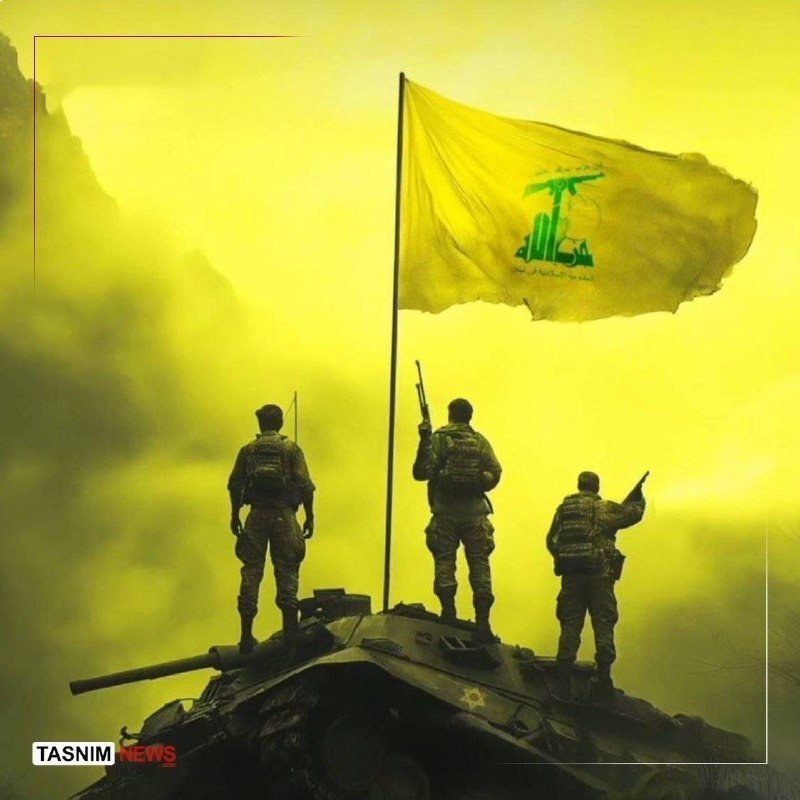
At 19:21 UTC on 7 June 2026, Iran's military general staff — the Khatam al-Anbiya Central Headquarters, the command body that nominally coordinates Iran's conventional armed forces, the Islamic Revolution Guard Corps, and the broader regional network Tehran calls the "axis of resistance" — issued a public warning to Israel. Stop operations in southern Lebanon and the Dahieh district of Beirut, the statement said, or face direct Iranian strikes on Israeli territory.
The warning, broadcast through Iranian state media and amplified within minutes by at least nine distinct Telegram channels, frames Israeli conduct as "repeated violations" of a Lebanon ceasefire and accuses the United States of providing backing. It is one of the more explicit and precisely time-stamped Iranian threats of direct retaliation in the current round of regional tension — and it lands in a public record where, as of writing, no Israeli government or IDF response has been verified on the wire.
Tehran has chosen a particular escalatory register: not a diplomatic note, not a foreign-ministry readout, not a United Nations-brokered message, but a direct command-level threat broadcast through military and parallel media channels. That choice collapses the usual buffer between Iranian strategic signalling and operational posturing. It does so at a moment when the underlying facts on the ground — what Israel is actually doing in southern Lebanon and Dahieh, what "ceasefire" the statement invokes and on what terms, and whether Washington's role is diplomatic shield or operational enabler — are not in the public record this article can independently verify.
The warning, in its own words and through its own channels
Between approximately 19:21 and 19:33 UTC on 7 June, the same core statement was carried by at least nine Telegram-based relays, each adding a layer of editorial framing. The most authoritative single source is PressTV, the Iranian state broadcaster, which ran the statement attributed to the "Commander of Khatam al-Anbiya Central Headquarters" and characterised Israel as "the aggressive Zionist regime" engaged in "repeated violations of the ceasefire" and "increasing acts of malice against the oppressed people of Lebanon day by day."
The substantive content, as it converges across the channels, is consistent. The Israeli military is told to halt attacks in southern Lebanon and in Dahieh — the southern suburbs of Beirut that have functioned as Hezbollah's political and military capital since the early 1990s. If Israel "expands its attacks in this area," the statement says, or if Israel "responds to Iran's actions," Iran will strike targets in Israel.
The wording is unusually direct. Iranian statements at this level of command often leave the response conditional and undefined. This one specifies the trigger conditions — Israeli escalation, or an Israeli response to Iran — and ties them to a stated outcome: Iranian strikes on Israeli territory. The Fotros Resistance account, which is openly Hezbollah-aligned, adds the geopolitical charge that the alleged Israeli conduct in Lebanon is being carried out "with US backing." That explicit US attribution does not appear in the PressTV relay, and the discrepancy is worth flagging: it suggests the resistance-aligned network is amplifying a harder line than the Iranian state outlet itself ran.
The twelve-minute cascade of relays — 19:21, 19:21, 19:21, 19:22, 19:24, 19:24, 19:25, 19:31, 19:33 UTC — is itself a fact about the region's information architecture. The warning did not have to wait for editorial curation by Western wire desks. It landed, in near real time, on an English-reading audience via Telegram.
What the warning does not say — and what is missing
The Iranian statement, as circulated, is a one-sided document. It names Israel's obligations. It does not detail the specific Israeli operations it purports to be responding to. It invokes a "ceasefire" without specifying which one, on what terms, brokered when, or by which signatories. It accuses Washington of "backing" without identifying the specific act of backing — military resupply, diplomatic cover at the UN, intelligence sharing, or something else.
This matters for any reader trying to calibrate severity. Iranian command-level threats of direct strikes on Israel are not unprecedented, but they are not routine either. The credibility of the warning depends on (a) what Israel is actually doing in the areas named, (b) whether the alleged ceasefire has a public text and whether Israel is publicly bound by it, and (c) whether Iran's declared red line has a defined trip-wire or is itself a posture, designed to be either triggered or quietly walked back depending on what the next 48 hours bring.
The source set for this article is dominated by Iranian state media (PressTV) and outlets sympathetic to Iran's regional posture — pro-resistance channels like Fotros Resistance and rnintel, regional analytics accounts like Clash Report, Middle East Spectator, BellumActa News, GeoPolitical Watch, and the englishabuali channel, which carries English-language relays of Iranian official statements. The Israeli government, the IDF Spokesperson, the US State Department, and the Western wire services — Reuters, AP, AFP, BBC, the Guardian, the New York Times — that would normally corroborate, contextualise, or rebut the Iranian framing have not, as of publication, produced a verifiable on-the-record response in the materials reviewed. That asymmetry is not editorial bias. It is a fact about the present information environment, and it shapes the read.
Command-channel signalling in a regional press environment that is no longer Western-routed
What Tehran is doing here is not just issuing a threat. It is choosing the channel. Military general-staff statements, broadcast through state media and amplified by a parallel network of Telegram relays, are the highest-status escalatory instrument in the Iranian toolkit short of an actual strike. They pre-position the public record so that any subsequent Iranian action can be described as a response to an Israeli provocation already on tape.
That signalling architecture has its counterpart on the receiving end. Israel's security cabinet, IDF operations, and the Western diplomatic corps have their own channels — most of which, in a normal escalation cycle, produce visible counter-frames within hours. The absence of a clearly datable counter-frame in the materials available here suggests one of three things: the warning has not yet been operationally absorbed in Tel Aviv and Jerusalem; the response is being held deliberately below the threshold of public statement; or the wire-side reaction is being processed at a slower tempo than the Telegram cascade.
All three readings carry the same structural implication: when one side's escalation register is broadcast in real time and the other side's is not, the public conversation about the event is shaped, by default, by the side that speaks loudest and fastest. That is the present condition of the regional information environment. It is also the condition under which the rest of the world is being asked to read this warning, and the condition that determines which version of the next 48 hours becomes the working record.
There is a longer arc here, too. The architecture of escalation signalling in the Middle East has, for the better part of two decades, run through Washington as honest broker — sometimes credibly, sometimes less so. The current statement explicitly rejects that framing by naming the United States as a co-belligerent in alleged ceasefire violations. Whether or not that charge holds up against subsequent evidence, the choice to put it in a command-level statement rather than a foreign-ministry readout is a signal to audiences across the region that Iran does not see Washington as a neutral party to this dispute. That is a posture statement, not a tactical one.
Stakes and what to watch over the next 48 hours
The immediate stakes are operational. If Israel is conducting limited operations in southern Lebanon and Dahieh — which would be consistent with the long-running low-intensity posture around the Israel-Lebanon border — the Iranian warning sets a stated threshold above which Tehran has publicly bound itself to respond. If Israel is, in fact, expanding those operations in the specific areas named, the warning now sits in the public record as a declared trip-wire, and the question becomes whether the trip-wire is meant to be honoured or to be tested.
The second-order stake is informational. Iranian command statements are now being relayed in near-real time to an English-reading audience by a network of Telegram channels that mix state media, regional analytics, and openly resistance-aligned outlets. The content lands on the wire at twelve-minute intervals, in multiple English-language relays, with consistent substance. This is what escalatory signalling looks like in a regional press environment that is no longer routed through three or four Western wire desks before reaching the global reader.
What to watch over the next 24 to 48 hours: an on-record Israeli official response from the Prime Minister's Office, the Defence Ministry, or the IDF Spokesperson; a US State Department or Pentagon read-out that either corroborates, contextualises, or rejects the Iranian framing; any visible change in the operational tempo on the southern Lebanon border; and any second-order Iranian statement that either escalates, qualifies, or walks back the warning. Any of those will tell us whether the 7 June 2026 statement was a posture or a precipice.
This piece is built almost entirely on Iranian state media and Iran-aligned Telegram relays, with no verifiable Israeli or Western-wire response in the public record at the time of writing. That asymmetry is flagged in the body. Monexus will update the source ledger as wire-side corroboration or rebuttal emerges.
Wire provenance
This editorial synthesis draws on the following public wire/social posts:
- https://t.me/presstv
- https://t.me/ClashReport
- https://t.me/GeoPWatch
- https://t.me/Middle_East_Spectator
- https://t.me/rnintel
- https://t.me/FotrosResistancee
- https://t.me/englishabuali
- https://t.me/wfwitness
- https://t.me/BellumActaNews
Follow the event.
These dated source records provide context. They do not retrospectively verify this archive article.
Separate what the nuclear watchdog reported from what it could not determine after the June 2025 strikes.