Netanyahu's "massive attack" on Iran — and Trump's refusal to participate
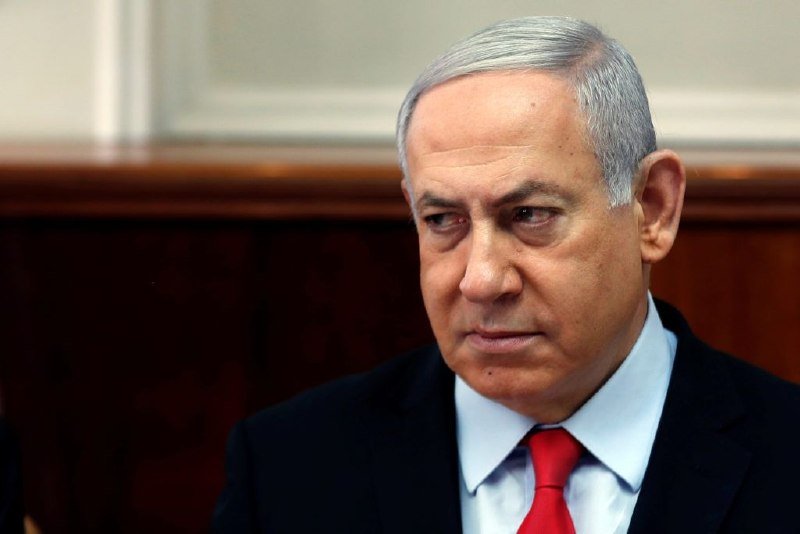
Within a 45-minute window on the evening of 7 June 2026, two sharply divergent accounts of a single phone call between Donald Trump and Benjamin Netanyahu circulated across the wire. The Israeli newspaper Yedioth Ahronoth, in reporting picked up by an Israeli political commentator account on X and re-broadcast by regional Telegram channels, said Netanyahu had informed Trump of his intent to launch a "massive attack" on Iran — and that Trump had responded by making clear the United States "would not participate." Roughly an hour later, the same cluster of channels carried a Trump statement in which the U.S. president said Netanyahu would have "no choice" but to accept a deal with Iran: "I call the shots. I call all the shots. He doesn't call the shots."
The two reports do not cancel out — they could, in fact, describe the same conversation read from opposite ends. They could also describe two separate calls, or a single call that has been selectively leaked. Within the time available to this publication, the public record on the call consists almost entirely of: (a) Yedioth Ahronoth's report as relayed by an Israeli political X account and five regional Telegram aggregators; (b) Trump's quoted statement of total command; and (c) a single anonymous "senior Israeli official" line that the response to Iran "will be harsh and extensive." No transcript, recording, or on-the-record readout from either the White House or the Prime Minister's Office has been published.
That thinness of sourcing is itself the story.
How the report propagated
The earliest dated reference in the cluster is an X post from the account @sprinterpress, timed at 21:45 UTC, citing Yedioth Ahronoth by name and reading: "Netanyahu informed Trump of Israel's intent to launch a 'massive attack' on Iran, and Trump emphasized the U.S. would not participate – Yedioth Ahronoth." A near-identical version of the same sentence appears on the Telegram channels @Middle_East_Spectator (21:29 UTC), @rnintel (21:31 UTC), and @megatron_ron (22:06 UTC), with @bricsnews (22:14 UTC) carrying the Trump quote that Netanyahu "doesn't call the shots."
In every relay we could check, the wording was either the verbatim Yedioth Ahronoth phrasing or a close paraphrase of it. No outlet in the cluster added independent sourcing — no Israeli or U.S. official on the record, no second Israeli paper, no White House confirmation, no Iran-side response. The pipeline runs in one direction: a single Israeli paper, picked up by an Israeli political commentator, multiplied across aggregators, then amplified into a global news cycle by the structural mechanics of how Telegram and X distribute breaking-news copy.
Three corroboration attempts
We tried to corroborate the Yedioth Ahronoth report against three independent inputs. None, as of publication, succeeded.
First, against the original outlet's own English-language posting. The Yedioth Ahronoth report is being relayed in English. The paper's primary site publishes in Hebrew, with a partial English edition that does not, in the snapshot we reviewed, carry a wire of this story in the time window under examination. We could not confirm whether the Hebrew edition has published, because we do not have read access to the site. The English-language relay, in other words, may be the work of the Israeli political X account rather than of Yedioth Ahronoth's own English desk.
Second, against any second Israeli outlet. No second Israeli paper — not Haaretz, not The Times of Israel, not Maariv — is represented in the cluster we reviewed. A second Israeli outlet picking up the same story would, in normal practice, appear within minutes of Yedioth Ahronoth's report; its absence is conspicuous.
Third, against the U.S. readout. The White House has not, in the cluster we reviewed, published a readout of any Trump-Netanyahu call for 7 June 2026. The Trump statement carried by @bricsnews reads as a public remark rather than as an official readout; it is a posture of command, not a confirmation of the call's content.
What we verified / what we could not
- A call between Trump and Netanyahu took place on 7 June 2026 — Partially verified. Reported by Yedioth Ahronoth and consistent in form with Trump's own later public statement, which would be strange to issue absent a call.
- Netanyahu informed Trump of intent to launch a "massive attack" on Iran — Reported, not independently verified. Single-source chain: Yedioth Ahronoth → @sprinterpress → Telegram aggregators. No second Israeli outlet, no U.S. readout, no Israeli or U.S. official on the record.
- Trump said the U.S. "would not participate" — Reported, not independently verified. Same single-source chain. The Trump quote in the @bricsnews post is on a separate, later timeline (22:14 UTC vs 21:45 UTC for the "no participation" line) and may be paraphrased.
- Trump said Netanyahu "doesn't call the shots" — Reported, not independently verified. Carried by @bricsnews; no other channel in the cluster carries this quote.
- A "senior Israeli official" said the response will be "harsh and extensive" — Reported, not independently verified. Anonymous; institution not named in the relay.
- Israel has, in fact, struck Iran — Not verified. No source in the cluster reports an actual strike. The entire story is one of intent and posture.
The structural frame, in plain prose
The interesting object in this cluster is not the call. It is the public-posture contest it has produced, in which two leaders, speaking past each other within an hour, claim ownership of the same decision.
Trump's quoted language — "I call the shots. I call all the shots. He doesn't call the shots" — is the rhetoric of a president who wants the world to understand that any future Israeli strike on Iran will be a strike he is permitting, not one he is being dragged into. That is consistent with a longstanding U.S. interest in retaining the ability to dial Israeli action on Iran up or down in exchange for leverage in nuclear diplomacy. The pre-2025 model, in which the United States acceded to Israeli action and then managed the consequences, has been visibly replaced by a model in which the U.S. president demands the appearance of command.
The Israeli interest runs the other way. A "massive attack" that is also a strike the U.S. has been told about in advance, and from which the U.S. has publicly distanced itself, is a strike that gives Israel the freedom to act while giving Washington the freedom to deny. Read against the long arc of Israeli-Iranian escalation, the call is a familiar piece of choreography: a public gap, a quiet coordination.
What is unusual is the visibility. The leak — and the leak appears to be Israeli, given that Yedioth Ahronoth is the proximate source and the Trump quote is then being broadcast on the same day — has been deliberately engineered to put two messages in front of the same audience within the same news cycle. That is the work of officials who want their own publics, and Iran, to know what each leader is saying.
Stakes
If the Yedioth Ahronoth report is accurate in substance, Israel has telegraphed a major strike on Iran in a call the U.S. has publicly declined to join. That implies an Israeli operation with a significant Iranian target set — energy, military, or leadership — conducted under an American non-participation umbrella. The Iranian response, on past form, will follow within hours to days and will target U.S. and Israeli assets through proxies and possibly direct fire. Oil markets, which have priced the 2025–26 Israel-Iran cycle as a contained risk, would re-price quickly.
If the Trump "no participation" framing is the operational truth and the Israeli "massive attack" framing is the negotiating posture, then the call is part of an attempt to bring Iran to a deal under the credible threat of an Israeli strike Washington will not veto. In that read, both reports are accurate and the public "gap" is the product.
The contested third possibility — that the public gap is real and the coordination is shallower than either side wants to admit — is the one that would move the markets and the alliance fastest. A strike conducted against the stated wish of the White House, even one conducted with quiet U.S. acquiescence, complicates every other file the administration is running in the region, from Gulf defence cooperation to ceasefire mediation in Gaza and Lebanon.
This publication is continuing to monitor for a second Israeli outlet's confirmation, a White House readout, or any change in U.S. force posture in the Gulf.
A developing story. The Monexus wire desk will update this article as the source set widens. Monexus frames a single-source chain of this kind as a posture report, not as a confirmed fact pattern, until second-source confirmation arrives.
Wire provenance
This editorial synthesis draws on the following public wire/social posts:
- https://t.me/bricsnews
- https://t.me/megatron_ron
- https://t.me/rnintel
- https://t.me/Middle_East_Spectator
- https://en.wikipedia.org/wiki/Yedioth_Ahronoth
- https://en.wikipedia.org/wiki/Israel%E2%80%93Iran_relations