Ruto's Gor Mahia pledge: a Sh10 million gesture and a structural question
A presidential pledge to Kenya's most decorated club is the kind of moment that reads in two directions at once — recognition of a championship, and a reminder of a league that has not yet built a commercial spine.
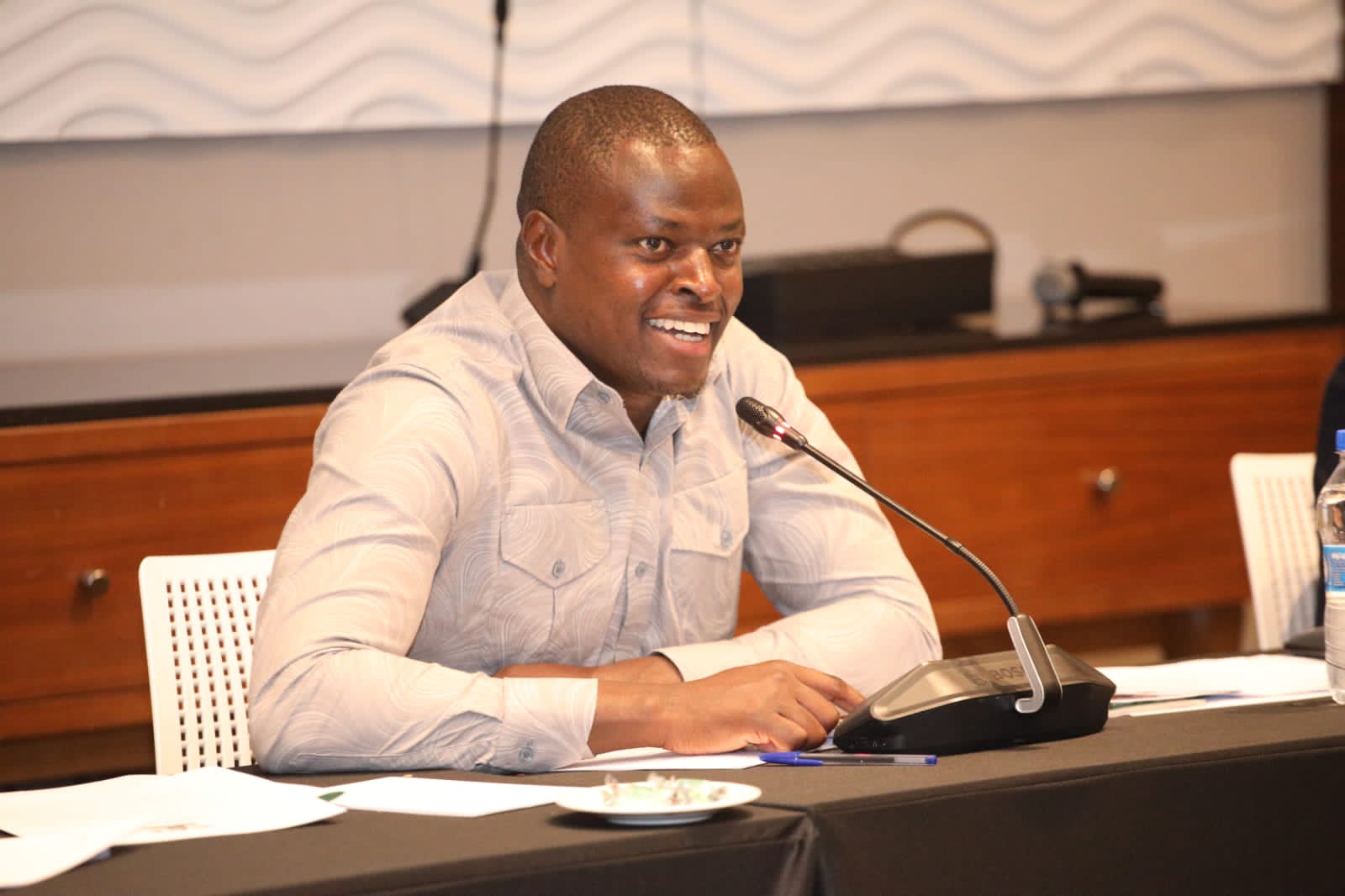
On the afternoon of 7 June 2026, at a trophy presentation staged to mark the end of a long domestic season, Kenya's President William Ruto announced a Sh10 million pledge to Gor Mahia FC, with each player in the squad also promised Sh100,000 in personal recognition of the club's Kenya Premier League title win. The gesture, reported by The Star Kenya, lands at a moment when questions about who bankrolls Kenyan club football — and on what terms — have rarely been more pointed. For a club whose fanbase stretches well beyond its Nairobi base, the money arrives as both reward and reminder: the state, when it chooses, can move quickly.
A presidential cheque at a trophy ceremony is a familiar ritual in many African football cultures. What is less familiar — and what Gor Mahia's latest title quietly exposes — is the structural condition that makes such gestures routine: a domestic league that has never quite built a commercial spine robust enough to replace them. The pledge, modest in absolute terms and lavish only against the backdrop of an undercapitalised competition, is the latest data point in a long-running argument about the political economy of the Kenyan game.
A title, a cheque, a context
Gor Mahia FC is no ordinary recipient of state attention. Founded in 1968, the club is the most decorated in Kenyan football history and counts a supporters' network that runs through the country's Luo communities and into the diaspora well beyond Nairobi. A 21st KPL title — depending on the official count — extends a record that has long made the club simultaneously a sporting institution and a cultural marker.
The Star Kenya reported the Sh10 million club-level pledge and the Sh100,000 per-player award on 7 June 2026, citing the trophy presentation as the venue. The amount is meaningful but not lavish. Spread across a first-team squad of, by most accounts, somewhere between 25 and 30 registered players, the individual component alone would account for roughly a quarter of the headline figure; the balance is presumably intended for club operations, logistics, or discretionary distribution by the club's management.
The framing matters. Ruto's pledge is not a salary, not a contract, not a sponsorship in the formal sense. It is a discretionary act by a sitting head of state, executed in public, photographed and televised, and bound up in the symbolic economy of recognition. That distinction — between structured funding and one-off presidential favour — is the structural fact that makes the moment worth more than its shilling value.
The political economy of the Kenyan game
Kenyan club football has spent much of the post-independence era searching for a sustainable revenue base. Broadcast deals have been thin, attendances inconsistent outside the big clubs, and corporate sponsors historically reluctant to commit at the scale seen in larger African leagues such as those in South Africa, Egypt, or the Democratic Republic of the Congo. The KPL has, at various points, been restructured, rebranded, and partially professionalised, with mixed results.
The result is a competition whose financial lifelines are unusually clustered. Top clubs — Gor Mahia, AFC Leopards, Tusker — carry significant supporter bases and uneven commercial activity; mid-table and lower-tier sides depend on a combination of county government support, gate receipts, and intermittent sponsorship. Within that structure, a presidential pledge to the league's flagship club is read in two directions at once. To Gor Mahia supporters, it is overdue recognition of a club that has carried the league's competitive credibility for decades. To supporters of rivals, and to those who follow the league's governance closely, it raises familiar questions about why public money, channeled through political discretion rather than an institutional mechanism, continues to set the tone.
The Global South frame is direct: in many African football ecosystems, the state has not retreated from the sport — it has merely shifted the mode of its engagement, from direct ownership of clubs (as in several North African systems) to discretionary patronage of the most visible ones. Kenya's version of that pattern is the presidential trophy-day cheque.
A president who shows up
Ruto is not the first Kenyan head of state to make a public gesture toward a winning club, and he is unlikely to be the last. The post-2002 period has seen sitting presidents — Mwai Kibaki, Uhuru Kenyatta, and now Ruto — appear at football functions, present trophies, and occasionally open the public purse. The pattern is bipartisan in the sense that it cuts across the political coalitions that have held state power.
What has shifted is the optics. Ruto's government has been louder about its sporting engagement than some predecessors, framing it as part of a broader youth-and-talent agenda. The pledge to Gor Mahia arrives in that context — alongside public commentary about football development, stadium construction, and the national team's qualification campaigns. The cumulative effect is to position the presidency as the league's de facto senior patron, a role no other Kenyan institution currently occupies with comparable visibility.
That positioning carries a counter-narrative. Opposition-leaning commentators and several fan groups have, in the past, accused the ruling coalition of selective generosity — visible largesse to clubs and leagues aligned with government sentiment, quieter treatment of others. The Star Kenya's report does not directly raise this critique, and the Gor Mahia case is complicated by the club's cross-regional fan base, which makes partisan framing harder. But the structural point remains: when the state substitutes for the market, distribution becomes a political question.
What the cheque does, and what it doesn't
Sh10 million converts, at recent exchange rates, to a sum in the tens of thousands of US dollars — material for a Kenyan club operating on tight margins, but not transformational in the way a sustained broadcast deal or title sponsor would be. The per-player Sh100,000 is more meaningful at the individual level: a meaningful bonus in a context where top-flight Kenyan footballers are not consistently among Africa's highest-paid domestic players.
What the cheque does, decisively, is buy time. It acknowledges a championship, stabilises a squad through what is typically a turbulent off-season of departures and contract renewals, and signals to the league's commercial interlocutors that the state is paying attention. What it does not do is build a youth academy, secure a broadcast contract, reform the league's governance, or move Kenyan club football toward the financial autonomy that the most successful African leagues have spent two decades pursuing.
The forward view is therefore less about the cheque itself than about what follows it. A one-off pledge to a champion is symbolic politics. A recurring funding mechanism, routed through a federation, a regulator, or a public-private sports fund, would be policy. The distance between those two outcomes is the space in which Kenyan football's next decade will, in practice, be decided. For now, the headline is a Sh10 million moment — well-received, well-photographed, and structurally familiar.
Desk note: this piece was written from a single Telegram-sourced brief, supplemented by general structural context about the Kenyan Premier League and the political economy of African club football. Where specific figures — squad size, prior title counts, exchange-rate conversions — are not stated in the source brief, the article speaks in general terms rather than asserting unverified specifics. The framing is structural: a presidential pledge read against the longer pattern of state engagement with Kenyan football, not as a personal scandal or a one-day story.
Wire provenance
This editorial synthesis draws on the following public wire/social posts:
- https://t.me/TheStarKenya
- https://en.wikipedia.org/wiki/Gor_Mahia_F.C.
- https://en.wikipedia.org/wiki/Kenya_Premier_League
- https://en.wikipedia.org/wiki/William_Ruto