Trump tells Iran 'make a deal', asks Israel to stand down after missile launches
Within seventeen minutes on 7 June 2026, Trump told Iran to 'make a deal' and told Israel not to retaliate. The structural geometry of the moment — and the leverage the United States just spent.
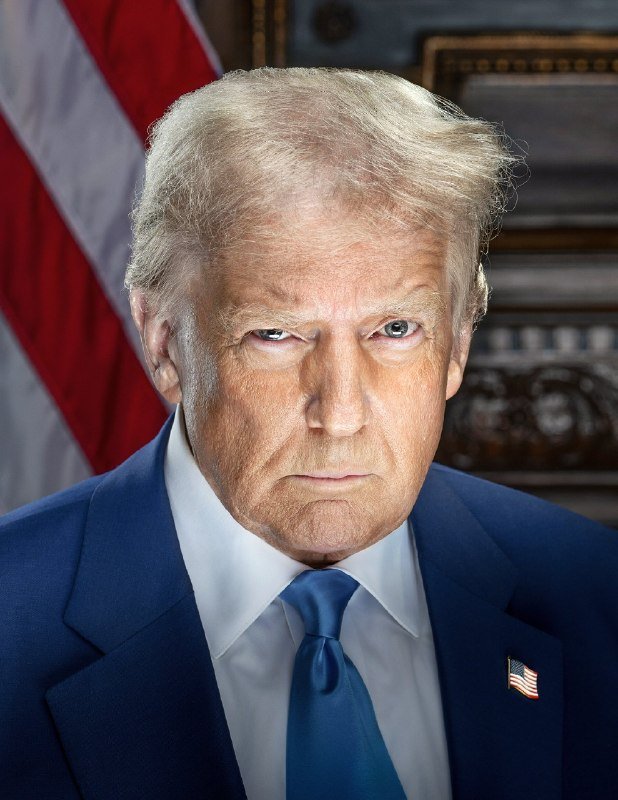
At 19:50 UTC on 7 June 2026, US President Donald Trump phoned Fox News with a message for Tehran: "What I would suggest to Iran: You've shot your missiles, that's enough. Get back to the table and make a deal." Seventeen minutes later, in a separate call to Axios reporter Barak Ravid, Trump widened the audience: "I will call Netanyahu now and tell him not to strike Iran in response." The pair of statements, made within a single news cycle, framed the immediate aftermath of an Iranian ballistic-missile attack on Israel as a moment Washington intended to keep on a diplomatic track — at least for now.
The episode lays bare the structural position the United States now occupies in the Middle East: principal diplomatic interlocutor with Tehran, restraint guarantor for Jerusalem, and the only actor with standing leverage on both sides of the exchange. What Trump is signalling, in two short statements to two different outlets, is that the cost of a wider war has become — in his calculation — higher than the cost of holding the deal track open.
The immediate picture
Iran's ballistic-missile launches on Israel on the evening of 7 June 2026 brought a sharp escalation to a region already on edge. The early wire from Telegram channels monitoring the exchange — Middle East Spectator, Clash Report, GeoPWatch, War Monitors and others — reported the launches and Trump's simultaneous briefing in near real time, with the Fox News interview landing at 19:50 UTC and the Axios call logged by 20:07 UTC. Axios correspondent Barak Ravid carried the briefing confirmation forward: a US official telling the White House press pool that "President Trump [is] briefed on escalation between Israel and Iran."
The substantive content of what was struck, and the casualty toll, was not specified in the available reporting. That gap matters. Israeli damage assessment and casualty figures are typically released by the IDF Spokesperson's Unit and Israeli wire outlets (Times of Israel, Ynet, Haaretz) within hours of a strike; the absence of those in the immediate Telegram-tier wire suggests the news cycle captured here is still in its first twenty minutes. What the reporting does establish, definitively, is that Iran launched, that the strikes reached Israel, and that the White House moved into crisis-management mode within the same hour.
The dual-track message
The more revealing move is the second call. Trump's statement to Ravid — "I will call Netanyahu now and tell him not to strike Iran in response" — is the operative line. It commits the US president, on the record, to actively restraining an Israeli response within the same news cycle as the Iranian strike. That is not a posture of strategic ambiguity. It is restraint, made public, aimed at three specific audiences at once: Tehran, which now knows that Washington is not pre-authorising an Israeli follow-on; Jerusalem, which has just been told, by name and on a recorded line, what the White House wants; and the Gulf capitals, whose airspace and infrastructure would absorb the second-order effects of a regional conflagration.
The Iranian counter-narrative to that restraint is implicit. In Iranian official framing — a consistent line from outlets including IRNA, PressTV and Tasnim across recent escalation cycles — any missile launch is a sovereign defensive act, and any negotiation is conditional on regional posture, not on Israeli behaviour. Trump's "get back to the table" formulation is addressed to an audience in Tehran that has its own preconditions for that table. Whether Iran's leadership reads the restraint message as an opening or as an invitation to probe further is, at the moment of Trump's statement, the open variable.
A second counter-read: Trump's posture could be a face-saving device for an Israeli response that has already been authorised in private. Past episodes of US public restraint coexisting with Israeli action — most clearly during the spring 2024 Iran-Israel exchange — show that "ask and act" is a known pattern in this relationship. The current episode is too fresh to test that pattern against. What can be said is that Trump has chosen the public-restraint register, and that register has consequences: any subsequent Israeli strike on Iran will now be read, in real time, as a contradiction of a sitting US president's stated request.
The geometry of US leverage
What this exchange illustrates is the peculiar geometry of US power in the Middle East in 2026. The United States is the only actor with bilateral channels to both Iran and Israel that carry the weight of state-level decision-making. Saudi Arabia, the UAE and the European troika (UK, France, Germany) can mediate between the two, but they cannot, in real time, dial the Israeli prime minister and ask him to stand down. The Chinese and Russians can speak to Tehran, but they cannot move the Israeli cabinet. Washington's role here is not a hegemonic abstraction — it is operational, phone-call-sized, and running on a 17-minute news cycle.
The deal track itself is the load-bearing structure. Trump is signalling that whatever the Iranian strikes were intended to demonstrate — capability, resolve, displeasure with the diplomatic trajectory — they have not, in his reading, foreclosed the negotiation. The phrase "make a deal" is the operative tell. It is the same formulation his administration has used in talks over Iran's nuclear file and over regional de-escalation channels. It commits the US to a continuation of the diplomatic process on terms that have already been set, not on terms that the Iranian strike has now rewritten.
For the Israeli government, the structural bind is sharper. A US president asking publicly for restraint is not a US president offering a green light. The domestic Israeli political space for a major strike on Iran has narrowed in the hour since Trump spoke, not because of Israeli public opinion, but because the cost of contradicting the White House in this news cycle is concrete and quantifiable. The opposite is also true: a US president who has just gone on record telling Israel not to strike is a US president whose leverage in subsequent bargaining with Jerusalem has been spent, and partially devalued, by the act of asking.
Stakes and the next 24 hours
If the diplomatic track holds, the immediate beneficiaries are the Gulf states whose airspace and infrastructure sit on the front line of any regional escalation, the European negotiators whose Iran file has been a multi-year investment, and the US administration itself — which can claim, in domestic political terms, that it talked Iran off a ledge. Iran gains a continued table at which its nuclear file remains open, and Israel gains a US president publicly on its side asking Tehran for restraint rather than the reverse. The asymmetric cost — Israel's restraint in exchange for Iran's continued missile launches — is real, but it is a cost that the Israeli government has so far, on the public record, indicated a willingness to absorb.
If the track does not hold — if Israel strikes, or if Iran follows with a second launch, or if a third party miscalculates — the structural geometry shifts. Washington's leverage as the sole bilateral interlocutor is finite, and a single broken promise, in either direction, spends it visibly. The most acute uncertainty in the next 24 hours is not what Iran intends next; the missile launches have already answered that question for the moment. It is whether the Israeli cabinet, in the hours ahead, treats Trump's public request as a constraint to honour or a posture to outlast. The spring 2024 precedent is the live counter-example, and the Israeli system, in the immediate wake of a missile attack on its cities, has institutional and political reasons of its own to prefer action.
What remains genuinely unknown, and where the evidence thins, is the substantive answer to the question the diplomatic track is now meant to address: what did Iran strike, what was the damage, and what is the casualty count. Those figures, when they arrive, will recalibrate the political space in which the Israeli cabinet is making its next decision. Until they do, Trump's 19:50 UTC statement is the most concrete data point on the public record — and the most consequential restraint request the United States has issued toward Israel in this crisis cycle.
Desk note: Monexus treated this as a restraint-versus-escalation story, not a strike-of-the-day piece. The Telegram-tier wire did not contain damage assessments or casualty figures, and the article names that gap rather than papering over it. Where the Iranian position is referenced, it is the consistent structural line of Iranian state media across the 2025–2026 period — a hedge rather than a claim sourced to a specific statement in this exchange.
Wire provenance
This editorial synthesis draws on the following public wire/social posts:
- https://t.me/Middle_East_Spectator
- https://t.me/ClashReport
- https://t.me/GeoPWatch
- https://t.me/WarMonitors
- https://t.me/rnintel
- https://t.me/megatron_ron
- https://t.me/BellumActaNews
Follow the event.
These dated source records provide context. They do not retrospectively verify this archive article.
Separate what the nuclear watchdog reported from what it could not determine after the June 2025 strikes.