The 22-year low and the missing buffer: how thin is the US oil cushion as Hormuz stays shut?
US petroleum stocks have fallen to their lowest level since 2004 and the Strategic Petroleum Reserve is at 1980s depths. With the Strait of Hormuz still choked, the question of who fills the gap is now the only one that matters.
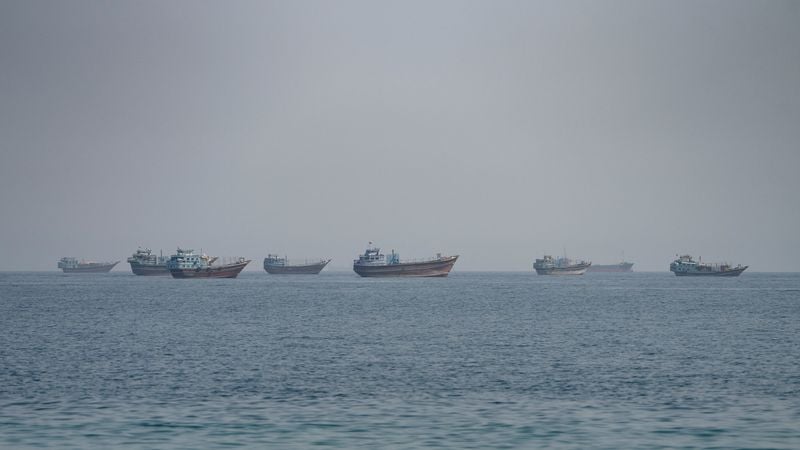
On 6 June 2026, the data arrived like a quiet alarm. US total petroleum stocks fell 10.6 million barrels in a single week, dropping to 1.57 billion barrels — the lowest level since 2004. The drawdown, attributed to the Iran conflict's chokehold on Strait of Hormuz tanker traffic, lands on a Strategic Petroleum Reserve already at its thinnest since the 1980s. Benchmark US crude traded near $96 a barrel in afternoon dealing. Bob McNally, the former White House energy adviser who now runs the Rapidan Group, has been blunt: unless Hormuz reopens, $200 a barrel is a realistic summer scenario. The cushion is essentially gone. What fills the gap is now the only question that matters.
The structural story is that America's proclaimed energy independence offers no shelter. Net exporter status does not insulate domestic consumers from a globalised market, and the renewables transition that might have softened the blow has been politically stalled for two decades. The crisis exposes a paradox at the centre of US energy policy: more production, less resilience. The next six weeks will test whether the current price is the ceiling or the floor.
The buffer is gone
US commercial petroleum stocks are at their lowest level in 22 years. That headline number — 1.57 billion barrels — conceals the speed of the decline. The 10.6 million barrel draw in a single week is not a seasonal dip; it is a structural bleed. SPR holdings, meanwhile, sit at their lowest point since the 1980s, meaning there is no federal reserve left to backfill commercial demand. "The combination of low oil inventory and a low amount of reserve in the strategic petroleum reserve basically just means there's no more like slush like extra oil to fulfill demand." Refilling the SPR at current prices would itself be inflationary. The hedge is exhausted.
The Hormuz overhang
The proximate cause is the Iran conflict and the resulting disruption of tanker traffic through the Strait of Hormuz, through which a significant share of seaborne crude transits. McNally's warning, delivered on 6 June, is that the disruption does not stay contained. "You start to raise the spill risk of spillover into other sectors." His central scenario: oil reaches $200 a barrel this summer if the strait remains effectively closed. The current $96 price already reflects a market functioning with severe friction. Summer driving demand is still building. Refiners are running near capacity. There is no obvious domestic replacement supply ready to absorb a prolonged Hormuz outage.
The China mystery
Behind the US numbers sits a quieter puzzle with global consequences. China's oil imports have fallen 40% compared to 2025, with no official explanation issued from Beijing. Three readings are circulating: a soft-power gift to Japan and South Korea ahead of regional negotiations; a quiet backchannel arrangement with Washington to give the Trump administration diplomatic room on Iran; or a flex of energy independence built on a massive, opaque SPR drawdown of Beijing's own. The structural counter-argument is that Chinese state planners have used strategic reserves and demand-side rationing — the kind of centralised levers that Western markets structurally lack — to absorb a shock that would otherwise have driven global prices 30-40% higher than they are. If China were importing at normal levels, the price today would sit in the $130-140 range, not $96. Beijing's silence on the mechanics is itself a policy choice. Each interpretation has very different implications for how long the global price remains suppressed, and how violently it reasserts itself once Chinese inventories are drawn down or rationing is relaxed.
The political response
In Washington, the response has been to look elsewhere. Treasury Secretary Scott Bessent, testifying before Congress, dismissed inflation as a "short-term blip" and added: "except for inflation, which is I believe going to be a short-term blip, the economic data is very strong." Pressed by Senator Maggie Hassan on grocery costs, Bessent replied that "groceries are going down." The data tell a different story. Food-at-home prices are up 2.5% since the current administration took office, and the average New Hampshire resident — a state with no sales tax — has paid roughly $3,000 more for basic goods and services over the same period. The country lost 100,000 manufacturing jobs in 2025. The administration has, separately, imposed new tariffs on 60 trading partners including the EU, China, Japan, and Britain, citing forced-labor provisions in existing law as a workaround mechanism that is unlikely to survive court challenge. Energy Secretary Chris Wright has placed the blame elsewhere still: "The bigger problem… with gasoline prices, electricity prices, heating prices is Democrat green policies. They've done everything they can for 20 years to drive energy prices up and now they're upset about high energy prices."
The structural frame and the stakes
The net-exporter illusion is the deepest story. Even a country producing more crude than it consumes participates in the global market, and global market prices determine what domestic consumers pay at the pump. US gasoline is currently averaging around $4.26 a gallon, down from $4.45 the week prior — a softening that reflects demand destruction as much as supply relief. Real energy independence, the structural argument runs, comes from breaking the link between oil and economic activity, which means renewables, electrification, and demand-side management. As one commentator put it on the same segment: "It doesn't matter if you're a net energy exporter, if you're participating in the global oil markets, you are also going to be subject — your consumers are also going to be subject — to those price pressures. The only real energy independence is from renewable energy." The OECD's June projection bears this out. Global growth will slow to 2.8% this year, down from 3.4%, recovering only to 3.1% next year, and that assumes energy prices have already peaked. Disruption in energy and critical commodities will continue to slow growth and feed inflation through 2027. Several dozen countries, particularly in Asia, have already cut consumption through rationing and controls, acting before the worst arrives. The three identified buffers are SPR drawdowns, the renewables transition, and preemptive rationing abroad. The US is drawing down the first, has slowed the second, and lacks the administrative machinery for the third. If a major supply disruption hits in earnest, something will snap. "Something is going to snap," one analyst wrote. "So far, the closure of the trade of Hormuz has not led to a major economic disaster, but that won't last forever."
The 22-year low is not a forecast. It is the inventory as of last week. The question of who fills the gap now sits with producers, diplomats, and a renewables transition that, for two decades, was treated as optional. It is not optional anymore.
Monexus frames this as a structural buffer collapse rather than a price story, distinguishing it from wire coverage that leads on the weekly drawdown figure alone.
Wire provenance
This editorial synthesis draws on the following public wire/social posts:
- https://www.youtube.com/watch?v=D152Jheu6nc