IDF chief tells General Staff force is ready to strike Iran on order
The IDF Chief of the General Staff has told his General Staff Forum the military is ready to strike Iran the moment political leadership gives the order. The framing is deliberate, the timing is exact, and the international read is being set in real time.
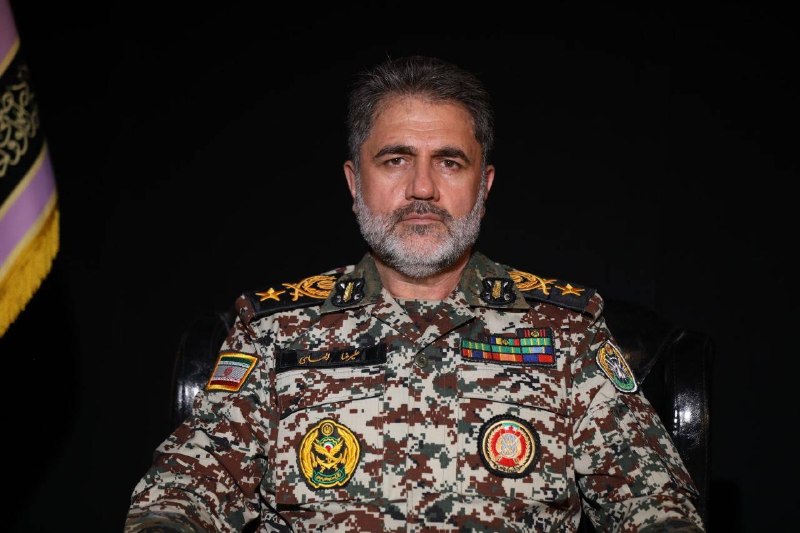
On the evening of 7 June 2026, with the day folding into its last operational hours, the Israel Defense Forces' top officer told his General Staff Forum that the military was ready to strike Iran the moment political leadership gave the order. Lieutenant General Eyal Zamir, the IDF Chief of the General Staff, framed the assessment in language the Israeli public has heard before: a deliberate, declarative posture designed to be heard simultaneously in Tehran, in Washington, and in the markets.
The Israeli signaling sits inside a fast-moving cycle that began with Iranian fire onto Israeli territory earlier the same day — an act the IDF publicly labelled "a grave mistake." Zamir's remarks, monitored across multiple channels operated by IDF English-language accounts and propagated within minutes by Telegram channels covering the Iran file, suggest Tel Aviv is laying the public groundwork for a kinetic response, not a contained one.
The statement and the channel
The IDF Spokesperson's unit and the IDF's official English account both pushed the same line within an hour. At 20:47 UTC, the IDF's English-language spokesperson account posted the framing that has since propagated across channels covering the Iran file. At 21:14 UTC, the official IDF account added that the Chief of the General Staff is "currently conducting a situational assessment with the General Staff Forum," and that the IDF "will strike the enemy with determination as soon as the order is given."
The wording is consistent and disciplined. Within roughly twenty minutes, the same formulation — strike "with force the moment the green light is given" — appeared in posts from channels including BellumActaNews, Intelslava, GeoPWatch, Clash Report, and English abuali, all citing the IDF as the source. The propagation pattern itself is informative: in the contested information environment around any Israel-Iran exchange, the IDF's bilingual communications apparatus is built to make the Israeli version of events the first plausible version on the wire.
What triggered the assessment
The trigger was Iranian fire. The 20:48 UTC post, carried by the same cluster of channels reporting the Zamir remarks, includes a longer IDF statement: "The Iranian regime made a mistake by opening fire on our territory." The framing of "mistake" is doing rhetorical work — suggesting Tehran miscalculated the consequences of its decision, and recasting a hostile act as a strategic error.
The intelligence picture in public is necessarily thin. Israeli briefings have, by long-standing convention, not specified the timing, location, scale, or weapon class of the Iranian fire in real time. International wire reporting on the specific exchange has not, as of publication, been verified from non-Israeli sources. That gap is itself part of the pattern: the Israeli framing tends to set the interpretive frame, and rival or international verification arrives on a delay measured in hours, not minutes. Reporting in this window is therefore necessarily lopsided, and the lopsidedness is the story as much as the events themselves.
The escalation ladder in plain sight
Iran and Israel have spent the past two years on an escalatory gradient that has, in fits and starts, moved from proxy confrontation toward direct exchange. What Zamir's language signals is that the IDF views the latest Iranian fire as a step that crosses an internal threshold. The "green light" formulation is not casual phrasing — it is a marker that the operational decision has been deferred to the political level, which in Israel means the prime minister and the security cabinet.
This matters for what comes next. An Israeli strike on Iranian territory, if ordered, would be qualitatively different from the shadow war both countries have conducted for most of the post-2018 period. The 7 June signaling does not specify the target set, the timing, the weapon mix, or the level of coordination with the United States. But it does set the domestic political conditions for an order to be given — and it does so in language chosen to make the order, when it comes, look like restraint finally exhausted rather than provocation newly begun.
The reading on the other side
The Iranian framing has, in past cycles, run through state media in three registers: deny, downplay, or signal reciprocal readiness. As of the timestamps in the source cluster under review, Iranian state-aligned channels had not, in the public sources available to Monexus, posted a counter-statement at the same volume or in the same time window. That asymmetry is worth holding on to.
Two reads are plausible. The first is that Tehran is calculating that a lower public profile reduces the political cost of any Israeli strike by not dramatising the moment. Quiet absorption of the public exchange preserves the option of a quieter de-escalation, and a noisy exchange forecloses it. The second is that the Iranian response is still being coordinated, and that the relevant text will arrive later in the evening or in the early hours of 8 June. Both are reasonable working hypotheses; neither can be confirmed from the available material, and the Monexus read is that the absence of a public Iranian reply, several hours after the Israeli messaging cycle began, is itself a piece of data.
The structural frame
What is visible in this episode is the operation of a tightly coordinated Israeli state communications system at the precise moment a kinetic decision is being made. Israeli security concerns are, in this reading, the substantive cause of the action under consideration; the language around the action is the way Israel has chosen to shape the international reading of it. The two cannot be cleanly separated, and treating them as if they could would be analytically careless.
That is the pattern worth holding on to. When the IDF speaks, the wires follow. When rival sources speak, they enter a frame already defined. The information architecture around the Israel-Iran cycle is not symmetric, and the asymmetry is by design rather than accident — the result of years of investment in bilingual, real-time, official-channel messaging that propagates through Telegram and X within minutes of issue. Coverage of the underlying kinetic event, whatever it turns out to be, will be read through that frame for at least the next several hours.
Stakes
If the order is given, the immediate stakes are military: the target set inside Iran, the response posture, the duration of any exchange. The medium-term stakes are regional: the activation of Hezbollah on the northern border, the posture of the Gulf states, the pressure on Jordanian and Iraqi airspace, the question of whether a US administration has been consulted or merely informed. The longer-term stakes are architectural — whether a direct Israeli-Iranian strike cycle becomes a periodic feature of the Middle East security environment, or whether this episode is contained through a diplomatic off-ramp that, as of the evening of 7 June 2026, has not been visibly engaged.
What remains uncertain, and what Monexus will return to as the picture develops, is the actual character of the Iranian fire that triggered the assessment. The Israeli framing has been delivered in real time; the independent verification that would anchor the framing in fact has not yet arrived, and may not arrive before the next Israeli statement does. Reporting in this window is closer to reading a mood than reading a record — and the difference matters, because decisions on the other end of these messages will be taken in real time by people watching the same channels.
The wire cycle on Israel-Iran has, in this exchange, been set almost entirely by IDF English-language channels and the Telegram accounts that re-broadcast them; Monexus's read follows that sourcing with explicit caveat, and treats the Israeli security framing as substantively legitimate while flagging the information asymmetry that surrounds it.
Wire provenance
This editorial synthesis draws on the following public wire/social posts:
- https://t.me/BellumActaNews
- https://t.me/englishabuali
- https://t.me/idfofficial
- https://t.me/intelslava
- https://t.me/ClashReport
- https://t.me/GeoPWatch
Follow the event.
These dated source records provide context. They do not retrospectively verify this archive article.
Separate what the nuclear watchdog reported from what it could not determine after the June 2025 strikes.