Apple's WWDC Bet: Personal AI, On-Device, Off the Cloud
At WWDC 2026, Apple made its clearest pitch yet that the personal AI race will be fought on privacy, latency and silicon — not on which model can name the most capitals.
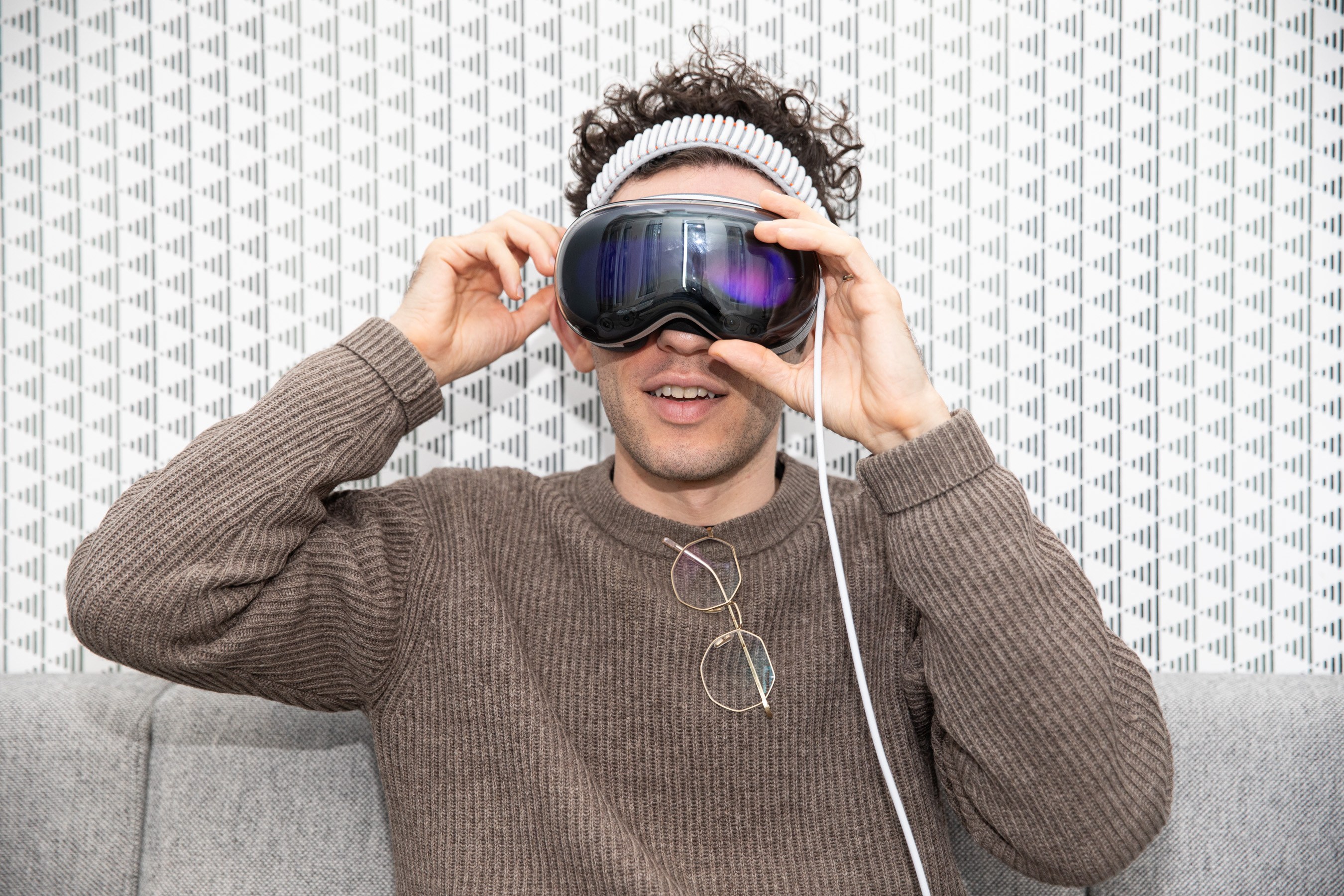
Apple's Worldwide Developers Conference opened at 10:00 PT (17:00 UTC) on 8 June 2026 at Apple Park, and the company used the keynote to redraw the line it has been drawing for two years: the next generation of consumer AI will live on the device, not in someone else's data centre. According to TechCrunch's live coverage of the event, the announcements spanned a long-rumoured Siri overhaul, the next major iOS release, and a broader push under the Apple Intelligence banner — a stack Apple has been quietly positioning as the privacy-first alternative to the cloud-resident assistants now standard across the industry.
The bet is straightforward, and it is also, finally, legible. Apple is arguing that the consumer-AI race will be won or lost on three things no one else can match simultaneously: control of the silicon, control of the operating system, and a credible claim that the user's data never leaves the device. That is a different contest from the one the headlines have been describing — the one about which model can recite the most obscure facts or generate the most photorealistic video. It is a contest about plumbing.
What Apple actually put on the table
TechCrunch's running WWDC 2026 recap frames the keynote around three pillars: a rebuilt Siri, the iOS 27 release, and an expansion of Apple Intelligence features. The publication's separate preview piece, published earlier the same day, characterised the Siri revamp as "highly anticipated" — a polite way of noting that the assistant's previous AI-era reboot, promised in 2024, has spent two years as the company's most public self-inflicted wound. The stakes of getting it right in 2026 are obvious: a personal assistant that still cannot reliably handle a multi-step request is a liability in exactly the moment the market expects one to be a feature.
The preview also makes clear that the iOS 27 release and the Apple Intelligence work are being treated as a single product story, not two. That is the editorial signal worth tracking. Apple does not break its platform into parallel narratives at WWDC; the company tells developers one story about the next twelve months and asks them to build inside it. The story this year is that the model is a system feature, the way the camera or the secure enclave became system features a decade ago.
The market reads the room
The fact that prediction markets priced Tim Cook's keynote language hours before he delivered it is, on its own, the most telling data point of the day. A Polymarket market listed on 8 June 2026 asked users to bet on what Cook would actually say on stage, with the URL shared via the platform's X account at 14:09 UTC. The existence of that market — granular enough to make money on specific phrasings — tells you that for a meaningful slice of the informed public, the WWDC keynote has become a financial event as much as a developer one. Apple trades on the words its CEO uses in a fifty-minute speech.
That has consequences for how the announcements get read. A line about "personal context" or "on-device foundation models" does double duty: it is a developer instruction and a stock-moving signal. Reporters who do not track the prediction-market side of the cycle will miss the second-order commentary that now surrounds these events.
The structural frame: a different AI race
What is happening at Apple is best understood as a quiet attempt to redefine what the consumer-AI race is actually about. The dominant narrative, set by OpenAI, Google and Anthropic, is a model race — larger context windows, more capable reasoning, longer and more impressive benchmark climbs. That race is real, and it is where most of the venture capital sits. But it is a race whose product the user never touches directly. The user touches a chat box, a search bar, an image generator, or, increasingly, an agent that books flights on their behalf. The model is several layers of abstraction away.
Apple's pitch is that the abstraction layer is the product. If the assistant can read your screen, summarise your messages, draft a reply and send it — and do all of that without your messages leaving the phone — then the question of which foundation model sits underneath becomes, for most users, a secondary engineering detail. That is a structural argument. It says: the cloud-model arms race is a procurement problem for Apple, not a product strategy. The product strategy is integration, latency, permissioning and trust.
The counter-narrative is just as serious. On-device models are smaller, less capable and slower to improve than the frontier systems being trained on tens of thousands of the latest GPUs. Apple can credibly argue that 80 percent of daily assistant tasks do not need a frontier model. It cannot credibly argue that the remaining 20 percent — the long-form reasoning, the open-ended research, the genuinely novel creative work — is solved locally. The honest reading is that Apple is choosing a different competitive terrain, not a higher one. The market will decide whether the terrain it has chosen is the one that matters.
Stakes
If Apple is right, the next phase of consumer AI splits cleanly: an on-device tier for the routine, privacy-sensitive 80 percent, and a cloud tier for everything else, accessed deliberately and visibly. The winners are the chip designers — Apple's silicon team most obviously, but also the broader Arm ecosystem that has made on-device inference economically viable. The losers are the cloud-first assistants that have built their consumer pitch around capability alone, without an integration story. Developers, meanwhile, get a more constrained but more predictable surface to build on, which is the trade Apple has always asked them to accept.
What remains genuinely uncertain is whether the rebuilt Siri, two years late, will work well enough on day one to vindicate the strategy in front of the only audience that matters: the hundreds of millions of users who have been quietly tolerating an underperforming assistant. The keynote is the easy part. The next twelve months of shipped behaviour are the test.
Desk note: Monexus read the WWDC 2026 keynote through the lens of platform strategy, not product review. The wire packages this as a Siri story; this publication treats it as a privacy-versus-cloud argument dressed up in developer tools.