Bankman-Fried files for Trump pardon, betting on a president who already told him not to
The FTX co-founder serving a 25-year sentence has formally asked Donald Trump for clemency — even after the president publicly told him not to count on it.
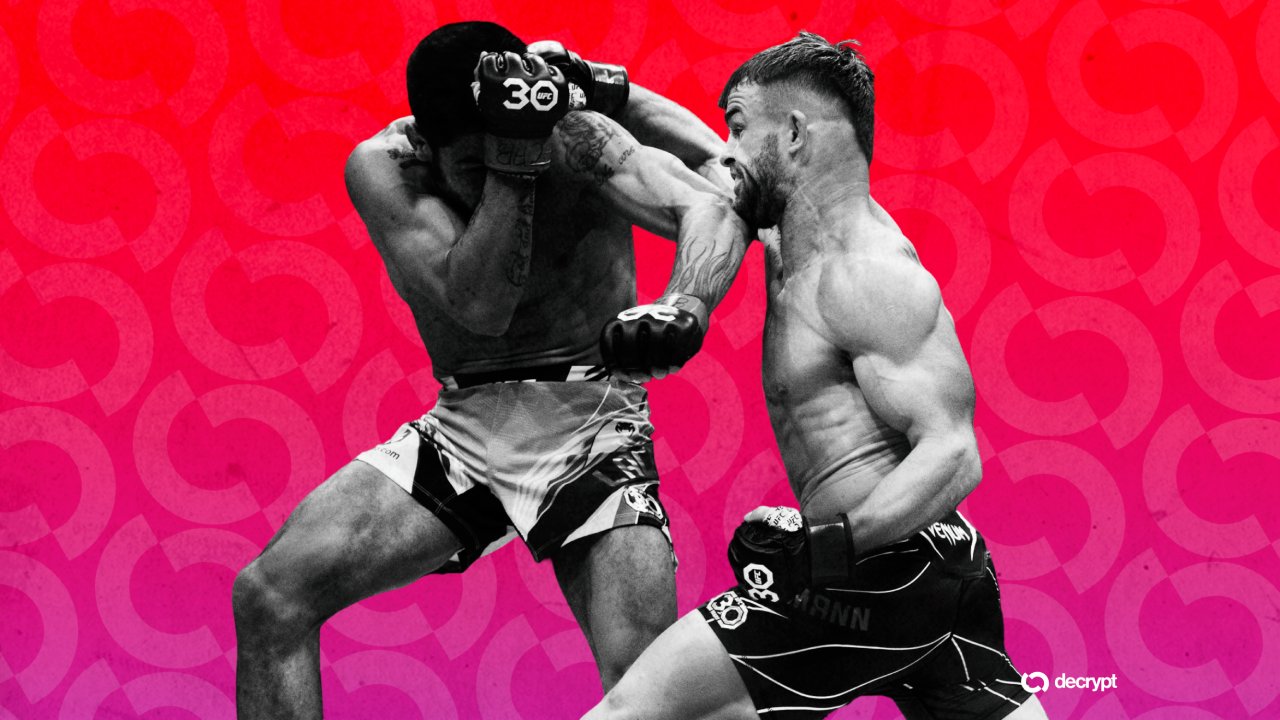
Sam Bankman-Fried has done the one thing President Donald Trump previously told him not to do: he has formally asked for a pardon. The 33-year-old co-founder of the collapsed crypto exchange FTX filed a clemency petition from federal prison on 8 June 2026, roughly two and a half years into a 25-year sentence for fraud and money-laundering convictions handed down in 2024. The application, first reported by the Financial Times, lands in a White House that has been unusually generous to crypto's fallen — and unusually candid with the man it is now being asked to forgive.
The petition is a long shot dressed up as a calculation. Trump has already used the pardon power to reset parts of the crypto industry's relationship with Washington, but he has also said, on the record, that Bankman-Fried's case sits in a different category. The math, in other words, is the bet: that the same administration willing to commute the sentence of a high-profile BitMEX co-founder might yet find a use for a one-time rival of Changpeng Zhao.
A petition filed in public
The mechanics of the move are straightforward. Under US Department of Justice rules, federal clemency applications are submitted through the Office of the Pardon Attorney; the White House is not required to act on them, and the process can stretch for months or years with no reply. What is unusual here is the speed with which the filing became public news, and the political theatre baked into the timing. Decrypt reported the petition at 18:08 UTC on 8 June 2026; CoinDesk's confirmation followed at 15:41 UTC; TechCrunch published its own account at 15:04 UTC. By the end of the trading day in New York, the story was the lead item on three of the industry's main wires.
Bankman-Fried's legal exposure is not in dispute. In November 2023 he was convicted on seven counts, including wire fraud and conspiracy to commit money laundering, for the collapse of FTX in November 2022. Judge Lewis Kaplan sentenced him to 25 years in March 2024. He has been incarcerated since August 2023. A federal appeals court has not, as of the date of the petition, overturned any element of the conviction. The clemency filing is therefore not a route to legal vindication; it is a request that the executive branch set aside the judgment of the judiciary.
Trump told him not to count on it
The reason this filing is newsworthy — rather than a routine piece of prisoner correspondence — is the public record Trump has already established on the question. In earlier interviews the president ruled out a pardon for Bankman-Fried specifically, distinguishing his case from the wave of clemency grants that followed his return to office. Trump has signed pardons or commutations for figures including Ross Ulbricht, the Silk Road founder serving a life sentence, and Arthur Hayes, the former BitMEX chief executive who pleaded guilty to Bank Secrecy Act violations. The pattern matters because it sets a precedent Bankman-Fried's lawyers are now asking him to extend — and a precedent Trump has, in Bankman-Fried's case, publicly disclaimed.
The petition therefore carries a built-in publicity risk for the applicant. If the White House rejects it, the rejection itself becomes a story. If the White House grants it, the grant will be read as a counter-signal to the Department of Justice, which argued unsuccessfully at sentencing for a 40-to-50-year term. Either outcome produces headlines, and Bankman-Fried's team has chosen to pursue the headline over the discretion that a quiet filing would have bought them.
A different crypto cycle
The structural context is the one element of the story the wires have not fully resolved. Trump's second-term crypto posture is not a continuation of his first-term skepticism; it is an explicit policy reorientation. The administration has moved to drop or settle enforcement actions against several major platforms, embraced a strategic Bitcoin reserve, and installed industry-friendly regulators at the SEC and the CFTC. Within that framework, a pardon for FTX's founder would be consistent with a broader argument that the enforcement wave of 2022–2024 went too far.
It would also be inconsistent with the way the administration has talked about Bankman-Fried personally. Trump has framed the FTX collapse, on multiple occasions, as a story about a fraudulent operator who stole from customers — language that aligns more closely with the prosecutors' sentencing memo than with the defence's "good faith mistakes" line. Granting clemency would force the president to choose between two things he has said in public: that the crypto crackdown of the Biden years was excessive, and that Bankman-Fried was uniquely culpable within it.
What the petition actually buys him
The most plausible read of the filing is that it is not primarily aimed at Trump. Clemency applications are public-record documents; they are reviewed by the Office of the Pardon Attorney before ever reaching the president's desk; and they remain on file regardless of outcome. Bankman-Fried's appellate options are narrowing as each post-conviction motion fails. A clemency petition filed now, two and a half years into a 25-year sentence, plants a flag in the public record at the moment when the political weather is most favourable to his industry — and creates a reference point that future defendants, and future defence teams, can cite.
There is also a softer political case. FTX's creditors are still being made whole through the bankruptcy estate, which has recovered a substantial portion of customer assets. The customer-harm narrative, which carried the original prosecution, has weakened as recoveries have improved. A petition that frames Bankman-Fried as a young founder who made catastrophic mistakes — rather than a deliberate fraudster — sits more comfortably with the administration's preferred story about the previous enforcement regime.
Whether that framing survives a presidential review is another question. The pardon power is unreviewable, but it is not unlimited in its political cost. A grant would be celebrated in some quarters of the industry and condemned by consumer-protection advocates, by victims' groups, and by members of Congress who have already criticised the Ulbricht commutation. The administration's calculation, like the petition itself, is a bet on which constituency matters more in an election year.
What remains uncertain
The sources do not specify the contents of the clemency petition itself, which is not yet a public document. They do not disclose whether Bankman-Fried's legal team has been in direct contact with White House counsel, or whether the filing was preceded by back-channel signals. They do not address whether co-conspirators — including Caroline Ellison, the former Alameda Research chief executive who testified for the government — have filed similar applications, or whether the Department of Justice has been formally notified. The petition's timing, two and a half years into a 25-year sentence and roughly eighteen months before the next presidential cycle, is consistent with both a serious legal move and a publicity play; the public record does not yet let a reader tell them apart.
What is not in doubt is that the application now exists. The White House has it. The Office of the Pardon Attorney has it. The crypto industry, the bankruptcy estate, and the plaintiffs' bar all have a stake in what happens next. And Bankman-Fried, having been told not to count on a pardon, has asked for one anyway.
Desk note: the wire coverage of this story is unusually aligned — three independent crypto outlets confirmed the filing within roughly three hours, and the Financial Times broke it. The interesting editorial question is not whether the petition happened (it did), but what the administration does with the precedent it now has to set.
Wire provenance
This editorial synthesis draws on the following public wire/social posts:
- https://t.me/wfwitness/154722