The blockade, the bet, and the bond market: reading Trump's leverage play on Iran
Donald Trump says a US naval blockade will hold "in full force and effect" until a final deal. Inside the pressure campaign, the prediction markets, and the second-order risk for anyone holding Iranian paper.
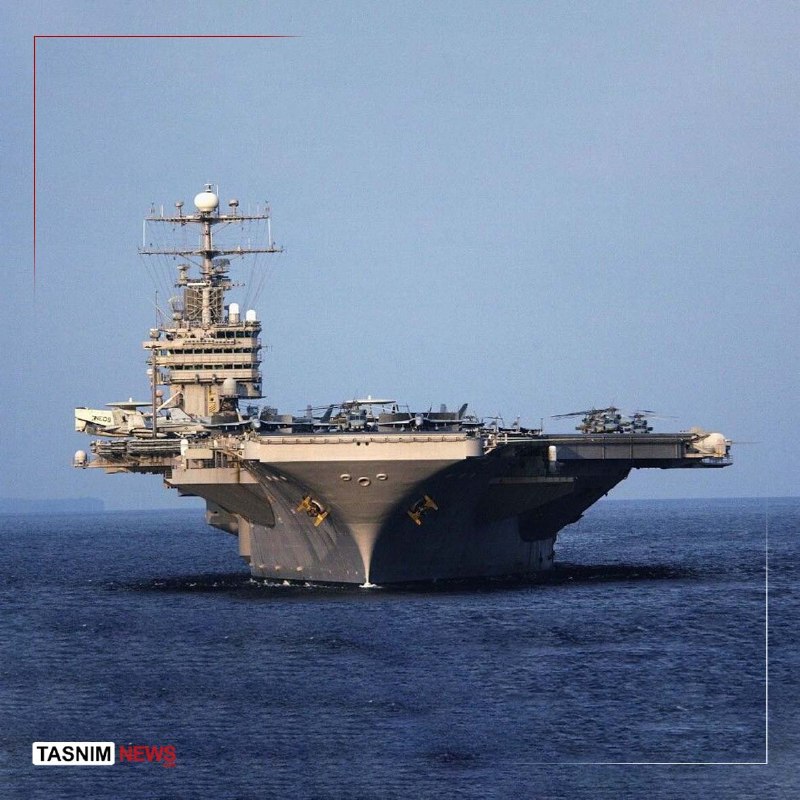
On 8 June 2026 at 13:29 UTC, US President Donald Trump used his social channels to declare that the American blockade of Iran would remain "in full force and effect" until a final deal is reached between Washington and Tehran. The line, distributed across Truth Social and amplified within minutes by the prediction-market account @polymarket, reset the negotiating clock: there is no expiry, no symbolic de-escalation window, and no off-ramp until the political core of a new agreement is signed.
This is not a story about a single presidential post. It is a story about the architecture of leverage that the United States is currently assembling around the Islamic Republic — a layered mix of naval interdiction, sanctions enforcement, secondary-tariff threats, and a parallel information campaign waged through prediction markets, Telegram channels, and short-form video. Each layer is calibrated to compress the Iranian decision space, and each carries a different cost if it fails. The blockade is the most visible. The market signals are the most underrated. The Russian and Chinese positioning underneath, much of it running on Russian-language and pro-Kremlin networks, is the most under-reported.
A blockade with no exit ramp
A maritime blockade is, in the older literature of international law, an act of war. Modern practice has softened the term — "interdiction," "maritime quarantine," "selective control" — but the operational reality is unchanged. Vessels are stopped, boarded, redirected, and, in extremis, seized. The Strait of Hormuz and the broader Persian Gulf chokepoint carry roughly a fifth of global seaborne oil. Any sustained disruption to traffic in those waters is, in effect, a tax on the global economy and a veto on Iran's primary export.
Trump's 8 June declaration that the blockade will hold until a "final deal" is significant for what it does not say. It does not announce a time limit, does not commit to a specific reciprocal step, and does not define what "final" means. That asymmetry — open-ended pressure on Tehran, open-ended patience in Washington — is the point. The political utility of a naval cordon is that it is both an instrument and a message: to Tehran that the cost of walking away rises daily, and to every commercial counterparty of Iran that hedging against the blockade is now a permanent feature of doing business.
The prediction market as policy telegraph
Within minutes of the post, the @polymarket account on X was already flagging it as a live market-moving event. That is not incidental. Polymarket and its peers have, over the past two years, become a parallel channel for reading the temperature of US foreign-policy bets. When the White House announces a hard-line posture on a deal, the implied probability of "no deal by date X" typically moves before any cable or wire service has filed a story. The price action is now part of the message.
The structural pattern is familiar. Political actors — in this case, the Trump administration — have learned to use prediction markets as both a polling instrument and a signalling device. A blockade that holds "in full force and effect" is easier to defend politically if the public markets agree that the probability of an eventual deal is rising. Conversely, if those markets begin to price in a low probability of resolution, the political case for sustaining the naval posture thins. The administration's calculus is therefore not just a function of Iranian behaviour or European diplomacy. It is also a function of what Polymarket, Kalshi, and their analogues are doing minute by minute.
For Tehran, the same instruments read the other way. Iranian-linked traders and sympathetic diaspora users have a financial incentive to push the implied probability of a deal upward — because a deal, however punitive, ends the blockade. The prediction market is therefore not a neutral mirror. It is itself a contested terrain.
The Russian and Chinese second story
While the Western wire narrative is dominated by the Trump–Tehran dyad, the Telegram channel Two Majors — a Russian-language milblogger feed with consistent reach into Russian-speaking audiences — was running a markedly different line on the same day. At 22:56 UTC on 8 June, Two Majors carried a quote, attributed to its own commentary, calling Trump "the liar and deceiver" and accusing him of having "promised peace and no new wars" while delivering "death and hunger over millions of people." A near-identical line surfaced an hour earlier on X via the account @sprinterpress.
The framing matters. Moscow's strategic interest in an indefinite US–Iran confrontation is real and rarely discussed in plain terms. A blockade that lasts months drains American naval capacity, ties up the US Navy in the Indian Ocean fleet, and complicates any pivot to the Pacific that Beijing's planners are watching closely. A prolonged crisis also keeps European buyers dependent on non-Iranian supply, much of which routes through Russian pipelines and Gulf-state intermediaries. For Moscow, the optimal outcome is not war and not peace. It is a long, financially expensive negotiation in which Washington is the actor paying the daily option cost of patience.
Beijing's interest is broadly aligned, with a different accent. Chinese refiners are the largest single customers of Iranian crude that escapes Western sanctions enforcement. The so-called "teapot" refiners in Shandong have built business models around discounted Iranian barrels, and Beijing's diplomatic support for the Iran-China 25-year cooperation framework gives that trade a quasi-official scaffolding. The blockade imposes costs on those refiners, but it also gives Beijing a continuing claim on Tehran's gratitude and a veto on any deal that excludes Chinese interests. China is not a bystander. It is a quiet third party at the table.
The cultural noise and the signal
The same 24-hour window that carried the blockade announcement also produced a heavy churn of short-form video on X — including, at 17:11 UTC, a clip shared by @sknerus_ in which a mother responds to her daughter's suggestions with the line, "I have a sponsor... so what can you do? The most you can do is bark in these comments." A second post from the same account, at 09:26 UTC, carried the line "I feel stupid to refuse someone something." Neither item is a policy event. Both are reminders of the texture of the information environment in which the blockade story is actually being absorbed by ordinary users: a feed in which a presidential declaration of war-adjacent measures and a domestic family row share the same screen real estate, the same algorithmic distribution, and roughly the same attention budget.
The point is not that the family rows are important. The point is that the marginal cost of attention to the blockade is, in practice, very low. For Trump, that is a feature. A policy that demands sustained public engagement is more politically vulnerable than one that can survive on the back of a single repeated phrase — "full force and effect" — carried by an algorithmic feed.
What we are not yet able to verify
The thread material for this article does not specify which body of water the blockade physically covers, whether the US is operating alone or with coalition partners, what the rules of engagement are for boarding and seizure, or whether any vessels have yet been stopped. It does not specify the current Brent price reaction, the level of the Polymarket implied probability on a Q3 deal, or the position of the Iranian rial on the open market. It also does not include direct comment from Iranian Foreign Ministry officials, the IRGC Navy, or the Supreme National Security Council. The picture painted here is therefore one of posture and architecture, not of confirmed kinetic action. Readers should treat the operational details as still developing.
Stakes and the next thirty days
If the blockade holds into July, three things become more likely. First, the political pressure on Iran's leadership to accept a framework that does not meet its maximalist demands — full sanctions relief, formal security guarantees, closure of the IAEA file — intensifies sharply. Second, the secondary-tariff regime expands, drawing in European and Asian buyers that have so far hedged. Third, the domestic political cost in the United States begins to bite, particularly if gasoline prices respond and if the prediction markets start pricing in a no-deel scenario as the modal outcome. A president who has tied his legacy to "no new wars" is, in the words of the Two Majors commentary circulating on 8 June, vulnerable to precisely the charge that the blockade is its own kind of war by other means.
The cleaner the blockade, the cleaner the deal that ends it. The noisier it gets — a tanker incident, an Iranian retaliatory seizure, a miscalculation in the Strait — the more the leverage inverts. That is the bet Trump is making on 8 June 2026. It is also the bet Tehran is being forced to call. Everyone else is along for the ride, paying the option premium in attention, in fuel, and in the steadily rising cost of insuring a Gulf transit.
— Monexus desk note: This piece treats the prediction-market layer and the Russian-language commentary as integral to the blockade story, not as colour. Western wires on 8 June led with the presidential declaration. The more interesting story is the multi-channel architecture of pressure that declaration now sits inside, and what it costs each of the parties when the bet is called.
Wire provenance
This editorial synthesis draws on the following public wire/social posts:
- https://t.me/Eu
- https://t.me/European_dissident
Follow the event.
These dated source records provide context. They do not retrospectively verify this archive article.
Separate what the nuclear watchdog reported from what it could not determine after the June 2025 strikes.