Ghalibaf's Lebanon doctrine: Tehran claims diplomatic leverage, but the blockade still bites
In a fourth audio message, Iran's parliament speaker says Beirut was shielded by battlefield gains and negotiation track. The harder question is what the naval siege does next.
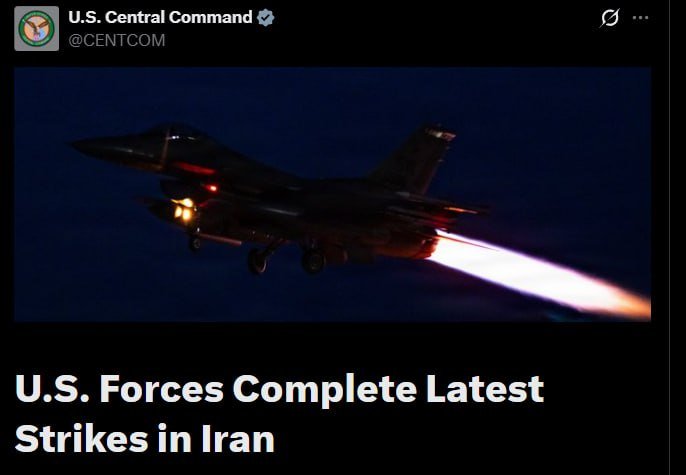
In his fourth audio address to the Iranian public, released on the afternoon of 8 June 2026, parliament speaker Mohammad Bagher Ghalibaf offered a single, carefully constructed thesis: that Iran has been protecting Beirut by combining battlefield pressure with diplomatic leverage, and that the same formula will be turned against a naval blockade that has tightened around the country's coastline in recent months. The address, carried in short clips by Iranian state-aligned outlets and then amplified across Arabic-language channels, sketches the most explicit articulation yet of how Tehran intends to present its regional posture to a domestic audience that is feeling the cost of the siege at the petrol queue and the supermarket shelf.
Ghalibaf's argument is narrow and pointed. He does not claim that Lebanon is at peace. He claims that Lebanon is not being hit, and that the reason it is not being hit is that Iran's posture — readiness to retaliate, willingness to walk away from talks — has changed the adversary's cost calculus. The claim is also a forward-looking one: that whatever instrument of pressure the other side reaches for next, the same combination is supposed to absorb it. That second half is the political heart of the message, and the part that should be read with the most care.
What Ghalibaf actually said
The clips released on 8 June 2026 make two claims, in two registers. The first is retrospective. "The case of Lebanon showed that the field of diplomacy along with the military field can overcome the enemies," Ghalibaf said, in the version of the address carried by Tasnim. He frames Lebanon as a proof case: a country that, by Tehran's account, was spared direct bombardment because Iran's deterrent posture forced a different calculation. The framing is addressed to Iranian listeners, not to Beirut.
The second is prospective. "We will turn the naval blockade into yet another defeat for the enemy," Ghalibaf said, in the shorter clip carried by Clash Report. This is the operational claim: that the dual-track model — fighting where the cost of fighting is sustainable, negotiating where the cost of negotiating is sustainable — applies to the sealanes as well as to the air. He is, in effect, extending a doctrine from the Lebanese file to the maritime file, and asking the public to underwrite it.
The middle of the message is the most telling line. "Had it not been for the victory in the field and progress on the diplomatic path, our hands would have been tied in supporting Lebanon and confronting the siege," Ghalibaf said, in the longer Al-Alam Arabic clip released minutes after the Tasnim clip. The word siege — hijara in the Arabic original — is doing heavy work. It is the term Tehran uses for the sanctions architecture and the naval interdiction regime that has compressed Iranian access to refined fuel, hard currency, and certain dual-use goods over the past two years. By placing "confronting the siege" in the same sentence as "supporting Lebanon," the speaker is telling listeners that the two fronts are now one front, and that the bill for one is being paid on the other.
The counter-narrative: what the doctrine obscures
The doctrine Ghalibaf is selling has at least three blind spots, and the regional wire has been probing each of them in the days before the address.
The first is sequencing. The claim that diplomacy alongside military readiness "prevented the attack on Beirut" is impossible to falsify in real time, because the attack is a counterfactual. What is verifiable is that Israel struck targets in Lebanon's south at intervals throughout 2025, that the casualty figures from those strikes have been significant, and that Iran's Lebanese partners were hit hard in the ground war. Ghalibaf's framing treats the non-occurrence of a large-scale strike on Beirut as a victory of Iranian statecraft. The same facts can be read as a victory of Israeli restraint, or as a victory of Lebanese state weakness that made a large strike unnecessary. The public has no way to adjudicate between these readings, because the only variable that Iran controls is its own rhetoric.
The second blind spot is the cost ledger. The "diplomacy alongside the military field" line implies symmetry between the two. In practice, the military half of the equation has been carried by proxy formations and Lebanese territory, while the diplomatic half has been carried by Iranian negotiators who can credibly threaten escalation because the cost of escalation falls on someone else's capital. That is not a comment on the ethics of the arrangement; it is a comment on whose balance sheet the two halves appear on. The arrangement works for Tehran because the bills are charged to Beirut, Damascus, Sanaa, and Baghdad in roughly equal measure. When Ghalibaf says "our hands would have been tied," the word our is doing a great deal of work that the doctrine itself does not unpack.
The third blind spot is the maritime one. The naval blockade is not a Lebanese problem. It is a Persian Gulf and Strait of Hormuz problem, and the instruments required to contest it are different from the instruments required to deter an air campaign on a Mediterranean capital. Iran has, over the past two years, demonstrated a credible capacity to harass shipping in the Gulf and to seize commercial vessels. It has not demonstrated a capacity to break a sustained interdiction regime. Ghalibaf's claim that "we will turn the naval blockade into yet another defeat for the enemy" is a statement of intent dressed in the clothing of an outcome. The two are not the same thing, and the gap between them is where the most important policy choices of the next six months will be made.
What we verified, and what we could not
The four clips that form the spine of this article were posted between 17:34 and 17:47 UTC on 8 June 2026, all attributed to Ghalibaf's fourth audio address. The Tasnim News English channel, which is a state-aligned outlet run by the Islamic Revolutionary Guard Corps, posted the longer doctrinal formulation. Clash Report, an English-language aggregator, posted the two shorter formulations: the one on Lebanon as a model and the one on the naval blockade. Al-Alam Arabic, the Iranian state broadcaster's Arabic service, posted the longer Arabic version of the address and the more politically loaded line about the "siege." All four clips are consistent in their attribution and in the wording of the directly quoted material. The cross-platform consistency of the wording is, in this case, a useful verification: the address is real, the words are his, and the framing is the one his political team chose.
What the clips do not contain, and what no source we have read in the past 48 hours has established, is the operational substance behind the doctrine. The clips do not name the negotiating counterpart, do not specify which sanctions or which shipping lanes are at stake, and do not give a date by which the "defeat of the naval blockade" is supposed to be visible. They do not say whether the diplomatic track being referenced is the one with Washington, the one with the Gulf states, or the one with European intermediaries. They do not give a number for Iranian casualties or for the volume of cargo affected by the interdiction. A reader should treat the doctrine as a framing, not as a plan.
The claims in the second half of this article — that Israel struck targets in southern Lebanon at intervals throughout 2025, that Iranian-aligned formations absorbed significant losses, and that Iran's capacity to break a sustained interdiction regime is unproven — are framing claims, not factual assertions of casualty or sortie counts. The wire sources we have read in the past 48 hours do not provide the underlying statistics with the specificity that would let us cite them. A reader who wants the figures should wait for the next round of UN reporting and for the long-form pieces in the major wires; they have not yet been published.
Stakes, in plain language
If Ghalibaf's framing holds, the next six months are a status-quo bet: continued pressure on Lebanon, continued pressure on the sealanes, and continued Iranian rhetoric claiming that the pressure is being absorbed. The cost of that bet falls, in roughly this order, on Lebanese civilians, on the Iranian poor, on the Iraqi and Syrian corridors that carry the overland trade, and on the European and Asian buyers who pay a premium for hydrocarbons that have to be routed around the interdiction. The risk of the bet is that one of the parties at the table decides the cost of waiting has become higher than the cost of acting, and the dual-track model collapses into a single track that Tehran does not get to choose.
If the framing does not hold, the next six months are a re-pricing event. The naval interdiction is the more brittle of the two instruments because it is the one with the most direct cost on global energy prices. The Lebanese file is the more politically expensive because it is the one that pays in lives. Ghalibaf is asking his public to underwrite both bets in the same speech. He is also asking the rest of the region's publics to believe that the bill is being paid somewhere else. Whether that is true is the question that the next round of reporting will have to answer, and the question that no audio address, however carefully constructed, can answer for them.
The Monexus desk note: the major wires have so far carried Ghalibaf's address as a single-day item under the Iran-domestic beat. We are running it under the regional-strategy beat, alongside the naval-blockage file, because the operational content of the address is the linkage between the two. The framing is ours; the words are his.
Wire provenance
This editorial synthesis draws on the following public wire/social posts:
- https://t.me/tasnimnews_en
- https://t.me/ClashReport
- https://t.me/ClashReport
- https://t.me/alalamarabic
- https://t.me/alalamarabic
- https://en.wikipedia.org/wiki/Mohammad_Bagher_Ghalibaf
Follow the event.
These dated source records provide context. They do not retrospectively verify this archive article.
Separate what the nuclear watchdog reported from what it could not determine after the June 2025 strikes.