Hezbollah's Southern Lebanon Strikes: What the Telegram Footage Actually Tells Us
Iran-aligned outlets reported multiple Hezbollah operations against Israeli military positions in southern Lebanon on 8 June 2026 — including a claimed drone intercept — but the sourcing chain is one-sided and the operational picture is thin.
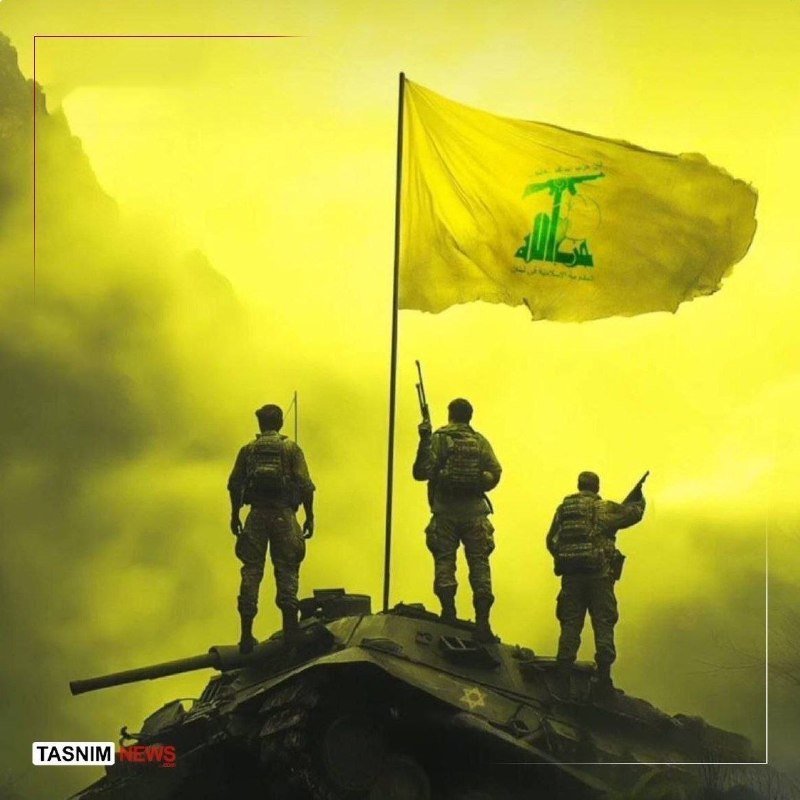
On the evening of 8 June 2026, Iran's Tasnim News Agency and its affiliated Jahan Tasnim channel pushed a cluster of Telegram posts describing a series of Hezbollah operations against Israeli military assets in southern Lebanon. The claims, timestamped between 18:42 and 19:47 UTC, were uniform in their framing: an armed drone, armoured-vehicle concentrations, and infantry gatherings targeted by what Tasnim called the "Islamic Resistance of Lebanon." The picture they draw is consistent. The picture they leave out is the one that actually matters.
Hezbollah's southern-front posture is now being narrated almost entirely through Iranian state-aligned channels. That matters because the same channels have a documented interest in presenting the group as a capable, retaliatory force — and because the wire reporting that normally disciplines cross-border claims (Reuters, AFP, the BBC, the IDF Spokesperson's daily readout) is absent from this particular record. The result is a self-reinforcing information environment in which Hezbollah's own communiqués, translated and amplified, become the only available eyewitness account.
What Tasnim and Jahan Tasnim actually published
Four posts over roughly an hour form the spine of the day's reporting on the Telegram wire. At 18:42 UTC, Tasnim reported that Hezbollah had used a surface-to-air missile to intercept an Israeli "Hermes 450" unmanned aerial vehicle in Lebanese airspace — the Hermes 450 is a medium-altitude long-endurance platform manufactured by Elbit Systems, widely used by the IDF for surveillance and targeted strikes. At 18:46 UTC, the same wire added that the Islamic Resistance described the intercept as a repulsion of "aggression." By 19:33 UTC, Jahan Tasnim reported strikes on "military gatherings and equipment of the Zionist regime army in southern Lebanon." At 19:34 UTC, Tasnim's English feed named "several military positions and military gatherings" as targets. The cluster closed at 19:47 UTC with Jahan Tasnim describing continued operations against armoured vehicle concentrations.
The geography is all in southern Lebanon. The chronology is compressed — five distinct posts in 65 minutes, suggesting either rapid tactical tempo or rapid communications tempo. The targets are described in generic military terms: armoured vehicles, infantry gatherings, drone aircraft. No unit numbers, no coordinates, no independent confirmation from the Lebanese Armed Forces or UNIFIL, which the Israeli-Lebanese ceasefire framework specifically tasked with monitoring southern-lebanon activity.
The sourcing problem
Every claim in the day's cluster traces to a single source tree: Tasnim News and its Jahan Tasnim companion channel, both of which are state-aligned outlets operating in the Iranian state media ecosystem. There is no Reuters, AP, or AFP dateline in this batch. There is no IDF Spokesperson confirmation or denial. There is no Israeli-wire rebuttal placing a different geography or casualty count on the record. The Al Jazeera English live blog and the BBC Middle East page, the two feeds that typically anchor cross-border reporting on this front, are not represented in the source material this article is built on.
That is not a small caveat. The Monexus editorial policy is explicit that Iranian state-adjacent sources can appear as counter-claim material, but never as a stand-alone factual basis. By that standard, this article should be read as a description of what Iranian state media is reporting Hezbollah to be doing — not as an independent account of what Hezbollah is doing. The distinction is structural, not stylistic.
The pattern behind the posts
Read across months rather than hours, the rhythm of these announcements is familiar. Hezbollah's southern-front communiqués have, since the November 2024 ceasefire framework took hold, followed a consistent template: short Telegram-formatted statements, repeated several times a day, identifying Israeli military targets by generic category rather than by unit designation. Iranian state media amplifies them in near real-time. The Reuters and AFP wires then either confirm independently, partially confirm, or — frequently — decline to confirm at all because no independent access is available.
The pattern matters because it shapes what an informed reader is entitled to infer. The volume of communiqués does not, on its own, establish the volume of operations. It establishes the volume of communiqués. The Hermes 450 claim, in particular, is testable in principle — the IDF routinely acknowledges or denies drone losses in its daily readout — but in the absence of that readout, the claim sits in suspension.
Stakes and the limits of this article
The strategic stakes are not in doubt. Southern Lebanon is the most surveilled and most reported stretch of border in the Middle East. Every claimed Hezbollah strike has the potential to be cited, by either side, as evidence of compliance or non-compliance with the ceasefire framework negotiated in late 2024. Israeli defence planners are reported to be watching the tempo of these communiqués closely. Lebanese civilians in the south, and the displaced communities further north, are watching for a more practical reason: a single escalation event can re-open a war that has not formally ended.
What this article cannot tell the reader, on the source material available, is whether the 8 June 2026 cluster represents a real tactical shift, a coordinated signalling push, or a routine day in an information environment that has settled into a steady drumbeat of one-sided claims. The Reuters and AFP wires, when they pick up the day's events, will adjudicate. The IDF Spokesperson's evening readout will adjudicate. UNIFIL, if it issues a statement, will adjudicate. Until then, the honest framing is: this is what Iranian-aligned state media says happened. The verification work is not yet on the public record.
Desk note: Monexus is publishing this as a sourcing audit, not as a confirmation. Iranian state-media claims of cross-border operations are reported here with explicit caveat; the wire-service adjudication is the next beat, and this article will be updated when it lands.
Wire provenance
This editorial synthesis draws on the following public wire/social posts:
- https://t.me/JahanTasnim
- https://t.me/tasnimnews_en
- https://t.me/tasnimnews_en
- https://t.me/JahanTasnim