Houthi drone intercepted over Eilat as Yemen front stretches Israeli air defence
A Houthi-launched drone was intercepted over Eilat on 8 June 2026, the latest in a string of long-range strikes that have turned Israel's southernmost city into a recurring flashpoint.
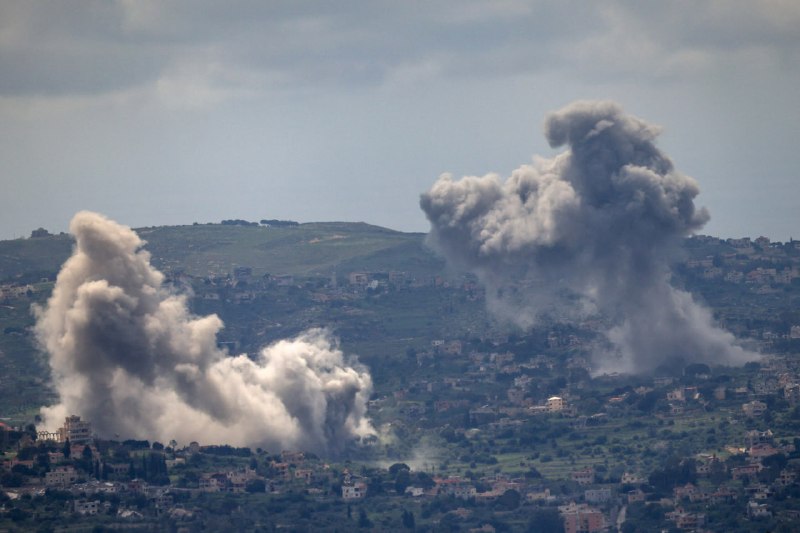
The Israeli Defence Forces confirmed shortly before 22:00 UTC on 8 June 2026 that air defences had engaged an unmanned aerial vehicle launched from Yemen over the southernmost city of Eilat, the third such interception over the Red Sea resort in recent weeks. Two interceptor missiles were fired, according to a Telegram post by the open-source channel GeoPWatch timestamped 21:30 UTC, and alarms sounded in Eilat and the surrounding Eilot region. No injuries or damage on the ground were reported in the initial accounts, and the IDF's brief statement attributed the launch to Yemen's Ansarallah movement — the formal name of the Houthi armed group that has controlled most of north-western Yemen since 2014 and that has, since late 2023, framed its missile and drone campaign as a pressure campaign linked to the war in Gaza.
The interception itself is a single, contained event. What makes it worth attention is the pattern it fits: a long-range strike that originates roughly 1,800 kilometres from its target, gets picked up by Israeli air-traffic and missile-warning systems, and is shot down without disruption to the city below. The episode compresses, in one afternoon, several of the strategic questions that have accumulated around the Houthis' missile and drone programme over the past two and a half years — questions about the group's reach, about the layering of Israeli air defence, and about the limits of deterrence when the launch point is an adversary with no shared border and a steady supply of airframes.
An Eilat under recurring alert
Eilat sits at the southern tip of Israel on the Gulf of Aqaba, separated from Yemen by the entire length of the Red Sea and the Arabian Peninsula. The city has become the most visible Israeli target for Ansarallah's long-arm strikes, partly because of geography — the shortest flight path from Yemen to Israeli airspace runs up the Red Sea — and partly because of symbolism: a hit on Israel's resort-and-port city would be read across the region. Initial reporting on 8 June was confined to the IDF's confirmation and to short, on-the-spot dispatches from local journalists. The Israeli correspondent Amit Segal posted on Telegram at 21:31 UTC that "after alarms in Eilat and the surrounding area: the IDF intercepted a UAV launched from Yemen," and the IDF's own channel followed within minutes. The open-source account GeoPWatch added the detail that two interceptors were fired, a useful piece of corroboration because it signals that the engagement was not a clean, single-missile kill but the kind of layered response that indicates the air-defence operators treated the inbound as a confirmed threat rather than a probe.
The reported alarm footprint — the city plus the surrounding Eilot regional council — matters. Israel's air-defence architecture, anchored by Iron Dome, David's Sling and the long-range Arrow system, is built in layers tuned to different ranges and altitudes. A small, slow, low-altitude drone from Yemen is precisely the sort of target that stresses the lower end of that architecture. The interception succeeded on this occasion, according to the IDF's confirmation and the absence of impact reports in the initial accounts, but each successful engagement also burns interceptor stock that is neither cheap nor, by most accounts, infinite.
Why Yemen, and why now
Ansarallah's campaign against Israeli and shipping targets began in earnest in late 2023, after the start of the war in Gaza, and has run on two parallel tracks. The first is a stated effort to enforce what the group calls a blockade of shipping linked to Israel in the Red Sea and the Bab el-Mandeb strait, in coordination with Iranian-supplied anti-ship missiles and drones. The second, more intermittent track is direct strikes on Israeli territory, almost always using long-range drones or cruise missiles that have to traverse Saudi, Egyptian and Jordanian airspace — or, increasingly, the maritime corridor of the Red Sea — to reach their target. The pace of those direct strikes has been uneven, with weeks-long gaps followed by clusters of launches, and the IDF has been reporting intercepts at a rate that suggests most have been stopped before impact.
The strategic logic from Sanaa's side is layered. Strikes on Eilat do not threaten Israeli military capability in any meaningful sense; a single drone, even a successful one, would not shift the regional balance. What they do, consistently, is demonstrate reach. A 1,800-kilometre flight is within the published envelope of the Houthi drone fleet, much of which traces its design lineage to Iranian supply chains and which has been adapted over the course of the war for longer missions, including strikes on Tel Aviv in 2024 that the IDF attributed to Iran-backed Iraqi militias acting in coordination with the Houthis. The Yemenis are not, on the evidence, attempting to defeat Israeli air defence; they are attempting to make it work for a living, and to make the cost of each engagement visible to Israeli voters and to the broader regional audience.
The structural frame: long-range pressure and layered defence
What the 8 June episode illustrates, more than any single tactical point, is the persistence of a low-grade, high-reach pressure campaign. Israel has, in the past two and a half years, layered additional air-defence systems into the southern and central commands, accelerated co-production arrangements for interceptors, and integrated the US Central Command's regional tracking architecture more closely into Israeli cueing. The cost of that integration, however, is denominated in interceptors, in operational tempo, and in the political capital required to keep it sustained. For Ansarallah, the cost calculus is simpler: a long-range drone, even a one-way airframe, is a cheap instrument against a defended target, and the marginal benefit of a successful intercept — in messaging terms, at least — is the same as the marginal benefit of an impact, provided the launch itself reaches Israeli airspace.
There is a counter-narrative worth naming. Some analysts argue that the Houthi campaign has, since the start of 2025, lost operational momentum as Israeli and US strikes on Yemeni launch sites and as the group's domestic position has been complicated by its entanglement in the broader Iranian regional posture. The fact that interceptions continue to succeed, on this reading, suggests a campaign that is being absorbed rather than one that is escalating. The evidence on 8 June, in isolation, is consistent with either reading: a drone was launched, it was intercepted, and the city was not hit. Whether that pattern represents the steady decay of a failing campaign or the slow, deliberate accumulation of pressure is precisely the question the available sources do not resolve.
Stakes and the road into the summer
The short-term stakes are bounded. Eilat is heavily defended, the immediate civilian impact on 8 June was zero, and the IDF's public posture on these intercepts has been to treat them as routine, even when the launch originates from as far away as Sanaa. The longer-term stakes are about cost accumulation, about the resilience of Israeli interceptor stockpiles, and about the regional signalling that each intercepted drone carries. For the Houthis, each launch that reaches Israeli airspace — regardless of outcome — is a documented data point that the group can deploy in its own domestic and allied media. For Israel, each successful intercept preserves life but spends capacity. For the United States and the wider Western coalition that has been patrolling the Red Sea and striking Houthi launch infrastructure, the 8 June episode is a reminder that the southernmost tier of the conflict remains active even as the war in Gaza enters a quieter, more political phase.
What remains uncertain, on the evidence available in the wire, is the volume of launches the Houthis intend to sustain into the summer, the exact composition of the airframes being used, and whether the 8 June interception is a one-off or the first of a renewed cluster. The initial accounts do not specify how many drones were in the salvo, whether additional launches followed the interception, or whether the launch was coordinated with any other front — Iranian, Iraqi, or Lebanese. The picture will sharpen only as the IDF's own post-event assessment becomes public and as independent open-source analysts reconstruct the flight path and the time-over-target from radar and satellite data.
This article was prepared by Monexus staff from initial wire and channel reports. The interception was confirmed in real time by the IDF and corroborated by two independent Israeli and open-source accounts; the broader assessment rests on the same limited set of sources and will be updated as further reporting becomes available.
Wire provenance
This editorial synthesis draws on the following public wire/social posts:
- https://t.me/sprinterpress
- https://t.me/amitsegal
- https://t.me/GeoPWatch