Tehran's sky is open again — and the silence from Washington is the story
Iran's airspace reopened on 8 June 2026 with a single sentence from Tasnim. The interesting question is why that sentence is doing so much work.
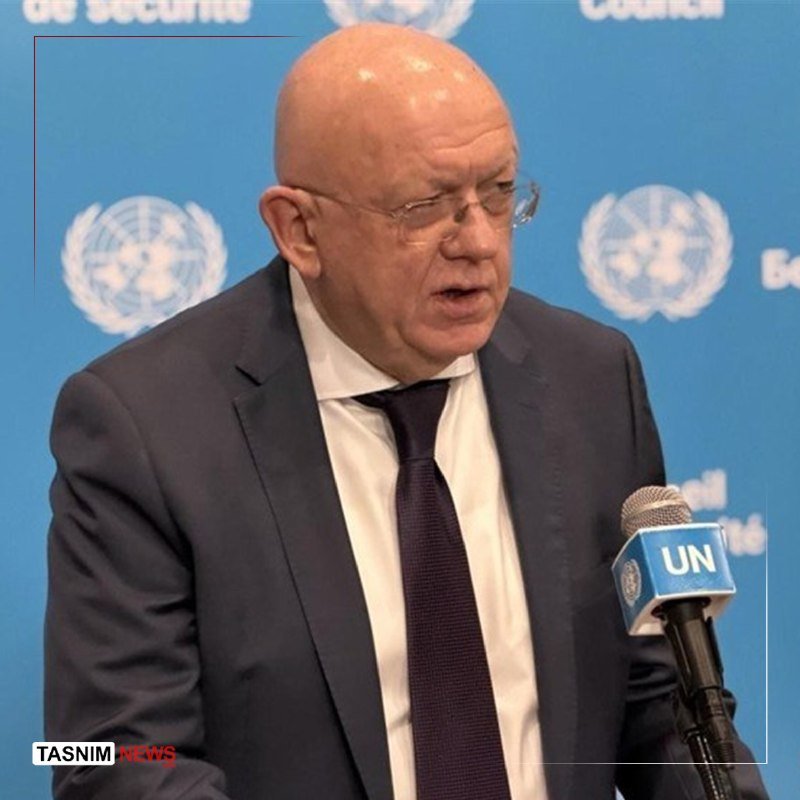
At 16:20 UTC on 8 June 2026, Tasnim News Agency, the outlet most often treated as the Iranian establishment's reading-out-loud voice, posted a single line: Iranian airspace has reopened, the situation has returned to normal, all flights have resumed. The Iranians, the agency added, are returning to routine. Within the hour, two Telegram channels that aggregate Iranian state media — abualiexpress and englishabuali — had carried the same sentence twice over, the duplication itself a tell of how thin the original reporting was and how quickly it was being amplified.
The headline is a non-headline. Iran's commercial airspace has, in fact, opened and closed repeatedly over the last two years, often for hours, sometimes for days, almost always in response to an Israeli-Iranian flare-up or an air-defence drill. What is worth asking is why Tehran chose this moment, and this wording, to declare the matter settled. The answer is not in the bulletin. It is in the absence that surrounds it.
The 'situation' that Tasnim did not name
Tasnim's phrasing is deliberately surgical. 'The situation has returned to normal' concedes that something abnormal happened, without saying what. Iranian state media has spent months training its English-language output to acknowledge disruption without conceding cause. A reader who reached only the agency bulletin would learn that flights are running; they would not learn whether a ballistic-missile test prompted the closure, whether an Israeli strike on an air-defence site forced civilian diversions, or whether a snap military exercise cleared the corridors. The sources do not specify which of these it was. The grammatical choice — 'the situation,' a noun phrase with no agent — does the work of an editor's red pen.
That silence is itself a kind of address. Iran's state-aligned press has, over the course of 2025 and 2026, refined a register that concedes physical reality (a flight is cancelled; a corridor is closed) while withholding political content (who closed it and why). The technique lets Tehran signal to its own public that the system functions under pressure, and signal to foreign observers that the regime is choosing what to disclose. Whether that is misinformation or simply hierarchy of information is a question the bulletins refuse to settle.
What the wires would have added, and did not
There is a useful counterfactual here. A Reuters or AP bulletin on the same event would have carried, in its first three paragraphs, the cause of the closure, the airlines most affected, the duration, and at least one named official from either Iran's civil aviation authority or a foreign carrier offering an independent schedule confirmation. Tasnim carried none of it. The channels that rebroadcast the line — abualiexpress and englishabuali — added nothing of substance. The total information content of the day's reporting is: Iranian airspace, open.
That asymmetry is the actual story. Western aviation wires have spent two years under-reporting Iranian closures, partly because the closures have become routine, partly because airlines have learned to absorb the disruption in routing rather than in cancellations. Tasnim's bulletin is, in effect, the only public artefact of an event the rest of the wire has decided is not an event.
Why now, and for whom
Three readings are available, and the evidence does not yet favour one cleanly. The first is the functional one: a closure had run its administrative course, the air force was done with whatever exercise or security window it required, and the regime simply closed the loop. The second is the diplomatic one: by announcing reopening in English, on a state-aligned wire, Tehran was speaking past its domestic audience to a foreign one — most plausibly to delegations preparing for the next round of nuclear or de-escalation talks, where the airspace question is a routine item of working-group negotiation. The third is the demonstrative one: at a moment when regional airspace has been weaponised by multiple state and non-state actors, Iran's ability to declare its own sky open on its own schedule is itself a piece of leverage.
Each reading is plausible. The source material does not let this publication choose between them with confidence. What can be said is that Tasnim's choice to use the present tense — 'has reopened,' 'have resumed' — was made at a particular moment in the diplomatic calendar, and that the brevity of the announcement was not a function of limited information so much as of limited appetite to share it.
What remains uncertain
The bulletins do not specify the duration of the closure, the number of flights diverted, the airlines most affected, or whether a notam (notice to airmen) was filed with Eurocontrol or the FAA. Independent aviation trackers, who usually pick up Iranian airspace status within minutes, had not, at the time of the Tasnim post, added a confirming public record in the channels surveyed here. Readers who need operational detail — passengers with imminent bookings, freight forwarders, insurers — should treat the state-agency line as a directional signal, not a flight-plan. The structural read, though, holds either way: Iran's airspace is a managed diplomatic asset, and 'managed' in this case means the regime decides what the public record contains.
This publication noted the wire's silence before the bulletin: an event that produced one sentence in Tehran and none in the major Western aviation wires is, by definition, a story about what gets reported and what does not.
Wire provenance
This editorial synthesis draws on the following public wire/social posts:
- https://t.me/englishabuali
- https://t.me/abualiexpress