Tehran shrugs off EU sanctions as Strait of Hormuz rhetoric hardens
Iran's deputy foreign minister dismissed new EU measures as 'hypocritical' on 8 June 2026 and warned that Tehran would continue to act on its own terms in the Strait of Hormuz, the world's most consequential oil chokepoint.
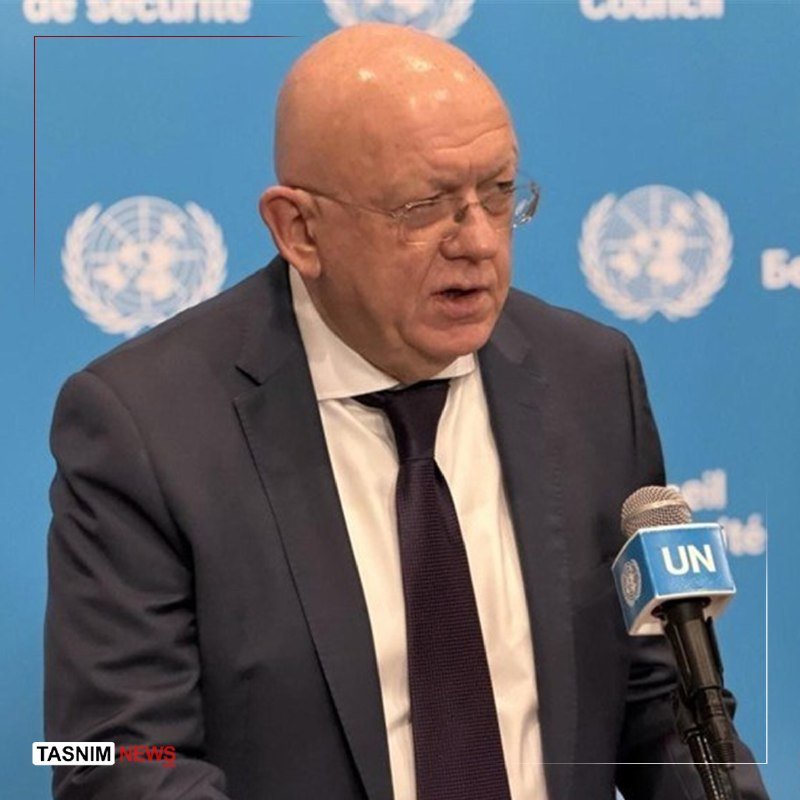
Iran's deputy foreign minister for legal and international affairs, Kazem Gharibabadi, declared on 8 June 2026 that Tehran "does not attach any value" to a fresh round of European Union sanctions, while reaffirming Iran's intention to continue "exercising sovereignty" in the Strait of Hormuz. The remarks, delivered in the hours after Brussels added two Iranian individuals and one entity to its restrictive-measures list, hardened a standoff that has quietly become one of the more consequential energy-security flashpoints of the year.
Gharibabadi framed the European measures as a form of theatre — the routine, almost seasonal, exchange of designations that has punctuated the EU's Iran policy for two decades. In his telling, sanctions adopted on European soil have not changed Iran's behaviour in the past, and will not change it now. He coupled that dismissal with a reminder that the Strait of Hormuz, through which a substantial share of globally traded crude passes, is not a neutral waterway. "We will continue to exercise sovereignty in the Strait of Hormuz," the deputy minister said, in remarks carried by Iranian state-affiliated outlets including Fars, Tasnim and the foreign ministry's official channels. The same message — that Brussels' decisions carry no weight and that the chokepoint will be policed on Iranian terms — was repeated in near-identical phrasing across the four wire items that surfaced on 8 June.
What the EU actually did
The European Council announced on 8 June 2026 that it had added two Iranian individuals and one entity to its sanctions list, the standard legal vehicle Brussels uses against officials, commanders, front companies and, in recent years, actors linked to alleged drone and arms-procurement networks. The Council's public statement, summarised by Iranian outlets, did not specify the names of the sanctioned parties in the wire items reviewed; it framed the designations as part of the EU's continuing response to Iranian actions that Brussels has previously described as contrary to regional stability.
The package is small in numerical terms — three designations on a single day — but it lands inside a wider European posture. The EU has, since the early 2020s, layered its Iran policy across three tracks: nuclear-compliance diplomacy, missile-and-drone export controls, and human-rights listings under separate legal regimes. Designations of individuals and entities are the third track's working tool. Gharibabadi's response was calibrated to that fact. He did not threaten retaliation; he questioned the legitimacy of the instrument itself, calling the sanctions "hypocritical" and suggesting that European criticism of Iran sits oddly with European conduct in other theatres.
Why Hormuz keeps coming back into the frame
The Strait of Hormuz is the narrow corridor between Iran and Oman through which a significant share of seaborne oil — and a meaningful slice of liquefied natural gas — exits the Persian Gulf. Estimates of the precise share vary by source and by year, but all credible readings place it in the high-teens to low-twenties of global seaborne crude. Any Iranian action that raises insurance premia, slows transit, or forces tankers to reroute around the Cape of Good Hope translates, within days, into higher delivered prices in Asia and Europe.
Tehran has long insisted that control of the strait is a sovereign question. In practice, Iranian rhetoric and Iranian capability have moved on different tracks. The country's naval forces — the regular Iranian Navy and the Islamic Revolutionary Guard Corps Navy — operate a layered presence in and around the strait, including fast-attack craft, mine-laying capacity, anti-ship missile batteries along the northern shore, and an expanding fleet of surveillance and fast-interceptor vessels. Western naval commanders, including those of the US Fifth Fleet, have publicly described the IRGC Navy as a hybrid threat, and the strait has been the site of recurring seizures and stand-offs involving commercial tankers.
Gharibabadi's 8 June remarks did not announce any new operational measure. The phrase "exercise sovereignty" is a diplomatic term of art; it can mean almost anything from a press statement to a boarding operation. The signal value, however, is what matters. By coupling the Hormuz language to a dismissal of EU sanctions, the deputy minister was broadcasting a single message: European pressure will be met with a posture of indifference, and Iran retains a set of chokepoint options it can dial up or down as the broader negotiation climate shifts.
Counter-narrative: what the European side is actually signalling
Read from Brussels, the same set of events tells a different story. The EU's Iran sanctions architecture is, by design, a slow-moving instrument — adopted by unanimity in the Council, with member states balancing the demands of the nuclear file, hostage diplomacy, and the European business community's residual interest in trade. Designations of two individuals and one entity are not intended to coerce; they are intended to demonstrate that the European legal machinery remains operational and that the cost of doing business with designated parties is rising incrementally.
That reading would also note what Gharibabadi did not say. He did not announce any retaliation in kind; he did not name a new nuclear step; he did not reference ongoing talks or set a deadline. Iranian state media, for its part, ran the Hormuz line in a separate frame from the nuclear file, suggesting that Tehran is keeping its escalation options segmented rather than bundled. From a European negotiating perspective, that segmentation is not a failure of sanctions; it is the predictable shape of a relationship in which both sides treat the other as a long-term counterpart.
The structural read
What is being staged on 8 June is a familiar rhythm of Middle East coercive diplomacy: one side imposes a small legal cost, the other rejects the legitimacy of the cost and signals that it retains physical leverage elsewhere. The Strait of Hormuz is, in this sense, Iran's standing answer to every sanction round it has received since 2010. The argument on the Iranian side is structural as much as legal — that a country sitting on the most consequential energy corridor in the world cannot be coerced by a regulatory instrument adopted in Brussels.
The argument on the European side is equally structural — that legitimacy, in the long run, is built by patient legal accumulation rather than by escalation. Neither side is wrong on its own terms. The risk for the wider market is that the two rhythms drift out of phase: that a routine designation, on a routine Monday, coincides with a naval incident, a tanker seizure, or a missile test, and the combined signal is read as a posture change rather than a coincidence.
Stakes and what to watch next
The immediate stakes are commercial. Any sustained Hormuz disruption would lift freight rates, raise insurance premia for Gulf shipping, and feed into retail fuel prices in import-dependent economies. The medium-term stakes are diplomatic. The EU's Iran file is one of the few European foreign-policy domains where Brussels, Washington, and several Gulf states have overlapping — though not identical — interests; Iranian rhetoric that paints Europe as a marginal actor complicates the coordination those overlapping interests depend on.
The forward signals worth watching are concrete rather than rhetorical. Any new boarding or seizure in the strait would, in Monexus's reading, be the first hard data point that the 8 June language is being operationalised. A quiet resumption of nuclear-file talks, by contrast, would suggest that the Hormuz line is being held in reserve rather than drawn down. As of the four wire items reviewed, neither has yet happened.
Desk note: Monexus leads with Iranian state-affiliated sources (Fars, Tasnim, the foreign ministry) for the Gharibabadi remarks, since the breaking news originated in Tehran, and notes the European Council's announcement as transmitted by the same Iranian wires. The piece treats both sides' structural arguments on their own terms before the editorial read.
Wire provenance
This editorial synthesis draws on the following public wire/social posts:
- https://t.me/farsna
- https://t.me/tasnimnews_en
- https://t.me/FarsNewsInt
- https://t.me/JahanTasnim